
AI news ·
Teachers struggle to assess student learning as AI use grows in schools
An estimated 84% of high school students used generative AI in 2025. Educators say their most pressing challenge is now verifying actual learning.
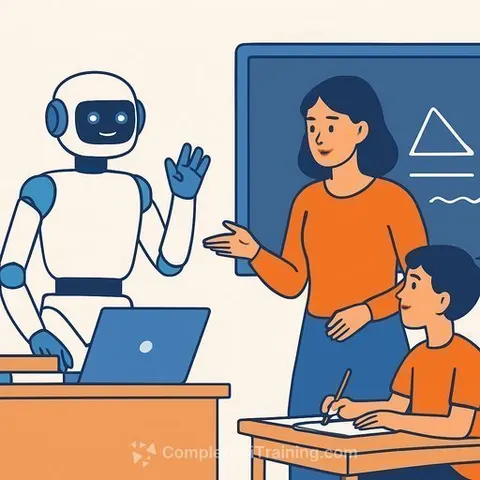
An estimated 84% of high school students used generative AI for schoolwork in 2025, and a new survey of educators reveals that the most pressing challenge is not simply cheating - it is determining whether learning actually happened.
The survey of 303 public school educators and administrators in Wisconsin, plus 132 professionals nationally, was conducted from spring 2025 to spring 2026. It found that academic dishonesty and plagiarism topped the list of AI-related concerns. In Wisconsin, 65% of respondents identified these issues as a worry, compared with 74% in the national sample.
But respondents also pointed to a deeper problem: difficulty in assessing student learning when AI is used. In Wisconsin, 47% of those who answered the question said that assessing learning was a concern; the figure rose to 53% nationally.
Assessing real learning grows more complicated
Teachers have long known that a finished assignment is not perfect evidence of learning. A parent might help too much, a student might copy from a friend, or a student might complete the work without understanding it well enough to explain it later. Generative AI makes that problem more visible and more complicated.
A common homework task - writing a paragraph explaining the theme of a short story - now produces results that appear organized, accurate, and polished. It is harder for teachers to tell whether students understood the story and articulated the theme independently, or simply entered a prompt into a chatbot.
The survey asked educators about the impact AI has had on student behaviour, mental health, or engagement. 29% of Wisconsin respondents and 40% of the national sample reported "increased student reliance on AI," while 19% and 33% chose "reduced critical thinking or problem-solving."
AI detection tools have high error rates
Some teachers use AI-detection tools to check whether work is original. A 2025 national survey of sixth- through 12th-grade public school teachers found that 43% used these apps regularly, and another 27% had experimented with them. But these tools can make significant mistakes in both directions.
One study of 14 AI-detection tools found false-positive rates as high as 50% and false-negative rates as high as 100%, depending on the tool. About 20% of AI-generated texts were misclassified as human-written; that rose to 52% when AI-written text was manually edited and 71% when it was machine-paraphrased. Other researchers found that detectors falsely flagged nonnative English writing as AI-generated at an average rate of 61.3%.
How teachers are adapting
Some educators are already changing their approach. They ask students to show or explain their process, add oral components to written work, or write more in class. When teachers need to see independent thinking, they give paper-and-pencil tasks. If the goal is writing fluency, teachers may need to see students write; if the goal is reading comprehension, they may need students to explain, apply, or defend their thinking.
The survey also found that many educators use AI themselves for planning, communication, documentation, differentiation, and administrative tasks. This underscores the need for professional development in AI for Education that helps teachers balance AI use with authentic assessment.
Clear policies and frameworks can help
Only 33% of Wisconsin respondents and 29% of national respondents said their district had a formal AI policy. Researchers who developed the Artificial Intelligence Assessment Scale - a tool that helps educators specify when and how students can use AI on an assignment - argue that educators should identify what level of AI use makes sense based on the learning outcomes being measured.
One assignment might require no AI use because the teacher needs to see independent writing. Another might allow AI for brainstorming but require students to submit original notes and a final reflection. A third might ask students to critique an AI-generated answer and explain what is accurate, incomplete, or misleading. Professional development resources, such as an AI Learning Path for Teachers, can help educators redesign assessments to measure understanding rather than just polished output.
Why this matters for educators
The goal is not to catch every possible misuse of AI - that is likely impossible. The goal is to design learning tasks where teachers can still answer the question that matters most: What does this student actually understand? By being intentional about assignment design and clearly communicating AI use expectations, educators can preserve meaningful evidence of learning even as AI tools become more accessible.