
AI news ·
Teradyne invests in Bright Machines to automate AI infrastructure manufacturing
Teradyne invested in Bright Machines to combine robotics with software-defined microfactories for AI infrastructure assembly, with over 130 such microfactories already deployed across 10-plus countries.
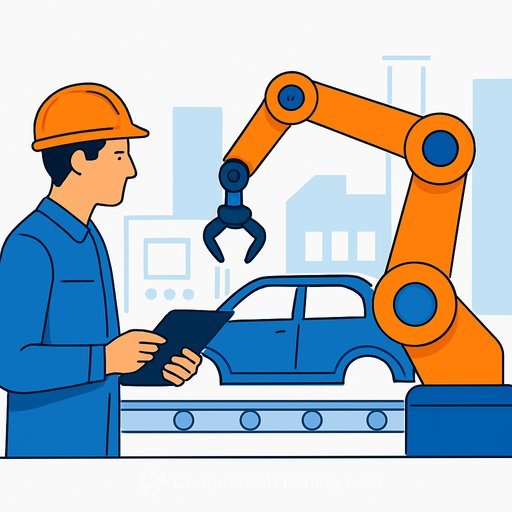
Teradyne Inc. has made a strategic investment in Bright Machines Inc., a company that builds AI and data center infrastructure, and the two firms are launching a collaboration to automate production of that equipment. The deal pairs Teradyne's robotics and test technologies with Bright Machines' software-defined manufacturing platform to speed up precision robotic assembly, material handling, and testing.
Teradyne credited AI as the main driver of its recent revenue growth, marking its fifth consecutive quarter of expansion. The company's subsidiary, Universal Robots, recently released a seventh-generation collaborative robot arm built to take advantage of AI advances.
What the partnership targets
Bright Machines, based in Burlingame, California, has deployed more than 130 microfactories across over 10 countries for AI infrastructure production. The collaboration aims to tackle the high complexity and short design cycles that define this manufacturing segment. By connecting data streams from assembly, robotics, and testing, the partners plan to create an end-to-end production data thread that allows manufacturing lines to self-correct and adapt quickly to new product designs.
Shantnu Sharma, Teradyne's Chief Development Officer, said the partnership accelerates the shift toward "physical AI" on factory floors, allowing for faster transitions from design to production.
The technology behind the shift
Bright Machines builds software-defined microfactories that replace fixed assembly lines with flexible, programmable cells. Integrating Teradyne's test and robotics hardware into those cells gives manufacturers a single system that can assemble, inspect, and validate components without moving product between separate stations. The result is a tighter feedback loop between what gets built and whether it works.
For process engineers managing high-mix production environments, this type of integration reduces the time lost to changeovers and manual quality checks. Coursework in AI Process Engineering Courses covers the data-feedback principles that make adaptive manufacturing lines possible.
Why this matters for IT, operations, and construction professionals
Data center construction timelines are shrinking while equipment complexity rises. Automated microfactories that can self-correct during production mean fewer defects reach the installation site, reducing rework for construction teams and commissioning delays for operations staff. For IT and development groups, faster, more reliable hardware delivery shortens the gap between data center design and live deployment.
Plant managers overseeing facilities that supply AI infrastructure components will see similar pressures. Training resources like AI Manufacturing Management Courses address the operational changes that come with software-defined production lines, including real-time quality data and predictive maintenance workflows.