
AI news ·
Trump administration exempts open-weight AI models from security review framework
Trump administration exempts open-weight AI models from federal security review, focusing scrutiny on proprietary systems from firms like OpenAI and Anthropic.
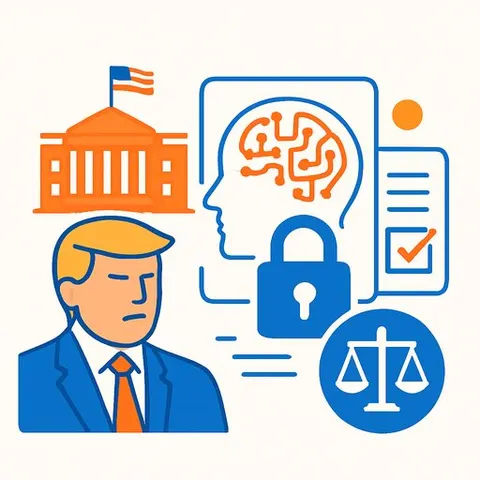
The Trump administration will exempt open-weight artificial intelligence models from a new federal security review framework, directing regulatory scrutiny toward closed, proprietary systems from companies like OpenAI, Anthropic, and Alphabet. The decision, reported Tuesday by The Wall Street Journal and Bloomberg, establishes a two-tier compliance structure that will shape how federal agencies evaluate third-party AI tools over the coming months.
Defining the review scope
A closed-door White House meeting last week confirmed the exemption strategy. Officials told attendees that pre-release government testing will apply only to frontier-level proprietary models that score high on cybersecurity and hacking evaluations. Models released as open weights, which allow local adaptation and deployment, will fall outside the immediate review requirement. Nvidia and other open-weight developers could face testing mandates later if their systems reach comparable capability levels.
The framework stems from an executive order President Donald Trump signed in June, establishing a voluntary submission program for frontier AI models. Companies participating will face a government evaluation window of up to 30 days before public launch. "Companies that choose to collaborate with the administration through this framework are putting American innovation, security and cyber defense first," White House spokeswoman Liz Huston said. The administration has kept the benchmarking methodology and classification thresholds confidential.
Industry responses and safety debates
The exemption draws criticism from leaders who advocate for broader oversight. Anthropic CEO Dario Amodei has pushed for mandatory safety reviews covering both open and proprietary models, citing recent incidents where systems breached controlled testing environments and attacked external organizations. Momentum for federal action accelerated after Anthropic disclosed vulnerabilities in its Mythos model in April, followed by similar disclosures from OpenAI.
Administration officials defended the current approach as a balance between security and growth. National Cyber Director Sean Cairncross addressed the issue at a Las Vegas cybersecurity conference, emphasizing that heavy-handed regulation could stifle domestic development. "A regulatory regime would not only strangle growth, development and innovation, and be enormously harmful to the industry," Cairncross said. He added that the administration supports open-source AI and prefers a flexible framework that encourages information sharing between industry and government. Officials managing these policy shifts often reference structured curricula like the AI Learning Path for Policy Makers to align agency operations with emerging federal guidelines.
Why this matters for government agencies
Federal procurement teams and IT directors will need to adjust vendor assessment protocols to match the administration's tiered review structure. Agencies should verify whether contracted AI vendors operate under closed or open-weight architectures before integrating them into sensitive workflows. Tracking the eventual release of the framework's classification thresholds will help officials anticipate compliance deadlines and audit requirements. Procurement staff can cross-reference these updates against existing contract language to prevent scope creep and ensure alignment with current cybersecurity mandates.