
AI news ·
Trump announces super intelligence force with four leaders
Trump created a Super Intelligence Force on October 4, 2026, naming four leaders to coordinate federal efforts, with a legislative proposal due within 60 days. Executive Order 14434 mandates replacing "artificial intelligence" with "super intelligence" across all executive branch communications.
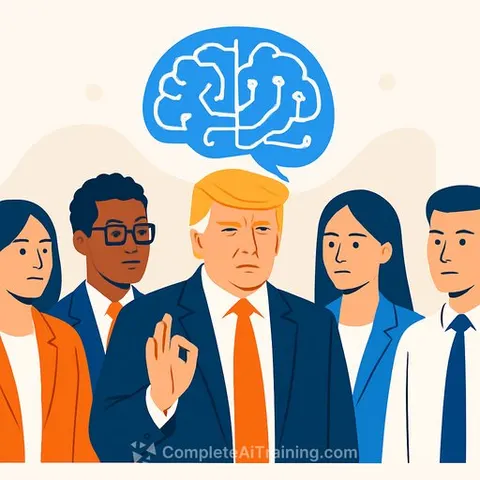
President Donald Trump announced the creation of a Super Intelligence Force on October 4, 2026, via Truth Social, naming four officials to lead a body that will coordinate federal efforts on what the administration now officially calls "super intelligence." The move follows Executive Order 14434, signed September 29, which mandates replacing the term "artificial intelligence" with "super intelligence" across all executive branch communications and directs a legislative proposal within 60 days.
The four leaders named are Jay Clayton, Andrew Ferguson, Emil Michael, and Scott Kupor. The task force reports directly to Trump and Chief of Staff Susie Wiles. Clayton had already been named White House AI czar on October 2, positioning him as the central figure in the administration's reshaped technology policy apparatus.
Unite.ai specifies that the Undersecretary role involved carries the title "Under Secretary of War for Research and Engineering and Chief Technology Officer," while other outlets describe the position more broadly as a Defense department role. BBC and The Decoder initially listed only three leaders, omitting Kupor from their reporting.
A mandated shift in language
Executive Order 14434 makes the terminology change binding across the executive branch. The administration's decision to abandon "artificial intelligence" in favor of "super intelligence" signals a rhetorical escalation that departs from the technical AI research community's use of "superintelligence" or "ASI" to describe hypothetical future systems that surpass human cognitive abilities. The Decoder noted this distinction explicitly, pointing out that the administration's term diverges from the established technical concept.
The order also requires a legislative proposal within 60 days, suggesting the administration intends to codify aspects of its technology policy beyond executive action alone.
What the task force is meant to do
The Super Intelligence Force is charged with coordinating federal efforts to maintain what the administration describes as U.S. leadership in super intelligence. The structure places four confirmed leaders atop the body, with Clayton serving as the White House's primary point person on the issue after his appointment two days earlier.
The reporting discrepancies around the number of leaders-three versus four-stem from different outlets receiving or verifying different levels of detail at the time of publication. Unite.ai's inclusion of Kupor provides the most complete picture of the leadership structure currently available.
Why this matters for executives and strategy professionals
The terminology change is not cosmetic. When an executive order mandates new language across an entire branch of government, it reshapes procurement documents, funding announcements, regulatory guidance, and legislative drafts. Organizations that work with federal agencies or seek government contracts will encounter "super intelligence" as the operative term in official communications. Strategy teams should update their government affairs monitoring accordingly and watch for the legislative proposal due within 60 days of September 29-it may contain provisions that affect compliance requirements, R&D funding eligibility, or export controls for technology firms. Professionals tracking federal AI policy can find relevant context through AI for Government Courses and AI Public Policy Courses that cover the intersection of executive action and technology governance.