
AI news ·
UC co-op student pioneers AI-driven automation in electron microscopy at national lab
UC mechanical engineering student Addie Salvador is automating electron microscopy at NREL using AI to enable autonomous atomic-level imaging. Her work speeds research in energy storage and microelectronics.
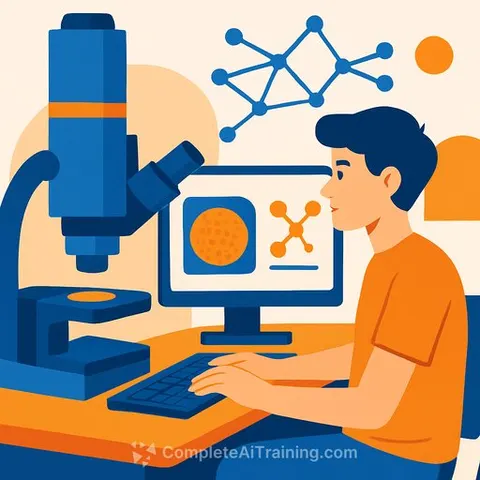
UC Co-op Student Advances AI-Driven Electron Microscopy at NREL
At the National Renewable Energy Laboratory (NREL) in Golden, Colorado, University of Cincinnati mechanical engineering student Addie Salvador is contributing to the automation of electron microscopy, a key technology for materials science. Based in Denver, Salvador is part of a team working within NREL’s $14 million characterization center, focusing on integrating artificial intelligence with transmission electron microscopy.
Her primary objective is to automate the operation of a transmission electron microscope, which provides atomic-level imaging critical for investigating advanced materials. This involves combining hardware control, machine learning, and materials science expertise to create workflows that allow the microscope to function autonomously—a relatively unexplored area in scientific instrumentation.
Innovating Experimental Protocols
Salvador’s work involves breaking down complex microscopy procedures into programmable steps and developing software to enable the microscope’s independent operation. Her mechanical engineering background equips her to address hardware integration challenges effectively, ensuring seamless communication between software algorithms and physical components.
According to Dr. Steven Spurgeon, a senior materials data scientist at NREL, Salvador’s cross-disciplinary approach has been crucial. “She’s identified hardware issues we might have missed and suggested novel solutions that enrich our approach,” he noted, emphasizing her ability to bridge engineering and materials science.
Impact on Energy and Electronics Research
The automation Salvador is developing supports research in energy storage materials, microelectronics characterization, and failure analysis of emerging technologies. By enabling the microscope to run experiments autonomously, including during off-hours, her work increases data throughput and accelerates discovery.
Currently, operators manually conduct each experiment, including repetitive and time-consuming tasks. Automation streamlines these processes, allowing researchers faster access to essential atomic-scale data. This efficiency is expected to expedite innovations in batteries, sensors, and computing devices.
Collaboration and Growth
Beyond technical contributions, Salvador actively collaborates with scientists and interns, bringing fresh perspectives and rigor to programming challenges. Her professionalism and problem-solving skills have made her a valued member of the team.
Her experience at NREL underscores the growing role of AI in scientific research. “AI can help increase the quality and quantity of data acquired and identify trends in large datasets, enabling faster and more thorough discoveries,” Salvador explained.
Looking Ahead
As her co-op term concludes, Salvador aims to pursue a career focused on research and innovation, leveraging AI to enhance scientific workflows. Her work at NREL lays groundwork for more efficient material discovery processes that could address global challenges such as climate change.
Those interested in advancing AI skills relevant to scientific research can explore practical courses at Complete AI Training, which offers resources on AI applications across industries.