
AI news ·
Unionized Allina Health doctors raise alarm over AI use in diagnoses as strike continues
150 unionized doctors at Allina Health's Mercy and Unity hospitals are on strike, with AI's role in patient diagnosis at the core of the dispute.
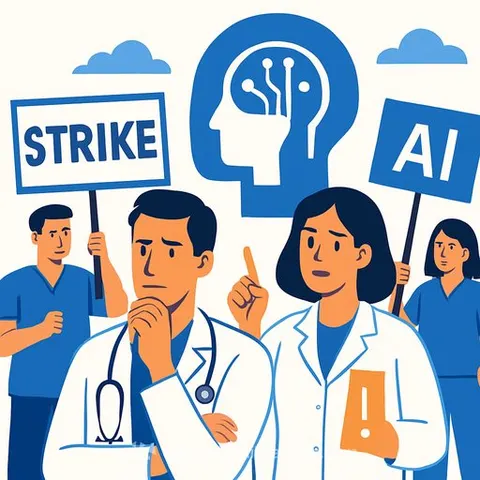
About 150 unionized doctors at Allina Health's Mercy Hospital in Coon Rapids and its Unity campus in Fridley entered the third day of a four-day strike Wednesday, with the use of artificial intelligence in patient diagnoses emerging as a central point of contention. The walkout follows three years of contract negotiations that have yet to produce a first union agreement, and it highlights a growing friction between clinical autonomy and health system technology adoption.
The strike reflects broader pressures in healthcare. William Jones, a professor of history at the University of Minnesota, said physician unionization is part of a trend that accelerated during the COVID-19 pandemic. While pay, sick time, and access to protective equipment have all been on the table, concern over AI has moved to the forefront.
AI diagnosis becomes a flashpoint
Jones said the doctors' unease with artificial intelligence is not a peripheral worry. "They are concerned about the use of AI in doing diagnosis," he said. "That's really at the center of this issue." The physicians want clear boundaries around how algorithm-driven tools are used in clinical decision-making, fearing that cost pressures could push the technology into roles that should remain with licensed professionals.
Allina Health has acknowledged progress in negotiations but has tied any final deal to managing rising healthcare costs. The health system has not publicly detailed how it currently uses AI for diagnosis or what limits it might accept.
A growing labor movement in medicine
The Allina strike is one of several recent actions by unionized physicians. Jones noted that the pandemic reshaped how doctors view collective bargaining, as staffing shortages and safety concerns pushed more to organize. For these doctors, the contract fight is about more than wages-it is about who controls the diagnostic process as hospitals adopt new tools.
The strike at Mercy and Unity involves roughly 150 physicians. No agreement had been reached as of Wednesday, and the four-day action was scheduled to conclude Thursday.
Why this matters for healthcare professionals
For clinicians and healthcare administrators, the Allina dispute signals that AI implementation will increasingly be a labor relations issue, not just a technical one. Contracts that once centered on compensation and benefits are now likely to include provisions governing how AI assists or replaces clinical judgment. Physicians and other providers should expect their unions and employers to negotiate specific guardrails around diagnostic algorithms, and those terms will set precedents for other health systems.