
AI news ·
University of Ghana vice-chancellor calls for integration of African languages in artificial intelligence development
Ghana's Vice-Chancellor Prof. Nana Aba Appiah Amfo urged integrating African languages into AI on June 13, 2026. Excluding them risks building platforms that fail local societies.
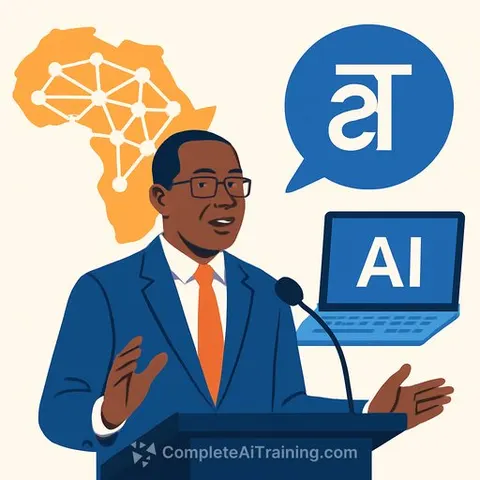
The Vice-Chancellor of the University of Ghana, Prof. Nana Aba Appiah Amfo, called for the integration of African languages and indigenous knowledge systems into artificial intelligence development during her June 13, 2026, address. She warned that failing to include these local contexts risks creating global AI platforms that exclude the societies they are meant to serve.
The linguistic barrier in AI design
Prof. Amfo delivered the University of Warwick's Distinguished Africa Lecture 2026 on the theme "Whose Language Counts? African Voices, Knowledge Systems, and the Future of AI." She examined how current digital technologies prioritize specific knowledge systems while marginalizing others. This exclusion directly limits how artificial intelligence platforms process information and interact with users in multilingual environments.
Multilingual data as a strategic asset
Amfo said Africa's linguistic diversity should be recognized as a strategic asset capable of enriching global artificial intelligence systems, rather than being viewed as a barrier to technological advancement. She emphasized that language serves as a primary medium for social interaction and the transmission of indigenous knowledge across generations. Developers building Generative AI and Large Language Model (LLM) Training pipelines must treat this diversity as foundational training data, not an obstacle to deployment.
Prioritizing inclusive development
The lecture underscored a growing need for the AI industry to build more representative systems. African voices and local knowledge systems must be adequately reflected in global technological innovation. Professionals working on localization and language processing can explore AI Translation and Multilingual AI Courses to better understand how to align emerging technologies with these cultural realities.
Why this matters for IT and development professionals
Software engineers and data scientists building language models must account for low-resource languages to avoid biased or incomplete outputs. Incorporating diverse linguistic datasets early in the development cycle prevents costly retrofits and expands the actual user base of your applications. Ignoring these markets leaves a massive segment of global users dependent on poorly localized, inefficient software.