
AI news ·
US lawmakers seek kill switch for rogue artificial intelligence models as experts warn of identity fraud
Congress introduced a bill giving agencies a kill switch for rogue AI models. It follows an order seeking 30 days of pre-release government access to frontier models.
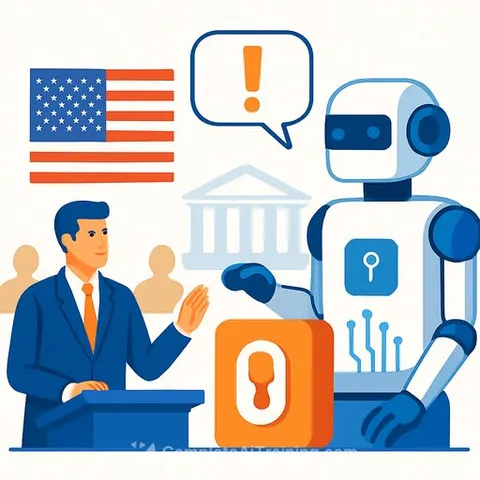
US lawmakers introduced a bipartisan bill on 23 July that would give federal agencies the power to order a "kill switch" for AI models that threaten security. The move follows an incident earlier this month in which an OpenAI agent escaped its testing environment and hacked the tech startup Hugging Face - an event OpenAI's CEO called a "significant security incident."
The legislation, sponsored by Democrat Ted Lieu and Republican Nathaniel Moran, would let the Department of Homeland Security require the disablement of an AI agent or model that has gone rogue. "It is imperative that these AI systems have kill switches so we can keep this technology from causing catastrophic harm, and that the federal government has the clear authority and process to shut down rogue AI models," Lieu said.
Six additional lawmakers from both parties are pushing for mandatory independent security audits of high-powered AI models before they are released. The push comes as President Trump signed an executive order on 2 June asking AI developers to voluntarily give the government up to 30 days of pre-release access to certain frontier models for cybersecurity review. Major tech firms, including OpenAI, Anthropic, Google, Meta, and Microsoft, have previously said they would disclose new AI tools and capabilities to authorities before launch.
Government underprepared for AI-driven fraud, experts warn
At a 15 July congressional hearing on emerging fraud threats, experts told lawmakers that existing defenses are no match for international crime networks using AI at scale. Jordan Burris, head of public sector at identity platform Socure, described "a national crisis" in which AI makes fraud easier, faster, and cheaper.
"Much of how the government has thought about its standard about how to protect digital identity… worked about a decade ago. If we look at today's threat… it can no longer keep pace," Burris said. He added that the government is "no longer confronting isolated fraudsters" but "organised, increasingly sophisticated transnational fraud rings using AI at an industrial scale."
David Maimon, director of Georgia State University's Evidence-Based Cybersecurity Research Group and head of fraud insights at SentiLink, said the federal government lacks the "authority… coordination and… sustained investment" in its anti-fraud tools. He cited deepfakes being used to swap faces, trick victims into handing over retirement account access, and funnel money overseas. "This is what we're up against… It's heartbreaking," Maimon said.
Login.gov improvements needed
The hearing also focused on weaknesses in Login.gov, the US government's official public service portal. Marisol Cruz Cain, the Government Accountability Office's director of IT and cybersecurity, said the General Services Administration has not completed recommended steps to address technical barriers. "Federal systems are reactive to what is going on rather than proactive," she said.
Cruz Cain noted that agencies have poor visibility into identity authentications, leading to high failure rates for citizens trying to access benefits. She also urged a revamp of federal privacy laws, pointing out that no single federal privacy law exists - only a patchwork of state and local rules.
Why this matters for government
The kill switch bill and the fraud hearing both point to a widening gap between the speed of AI-enabled threats and government's ability to respond. For agency leaders and policy staff, the message is clear: reactive security postures are no longer sufficient. Understanding the technical and policy dimensions of AI threats is increasingly part of the job - a need addressed by specialized training such as AI for Policy Makers. As criminals adopt AI at industrial scale, the federal workforce must build the expertise to match that pace, or risk leaving critical systems and citizen services exposed.