
AI news ·
Vinod Khosla urges FDA to certify medical AI that outperforms the median human doctor
Vinod Khosla urges the FDA to certify autonomous medical AI when it beats the median human doctor. A national survey found 25% of U.S. adults have already used AI for health information.
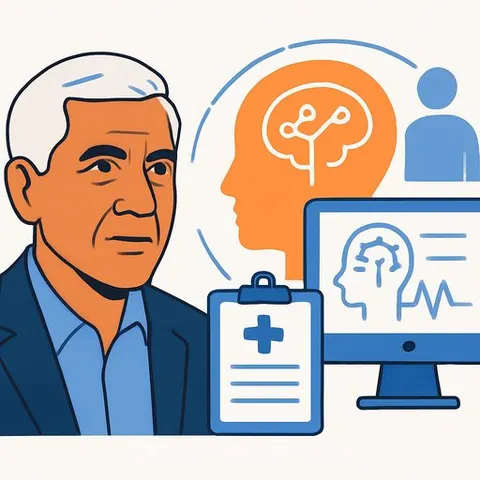
Venture capitalist Vinod Khosla wants the FDA to certify autonomous medical AI when it can outperform the median human doctor, a standard he says would push medicine above its current baseline. In a post on X on Tuesday, Khosla shared an Atlantic opinion piece he co-authored with physician and health policy expert Ezekiel Emanuel, arguing that the agency should move past institutional hesitation and use comparative human performance as the approval predicate.
"We need to get past biases and knee jerk responses and have FDA really certify AI based on it performing better than median human doctor as a predicate," Khosla wrote. "Uplevel medicine to above median standards."
The case for algorithmic care
Khosla and Emanuel contend that large portions of medical care follow algorithmic patterns - evaluating symptoms, monitoring patients, flagging drug interactions - where specialized AI could deliver more consistent results than physicians. They pointed to studies where AI outperformed doctors in simulated clinical tasks. A 2023 diabetes study showed that autonomous AI helped patients reach stable insulin doses faster than conventional management.
Khosla's investment firm has previously emphasized that medical AI should match or beat the error rates and quality benchmarks of median physicians before receiving FDA clearance.
Earlier disease prediction on the horizon
Last month, Khosla predicted that by 2035, AI would transform routine diagnostics like ECGs and EEGs, extracting far more signal than current interpretation methods allow. He said these systems could surface hidden conditions and predict disease before serious symptoms appear, creating a window for earlier intervention. Researcher Derya Unutmaz described Khosla's decade-old AI forecasts as remarkably accurate.
Mounting signals from industry and patients
Khosla's call lands amid broader industry momentum. Marc Andreessen recently said AI is already a better doctor than 99.99% of humans, following OpenAI CEO Sam Altman's report that physicians found fewer flaws in GPT-5.6's responses than in doctor-written answers. Mark Cuban has separately warned that healthcare conglomerates could erect barriers that delay or deny care, undercutting AI's potential benefits.
Patient behavior is shifting as well. A national survey found that 25% of U.S. adults have used AI for health information, often to research symptoms before or after doctor visits. About 14 million adults skipped a medical visit after receiving AI guidance, raising concerns about patients substituting professional care with chatbot advice.
Why this matters for healthcare professionals
The push for FDA certification tied to median physician performance signals a regulatory conversation that could reshape clinical workflows, liability frameworks, and hiring. If autonomous AI clears that bar for specific diagnostic or monitoring tasks, healthcare organizations will need clear protocols for when AI operates independently and when human review is required. For professionals in clinical and administrative roles, understanding where AI fits into regulated care pathways - and where it does not - will become a core competency, not a side interest. Resources like AI for Healthcare and AI for Medical Billers can help teams build that understanding before policy changes arrive.