
AI news ·
What the U.S. Can Learn from Estonia’s AI-Driven Digital Government Revolution
Estonia’s AI-powered digital government cuts bureaucracy and boosts efficiency with 130+ online services. The U.S. can learn to modernize and streamline public services.
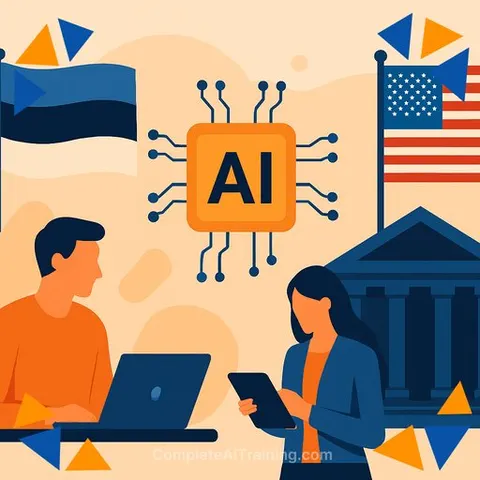
What The US Can Learn From Estonia’s AI-Powered Digital Government
Red tape and bureaucratic delays are common frustrations in American government at all levels. According to the U.S. Chamber of Commerce, federal red tape alone costs the public 11.6 billion hours annually, which breaks down to nearly 35 hours per citizen each year. This inefficiency drains about $117 billion or 0.6% of GDP, largely due to outdated systems rather than actual waste. In contrast, Estonia has built a digital government model that significantly cuts bureaucracy and leverages AI to deliver efficient public services.
Estonia’s Journey to a Fully Digital Government
Estonia has committed to creating a citizen-focused government by eliminating nearly all traditional bureaucracy, aiming for 100% digitalization of government services. This started with the “Zero Bureaucracy” initiative around 2015-2016, driven by ministers and entrepreneurs who identified obstacles in government processes. Now, almost all services are online, with over 130 AI-powered public service applications in use. These services are predictive, personalized, and proactive.
For example, when a child is born, all related paperwork is handled online automatically—no physical forms required. The healthcare system similarly stores patient data digitally, so patients don’t have to repeatedly fill out forms during doctor visits unless significant changes occur.
Benefits for Business Owners
Digitizing and automating form filing and processing is a major advantage for business owners and entrepreneurs. Estonia’s government estimates that a real-time economic solution, fully implemented by 2027, will save Estonian businesses about $132 million in both time and paperwork costs.
This approach can translate directly to the U.S., where contractors, entrepreneurs, and companies could experience faster permit approvals, tax filings, and payroll management. Processing everything digitally and in real time would reduce wait times and improve business efficiency.
Estonia’s thriving AI ecosystem also supports global enterprises. Pactum AI, an Estonian company working with Walmart and Maersk, uses AI agents to negotiate supplier contracts continuously, creating savings and improving procurement operations. This shows how AI can extend human capabilities and improve business outcomes.
Education and Preparing for the Future
Estonia has integrated AI education into its curriculum, focusing on critical thinking and creativity to prepare young people for an AI-driven economy. The Minister of Education stresses that economic competitiveness depends on how well students adapt to AI tools.
By 2027, Estonia plans for one-third of teachers and students to be actively using AI tools. The goal is to teach AI as a tool to complement education rather than replace fundamental skills like reasoning and problem-solving. Students are encouraged to question information critically, avoiding passive acceptance of AI-generated answers.
Employment and Workforce Development
The rise of AI raises concerns about job displacement. Globally, AI could replace around 9.1% of jobs, but 83% of employers say workers with AI skills are more likely to be retained. Estonia invests heavily in upskilling its workforce, allocating over $10 million in 2023 for education in technology, production, and engineering fields.
Estonia focuses on working smarter by combining AI with human skills. The government views AI as a way to increase productivity per person—helping the country climb the global value chain. Future jobs will belong to people who know how to use AI effectively, not to AI itself.
Challenges and Security Considerations
Digitizing government services carries risks such as cyberattacks, data breaches, and infrastructure gaps. Only 42% of Estonians trust the EU to protect their digital rights, and high-capacity network coverage in Estonia is slightly below the EU average.
To address these issues, Estonia relies on strong public-private partnerships and strict cybersecurity measures. Public officials must use authorized devices and secure networks. Cyber threats, especially from hostile actors, remain a daily concern, intensified by regional tensions.
Despite digital advances, Estonia faces economic challenges including moderate GDP growth, inflation, and the need for tax reforms. Military spending due to geopolitical risks also strains the budget. These factors highlight the need for careful financial management alongside digital innovation.
Maintaining Sovereignty While Embracing Global AI
Estonia collaborates with global AI leaders like OpenAI and Anthropic but insists on protecting national data sovereignty. They develop custom AI tools that prioritize transparency and responsibility, ensuring data remains local when possible.
This strategy balances innovation with control, avoiding overdependence on any single tech company. The government sets clear terms for partnerships to protect security and flexibility. Estonia’s president sums it up well: “We won’t use artificial intelligence the most, but we’ll use it the smartest.”
Lessons for the United States
Estonia’s model shows that government can be fast, efficient, and focused on citizens when proper leadership and digital infrastructure are in place. The U.S. has the talent and technology but lacks the political will to make such changes.
Adopting a similar approach could reduce bureaucratic burdens, improve service delivery, and boost productivity nationwide. For government employees and leaders, understanding AI's practical applications and fostering digital skills is essential.
For those interested in advancing their AI knowledge and practical skills, resources like Complete AI Training’s latest AI courses offer valuable education tailored to today’s workforce needs.