
AI news ·
Why Boards Must Resist Automating Strategic Leadership: Preserving Board Chairs’ Power in the Age of Generative AI
Generative AI streamlines routine board tasks but risks weakening chairs' strategic influence. Boards must set clear AI boundaries to preserve leadership roles.
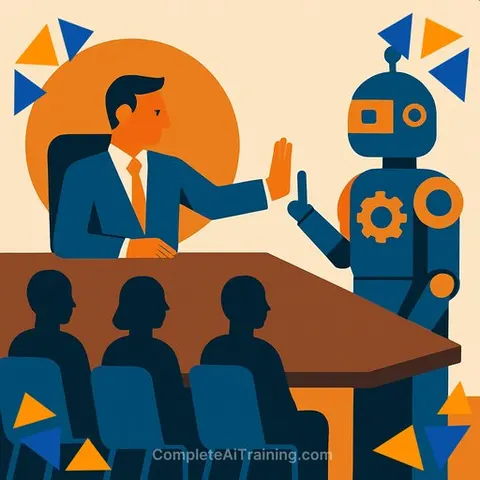
Generative AI Is Great at Routine Tasks. Here’s Why Boards Should Resist Using It.
Generative AI is transforming industries by automating routine tasks and enhancing decision-making. Many organizations have started using AI in board meetings, applying it to tasks like minute-taking, agenda creation, and meeting documentation. AI-powered board-management tools that provide advice and guide discussions are also emerging.
However, boards must approach AI adoption carefully. Without clear boundaries, AI risks eroding the strategic influence of board chairs—the leaders who set direction and ensure effective governance. Protecting the unique leadership roles from AI “encroachment” is essential to maintain strong and effective boards.
The Importance of Power-Conduit Tasks
Recent research involving 27 board chairs across diverse industries revealed that certain routine tasks actually serve as critical levers of leadership influence. These “power-conduit tasks” include setting meeting agendas, summarizing discussions, and managing board member performance. Automating these with AI can unintentionally weaken the chair’s ability to guide and shape board outcomes.
Power-conduit tasks may seem procedural but are vital for exerting control and influence within the boardroom. When AI takes over these tasks without human oversight, it creates “encroachment risk” — diminishing the strategic role of the chair.
Three Key Power-Conduit Tasks of Board Chairs
- Managing the Agenda
The chair decides which topics get discussed and in what order. This shapes priorities and controls the flow of conversation. About 30% of chairs highlighted agenda-setting as a major source of their influence. Unlike AI-generated agendas based on past data, the chair’s strategic input ensures sensitive or complex issues are addressed at the right time and in the right context. - Discussion Summarization and Theming
Chairs synthesize board discussions to guide consensus and decision-making. They listen for nuances, unspoken concerns, and mood shifts—elements AI often misses. Effective summaries help align board members and resolve conflicts, making this task a key influence point that should not be fully delegated to AI. - Board Member Performance, Review, and Recommendation
Evaluating board effectiveness and managing committee composition requires judgment, interpersonal skills, and sometimes difficult conversations. Chairs ensure the board has the right skills and dynamics to serve stakeholders. This complex role cannot be replaced by AI’s routine optimization.
How Boards Can Minimize AI Encroachment
To prevent AI from undermining leadership influence, boards should adopt a three-step approach:
- Identify Key Strategic Roles
Pinpoint roles—like board chairs and C-suite executives—that rely heavily on influence and strategic judgment rather than routine operations. - Identify Power-Conduit Tasks
Work with those leaders to determine which tasks are central to their influence and should remain free from full AI automation. - Fence and Control AI Involvement
Establish policies that clearly define where AI can assist and where human oversight is mandatory. This ensures AI supports leadership without replacing critical strategic functions.
By setting boundaries around AI use, organizations can leverage automation for efficiency while preserving the strategic authority of their leaders. The goal isn’t to reject AI but to integrate it thoughtfully, so it becomes a tool that amplifies rather than diminishes the board chair’s role.
For executives interested in how AI can be integrated responsibly into leadership and governance, exploring specialized AI training can provide valuable insights and skills. Resources such as Complete AI Training’s latest AI courses offer practical guidance on balancing AI adoption with effective leadership.