
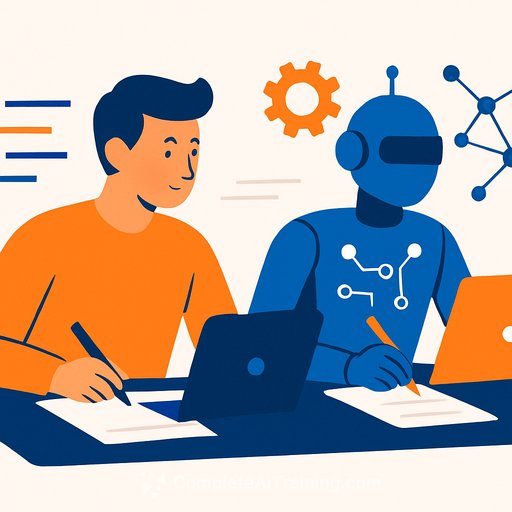
Business Working Strategies: Making the Case for Real Human Writers
We’re well into a series exploring artificial intelligence and its impact on work, and the question remains: Is AI a friend or foe to workers? It’s easy to say “both,” but that doesn’t answer how much each side weighs or if the balance is shifting.
Looking specifically at the writing profession, the outlook isn’t encouraging. AI-generated content is becoming common—from press releases to novels. Some “authors” even boast about producing multiple books weekly using AI. This raises concerns about the future roles of journalists, technical writers, advertising copywriters, textbook authors, and songwriters. Many writing jobs face real threats from AI automation.
Does It Matter Who Writes?
Assuming displaced writers find other jobs, is it important whether a human or AI creates a press release or novel? From a purely functional standpoint—informing or entertaining—the difference might seem minor. Society will likely never agree on this fully. Meanwhile, AI continues advancing. The critical question is whether to keep pace or resist and risk being left behind.
Moving forward with AI integration makes sense, but with an important condition: writers still need proper training in writing fundamentals. This preserves unique human voices, which AI can’t authentically replicate. Without these distinct voices, AI risks becoming a self-referential loop.
The Cognitive Value of Writing
Writing strengthens more than just communication skills. Studies show it enhances cognitive functions like critical thinking and memory, and can even boost dopamine levels. Because writing engages empathy, logic, and recall, it may help maintain mental sharpness longer in life.
This idea is similar to a famous lesson from The Karate Kid, where repetitive tasks build muscle memory and patience—skills that become second nature. Writing exercises create a similar foundation. Writers develop confidence, find their unique voice, and learn to anticipate readers’ reactions. AI tools don’t currently build this kind of deep, personal skill.
Preparing for AI’s Role Without Losing Core Skills
The threat AI poses to writers extends to many other professions that may be automated. We can’t outrun or legislate away this trend. Still, that isn’t a reason to neglect the core skills that define our work. Developing real expertise isn’t ignoring AI’s rise—it’s preparing to work alongside it effectively.
Next, we’ll explore how combining AI with strong foundational skills can create better outcomes in the workplace and beyond.
For writers interested in integrating AI thoughtfully with their craft, exploring practical AI training courses can be a good step. Resources like Complete AI Training’s courses designed for various jobs offer ways to build relevant skills without losing the human touch.