
AI news ·
Why Students’ Essays Still Outshine AI: The Missing Personal Touch in Machine Writing
Students write more engaging essays than AI, using personal touches and questions that AI lacks. This helps educators spot genuine work and support academic integrity.
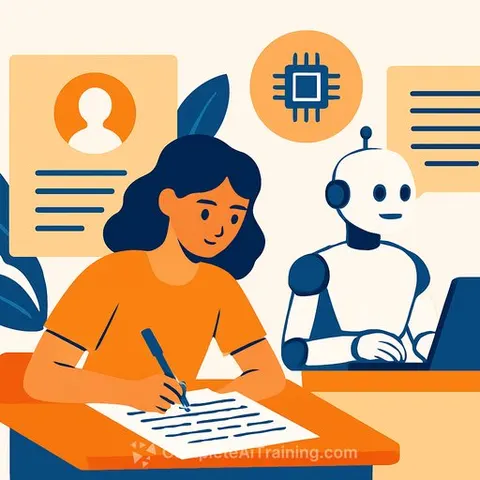
Man vs. Machine: Why Students Still Write Better Than AI
A recent study reveals a clear difference between essays written by students and those generated by AI tools like ChatGPT. While AI-produced texts flow smoothly, they often lack the subtle techniques that engage readers on a personal level. This distinction can help educators identify genuine student work and highlights the need for stronger critical literacy in an era dominated by automated text generation.
Can AI Write Better Than a Student?
Researchers from the University of East Anglia, collaborating with Jilin University, analyzed 145 essays written by students alongside AI-generated counterparts. Their goal was to detect markers that invite reader engagement. The findings aim to support educators and exam boards in spotting suspicious assignments, especially since existing AI-detection software can produce false positives.
By understanding common discourse habits students use, graders can spot when writing loses its personal touch—something AI essays often miss. This insight helps maintain fairness in grading and upholds academic integrity as generative tools become more widespread.
Students and the Rise of AI
Concerns about AI tools like ChatGPT have sparked anxiety among educators. The fear is that such tools might encourage cheating and weaken essential literacy and critical thinking skills. Reliable detection methods for AI-generated texts are still in development, making human judgment crucial.
AI Writing Is Less Engaging
The study focused on “engagement markers” such as questions, personal asides, and direct appeals to readers. Student essays consistently used a variety of these strategies, creating a more interactive and persuasive reading experience.
Human writers often address the reader directly, using rhetorical questions and personal commentary to build connection and clarity. These techniques make arguments stronger and more relatable.
AI Lacks the Personal Touch
In contrast, AI-written essays, though fluent and following academic conventions, tend to be impersonal. They avoid questions and limit personal commentary, resulting in a flat and less persuasive style.
This happens because AI models prioritize coherence over conversational nuance, relying on statistical patterns rather than genuine perspective or voice.
Classroom Uses, Not Shortcuts
Despite these shortcomings, AI tools shouldn't be dismissed outright. When used transparently, they can serve as helpful tutors rather than shortcuts. Educators are encouraged to design assignments that require drafts and reflection—steps that AI cannot replicate.
Teaching students to recognize engagement markers sharpens both their writing and their ability to detect machine-generated text. As detection software evolves, stylistic clues still provide educators with a useful edge.
Preserving Honest Student Voices
Coursework must remain a reflection of independent thought. If AI-generated texts replace genuine student voices, the value of qualifications could be undermined.
The study provides data to help shape safeguards that maintain space for authentic, imaginative writing. It also ties into broader digital literacy efforts, teaching students to question who wrote a text and why, whether they encounter it in news feeds, search results, or chat apps.
Writing with a visible stance encourages critical reading habits and reduces the acceptance of anonymous, impersonal prose.
The full study is published in the journal Written Communication.