
AI news ·
Writers and Sinologists Reflect on AI’s Place in Literature and Translation
Chinese writer Liang Hong values emotional depth over AI use, seeing AI as a tool that can expand perspectives but never replace authentic creativity. Sinologists agree human nuance is vital in literary translation despite AI assistance.
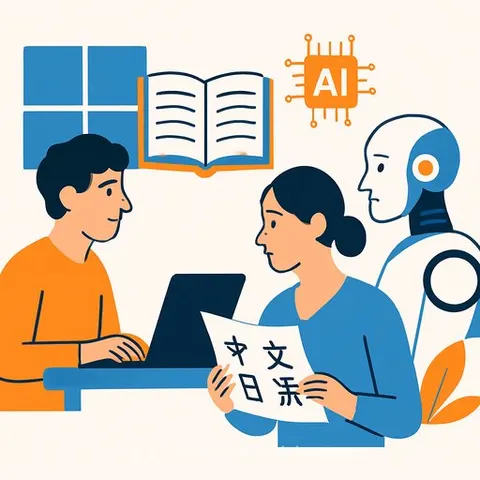
AI Through the Eyes of Writers and Sinologists
Chinese writer Liang Hong, known for her non-fiction trilogy about Liang Village in Henan province, shared her honest reaction to the rise of AI tools like DeepSeek. During a writing retreat earlier this year, Liang felt a strong urge to resist using AI. Instead, she focused on bringing her characters to life with vivid detail and emotion.
"Even if, someday, the characters in my book are included in an AI database, I would still feel proud because it represents my contribution," Liang said. Her stance highlights a key tension many writers face: balancing new technology with authentic creative expression.
AI as a Perspective Expander, Not a Substitute
Liang acknowledges that AI can broaden perspectives, but stresses it cannot replace the unique viewpoint and deep feelings a writer has toward their subject. This emotional connection is essential to shaping believable characters and exploring social realities.
She doesn’t oppose AI, recognizing it as an unstoppable force. Instead, she believes that writers need to cultivate stronger emotional depth to maintain a genuine connection with their time and audience.
Sinologists on AI and Literary Translation
Experts in Chinese literature and translation, many with decades of experience, agree that AI tools can assist but should never replace human translators. Literary translation demands intuition, cultural sensitivity, and emotional nuance that AI cannot fully replicate.
- AI can handle repetitive or technical tasks, speeding up workflows.
- Human translators provide the artistry and contextual understanding essential to literature.
- Collaborative approaches combining AI assistance with human expertise show promise.
For writers exploring how to integrate AI tools without losing their unique voice, understanding these boundaries is crucial. Emotional depth and authenticity remain irreplaceable.
Writers interested in practical AI applications that support creativity without overshadowing human input can explore specialized AI courses and tools. Resources like Complete AI Training's courses for writers offer guidance on using AI effectively while preserving artistic integrity.