AI agent for vice president of strategies
Regulatory Horizon Scenario Agent
Turn pending rules into dated, costed scenarios that leadership can plan against.
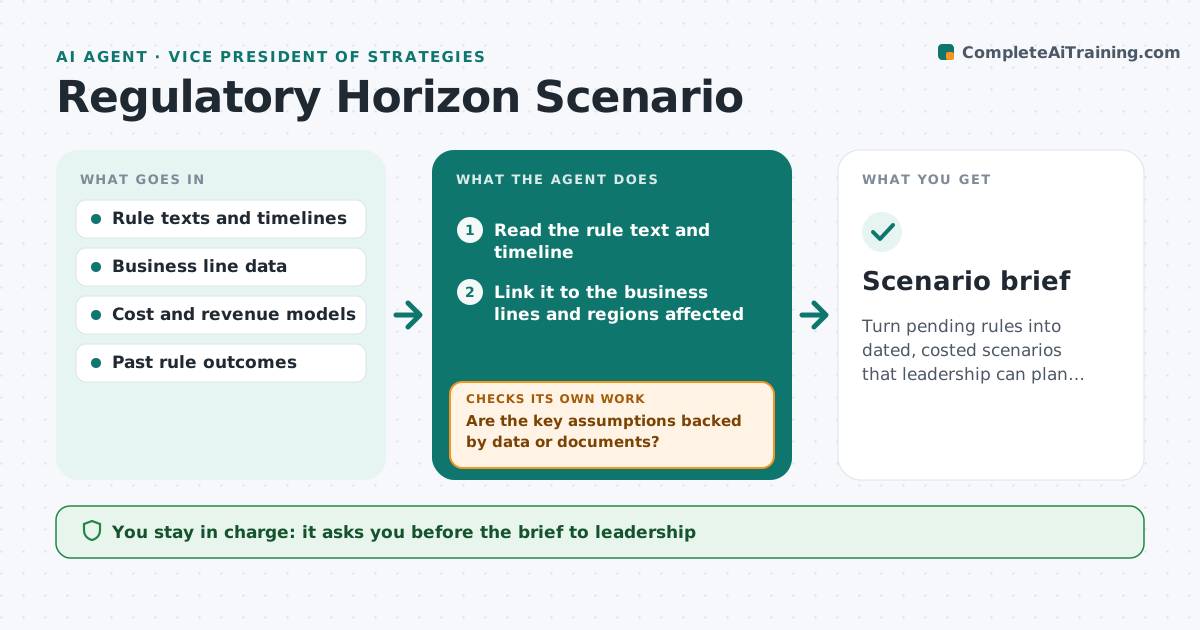
What it does
Proposed rules are published long before they take effect, but strategy teams read them as news, not as inputs to planning. This agent reads proposed rules and timelines, links them to business lines, and models the impact under a few scenarios, such as the rule passing as drafted or with a delay. As the rule moves through stages, it updates the scenarios and the likelihood. It drafts options for leadership, such as changing product design or timing. The leader approves what goes to leadership. Edge case: a rule that affects a business line only in one region is modeled for that region only.
How it works
Follow the arrows from top to bottom. The orange dashed arrow is the loop: when a check fails, the agent goes back and tries again.
Read the steps as a list
- A proposed rule is published
- Read the rule text and timeline
- Link it to the business lines and regions affected
- Pull business line revenue and cost data
- Model best, expected and worst scenarios
- Are the key assumptions backed by data or documents?If not: Ask the owner for figures and rerun the model. Back to step 4.
- Draft options for leadership with cost and timing
- Leader approves what goes to leadershipThe agent waits here for your OK.
- Track the rule through each stage
- Did the rule change stage or content?If not: Update the scenarios and likelihoods and notify the leader. Back to step 5.
- Scenario brief
How it decides
Models best, expected and worst cases using stage and past outcomes, and updates the likelihood each time the rule moves.
- Model three scenarios for every rule above the exposure limit
- Update within 5 days of a stage change
- Likelihood uses stage and past outcomes
- Regional rules are modeled by region
Make it yours
Every agent is a starting point. You choose these settings for your own situation.
- Exposure limit for modeling
- Regions covered
- Scenario count (default 3)
- Update speed (default 5 days)
- Sources
What keeps you in control
It always asks you first
- The brief to leadership
- Any legal reading of the rule
- Any plan change
Hard limits
- Never give legal opinions
- Never send the brief without approval
It stops when
- Done: rule takes effect or is dropped
- Stop: rule is outside the business
- Stop: legal takes over
Set it up
We guide you through the set-up, step by step
Members get the full set-up guide for this agent. No technical skills needed: you copy, paste and upload.
- One set of instructions to paste into your AI, with the clicks for ChatGPT, Claude, Microsoft 365 Copilot, Gemini and Grok
- The agent then walks you through connecting your own data, one source at a time
- A downloadable copy with the flow chart, the rules and the full guide