AI tool
Claude Dashboards & Motion
Claude Dashboards turns company data into live dashboards from plain-language questions, while Motion creates code-based animated explainers exportable as MP4. It's for teams who want to explore data and produce animations without waiting on speci...

About Claude Dashboards & Motion
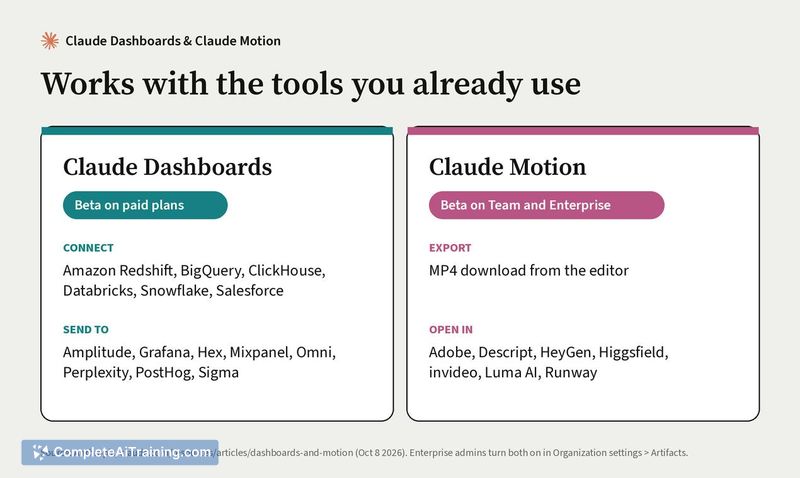
Claude Dashboards and Claude Motion are two beta artifacts available within Claude. Dashboards connects to data platforms like BigQuery, Databricks, Snowflake, Redshift, ClickHouse, or Salesforce and generates live dashboards from plain language questions. Motion creates short animated explainers from reports and charts, written as editable code and exportable as MP4 files.
Review

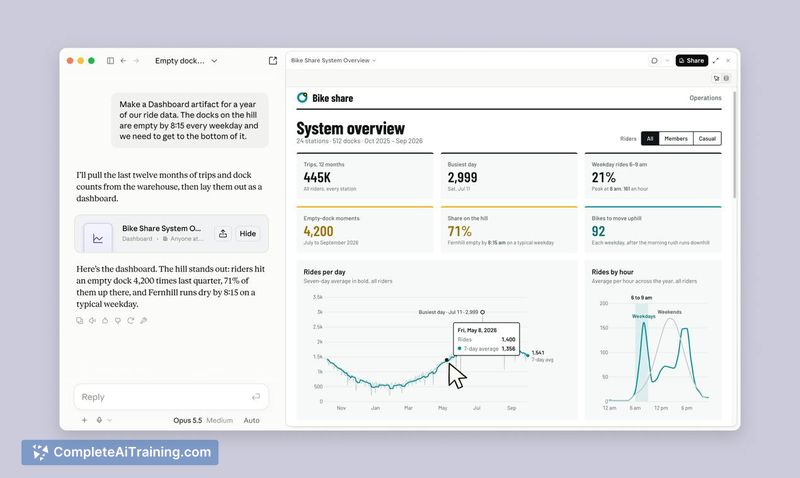
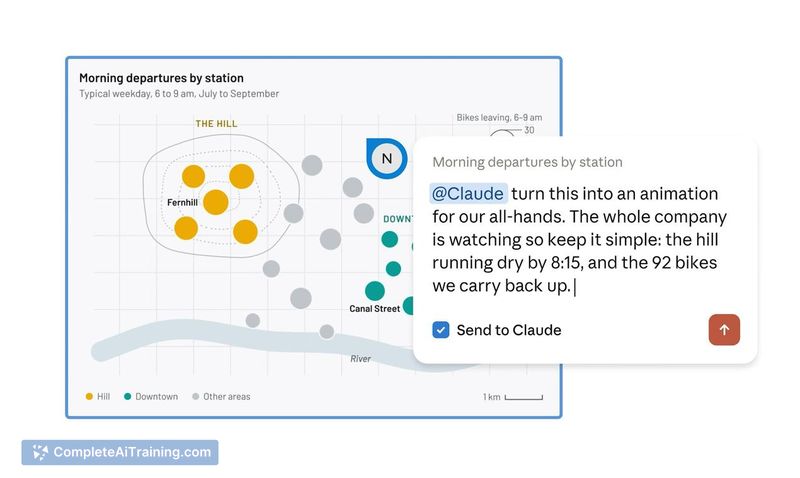
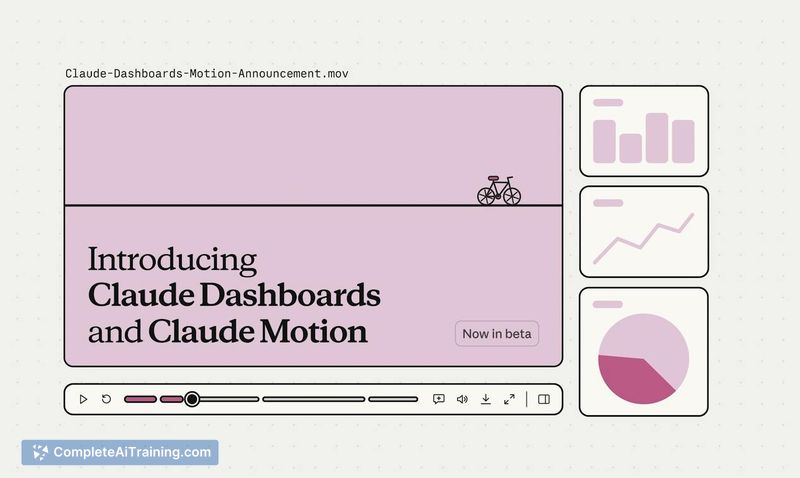
Anthropic has added two new beta artifacts to Claude, expanding what the assistant can produce beyond text. Dashboards targets data querying and visualization, while Motion handles code-based animation. Both are accessible now through the Claude interface, though availability varies by plan.
Key Features
- Plain language to live dashboard - Ask a question in everyday language and Claude builds a dashboard that refreshes as the underlying data changes. Click any number to see the query that produced it.
- Direct data platform connections - Works with BigQuery, Databricks, Snowflake, Redshift, ClickHouse, and Salesforce. No separate BI tool required to get started.
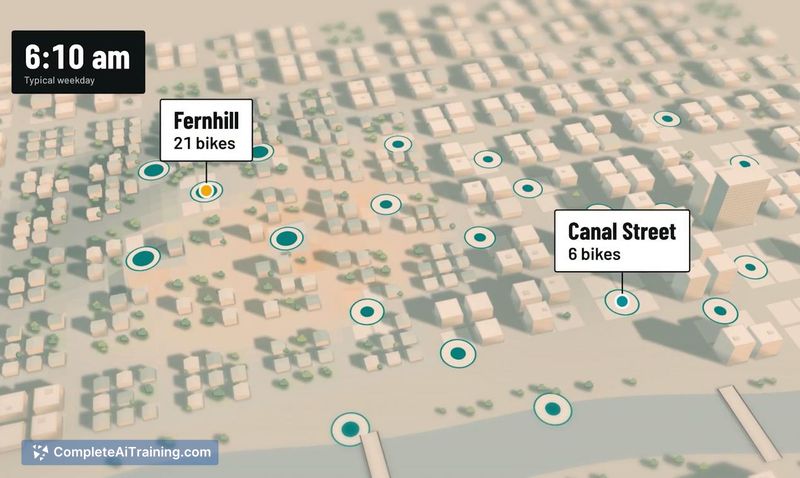
- Code-based animation - Motion doesn't use a video generation model. It writes code that animates text, charts, shapes, and images, so you can edit individual words, numbers, or timing without regenerating the entire animation.
- MP4 export - Completed animations can be exported as MP4 files for use outside Claude.
- External tool handoff - Dashboards can be sent to Hex, PostHog, or Sigma for further work. Animations can be opened in Runway, Descript, or Adobe.
Pricing and Value
Claude Dashboards is available on paid Claude plans. Claude Motion is available on Team and Enterprise plans. The free tier does not include access to either artifact. Specific pricing tiers beyond this plan-level restriction have not been detailed in the current launch information.
Pros
- Removes the need to write SQL for ad-hoc data questions, which can reduce dependency on data teams for quick lookups.
- Every chart exposes its underlying query, so users can verify how a number was calculated rather than trusting a black box.
- Motion animations are code under the hood, making precise edits possible - change one word and the rest of the animation stays intact.
- Direct connections to six major data platforms cover a wide range of common enterprise setups.
- Export paths to tools like Hex, Descript, and Adobe mean the output doesn't lock you into Claude's ecosystem.
Cons
- Both artifacts are in beta, so stability, feature completeness, and long-term support remain open questions.
- Motion source code is not exposed for editing outside Claude, which limits workflows that require external code iteration.
- This tool is not well suited for teams that don't use one of the six supported data platforms, or for users on free plans who won't have access at all.
Claude Dashboards & Motion fit teams already on paid Claude plans who regularly query BigQuery, Snowflake, or similar platforms and want to skip writing SQL for routine questions. The animation side suits those who produce short data-driven explainers and need frame-level control without learning motion graphics software. Organizations outside the supported data platform list, or those requiring production-stable tools rather than beta features, should wait for broader compatibility and maturity.