AI tool
Context Engine
Context Engine gives development teams a way to isolate the information each AI agent receives, preventing one agent from simply agreeing with another's prior decisions. It is for project leads who want to track individual progress and identify er...
About Context Engine
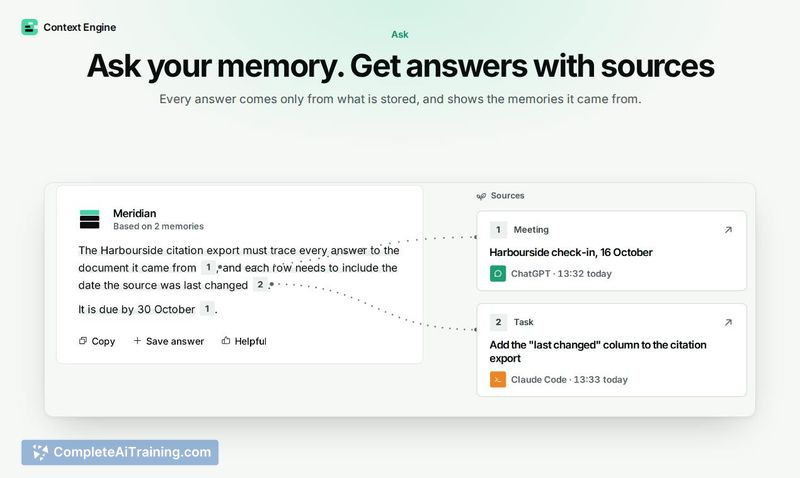
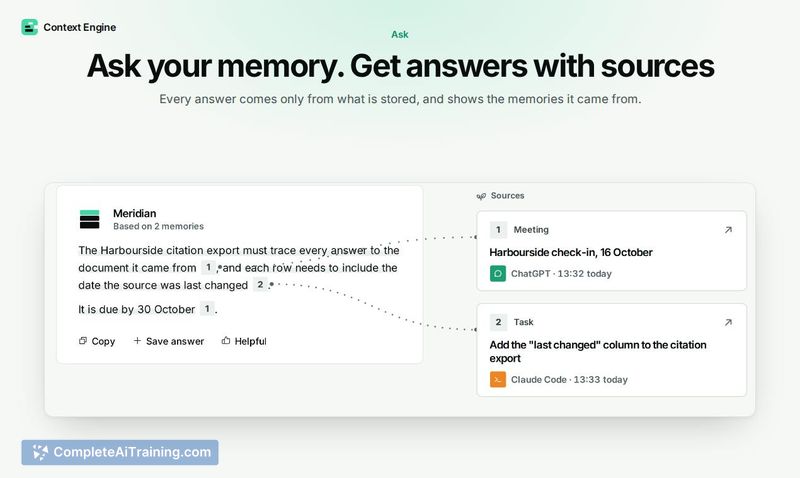
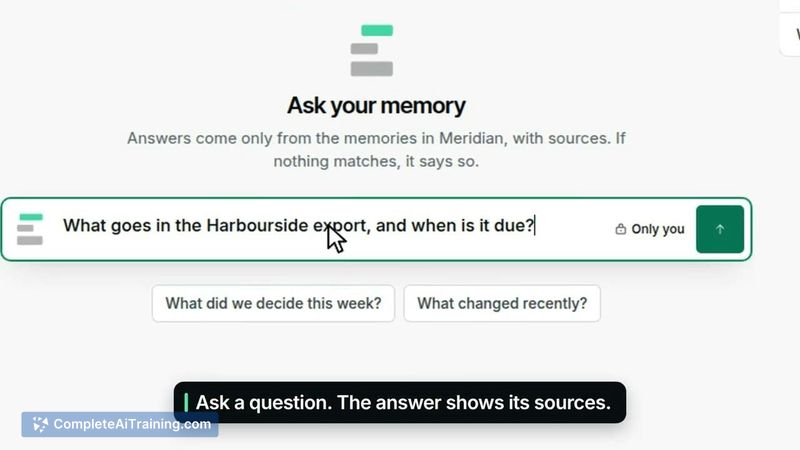
Context Engine is a knowledge base tool that acts as a shared memory for both AI agents and human team members. Claude, ChatGPT, Cursor, and Claude Code can save to it while working, and people on the team can read entries, ask questions, and add files. The product launched this week with a free tier available to start.
Review
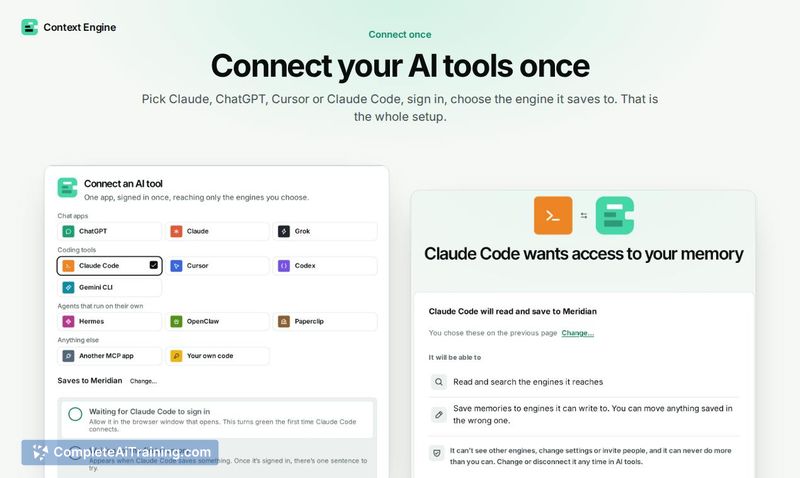
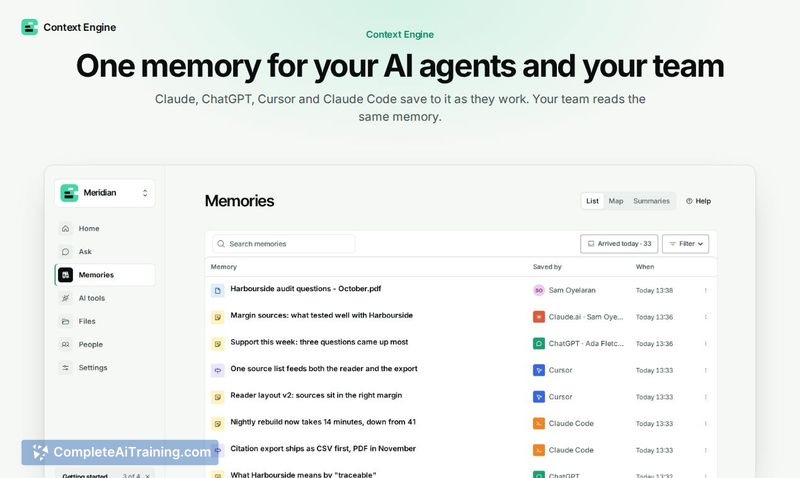
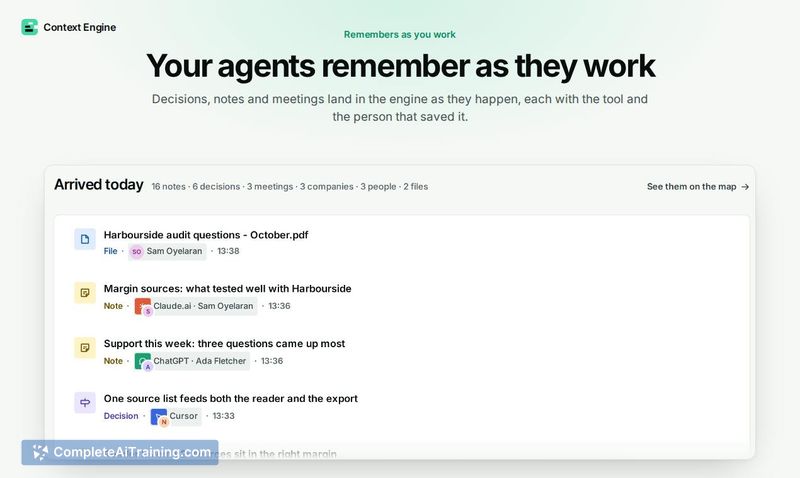
Context Engine tackles a specific coordination problem: when multiple AI agents and people collaborate, they often operate from different sets of information. The tool creates a single repository where agents write what they learn or decide, and humans can inspect that same record. This review examines what's available at launch and where the tool's boundaries lie.
Key Features
- Unified memory that AI agents including Claude, ChatGPT, Cursor, and Claude Code write to during their work sessions
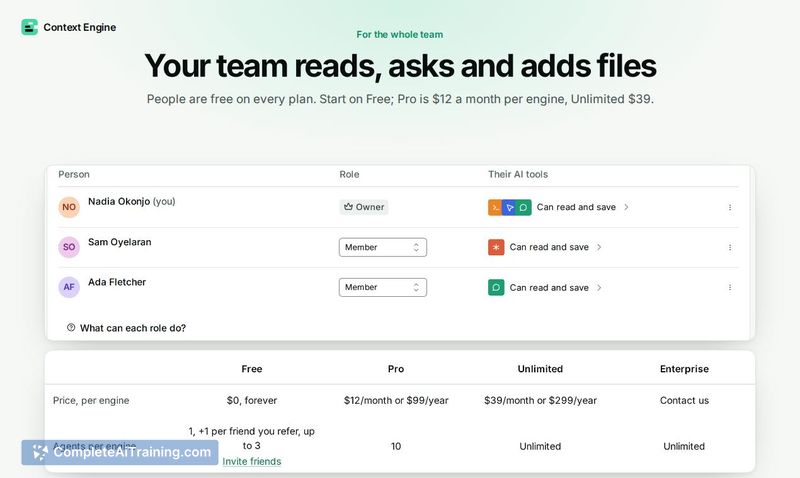
- Human team access for reading stored context, querying the knowledge base, and uploading files
- Free starter tier that lets teams begin without upfront payment
- 50% discount for 3 months available at launch
Pricing and Value
The tool is free to start. A launch promotion offers 50% off for 3 months, though the full pricing structure after the promotional period is not yet defined on the product page. The free tier lowers the barrier for teams wanting to test whether shared agent memory fits their workflow.
Pros
- Reduces the fragmentation that occurs when each AI agent maintains its own separate context
- Gives human team members visibility into what agents have recorded, rather than treating agent memory as a black box
- Works with several commonly used AI tools out of the box
- Free tier means teams can evaluate the approach without committing budget
Cons
- No built-in guardrails or review workflows for catching incorrect or stale agent contributions before they become shared team knowledge
- Lacks provenance tracking or decay mechanisms that would help teams identify when an agent's saved context might be outdated
- Not well suited for teams that want different AI agents to work from separate, independent contexts to avoid confirmation bias during review tasks
Context Engine fits teams where multiple AI agents handle sequential or overlapping work and humans need to audit what the agents recorded. It's less helpful when the goal is independent agent review, since sharing the same memory can cause later agents to align with earlier decisions rather than challenge them. Teams that want curation controls or decay logic for agent-written content will find those capabilities absent at launch.