AI tool
CrawlForge MCP
CrawlForge MCP is an MCP server that gives AI agents reliable web access through 31 tools for scraping, stealth browsing, and multi-source research. It is for developers who need their agents to extract and process web content without sending page...
About CrawlForge MCP
CrawlForge MCP is an open-source MCP server that equips AI agents with 31 web tools for scraping, searching, crawling, and extracting structured data. It supports stealth-mode browsing, persistent browser sessions across calls, and multi-source research. The server can be added to Claude Desktop, Claude Code, or Cursor with a single npx command, and it delivers page content as clean markdown or JSON.
Review
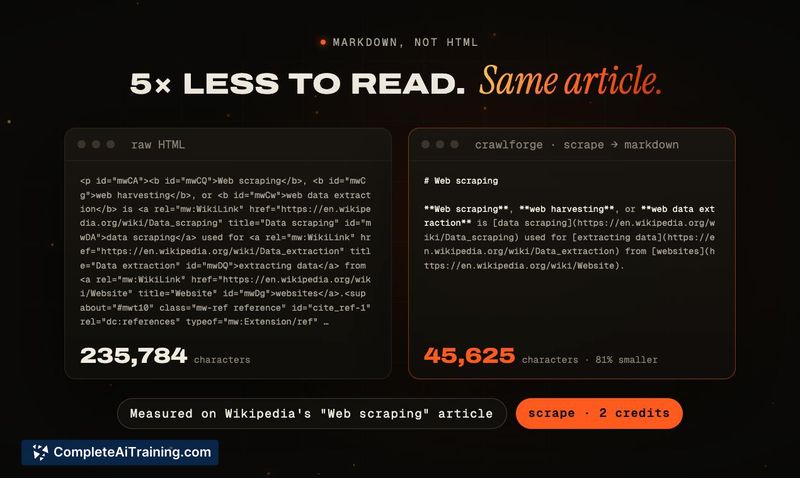
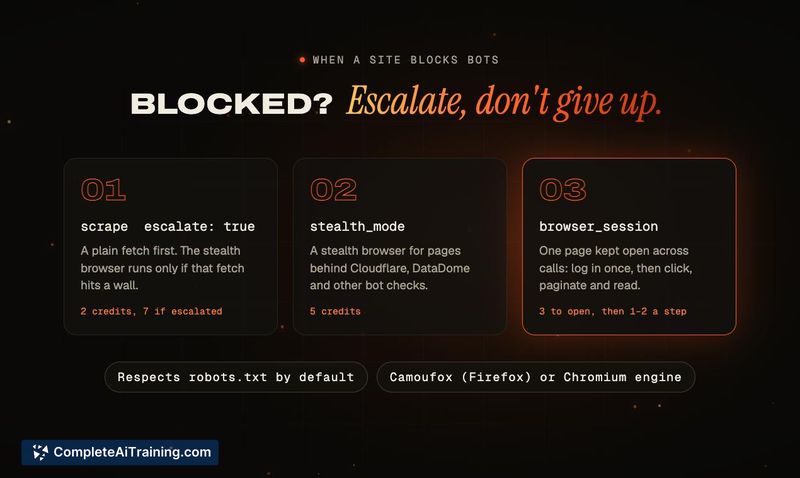
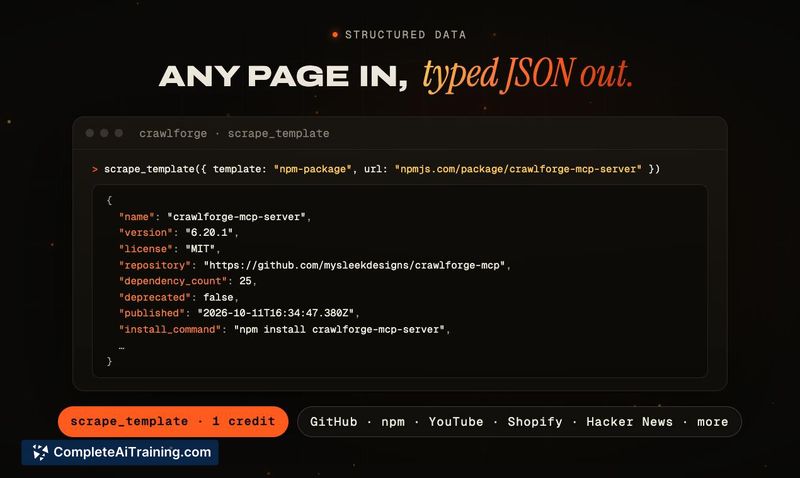
CrawlForge MCP packages a full web interaction stack into a single MCP server. Instead of wiring together separate APIs for scraping, headless browsing, and content cleaning, developers get a unified toolset their AI agents can call directly. It's a focused utility, built and tested primarily in Claude Code, with over 1,100 commits from a solo maker.
Key Features
- 31 MCP-native tools covering page scraping, web search, crawling, structured data extraction, and stealth browsing.
- Persistent browser sessions that survive between agent calls, reducing repeated setup work.
- Multi-source research capability that pulls and synthesizes information from several URLs in one go.
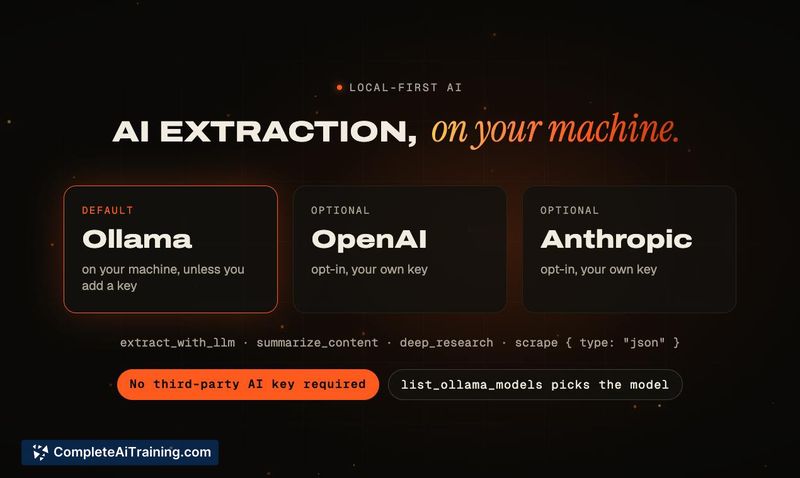
- Local LLM extraction via Ollama by default - page content doesn't need to leave the user's machine for summaries or structured output.
- One-command setup: npx -y crawlforge-mcp-server plus a free API key from crawlforge.dev.
Pricing and Value
Pricing follows a pay-per-use credit model, starting at 1 credit per call. New users receive 1,000 free credits with no credit card required. Paid plans include monthly and yearly subscriptions, one-time credit packs, and an auto-recharge option. All payment processing runs through Stripe, with webhook-based credit grants that include deduplication to prevent double-crediting. Exact plan tiers and per-credit costs beyond the free allocation are not specified on the launch page.
Pros
- Single MCP server replaces multiple separate services (scraping API, headless browser, anti-bot handling, content cleaner).
- Free tier lets users test the full toolset on their own sites before committing to a paid plan.
- LLM extraction defaults to a local Ollama model, keeping sensitive page data off third-party servers.
- Atomic Postgres updates for credit charges prevent balance errors under parallel agent traffic.
- Serverless architecture on Vercel and Neon means no database servers or infrastructure for the user to manage.
Cons
- Roadmap items are not detailed on the launch page, so the future direction beyond the current 31 tools is unclear.
- The tool is tightly coupled to the MCP ecosystem - teams not using MCP-compatible clients won't benefit from it.
- Not well suited for users who need a traditional REST API for web scraping outside of an AI agent workflow; the tools are designed for agent consumption, not direct HTTP endpoints.
CrawlForge MCP fits developers who already work inside the MCP client ecosystem - particularly Claude Code and Cursor users - and want their AI agents to interact with live web pages without assembling a custom scraping stack. The local extraction option makes it relevant for work with sensitive or proprietary page content. Teams that don't use MCP-compatible tools, or that need a standalone scraping API, will find it less applicable.