AI tool
The Brains
The Brains turns public talks, essays, and interviews from founders and investors into MCP servers that an AI can search. It provides answers with direct links to what each person actually said, for anyone who wants source-backed product advice.
About The Brains
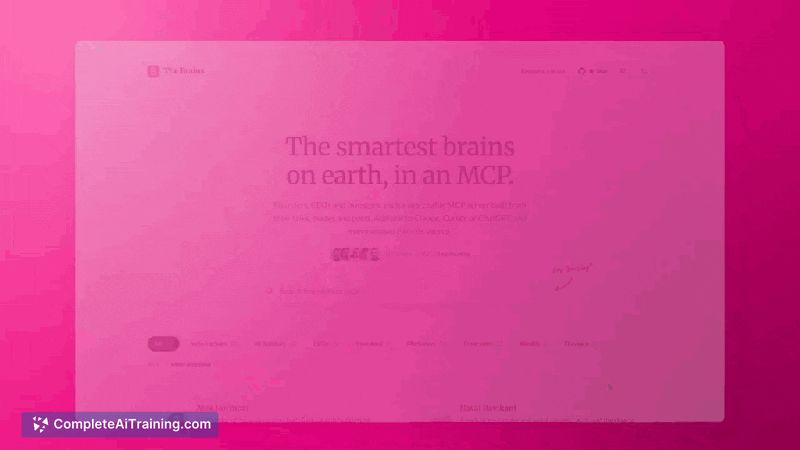
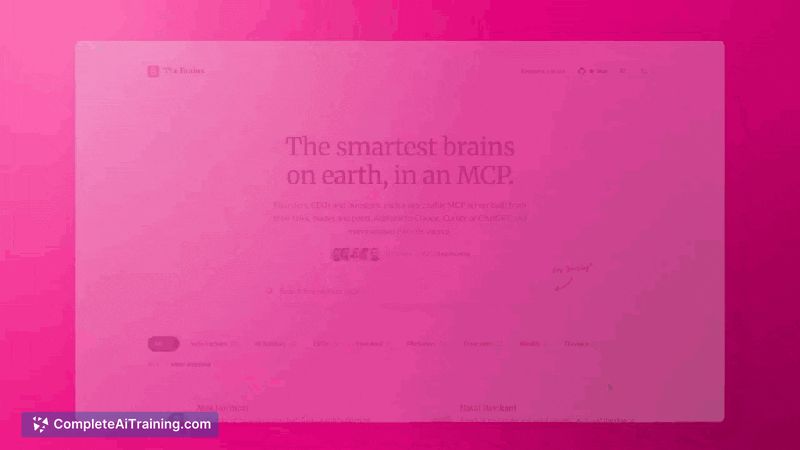
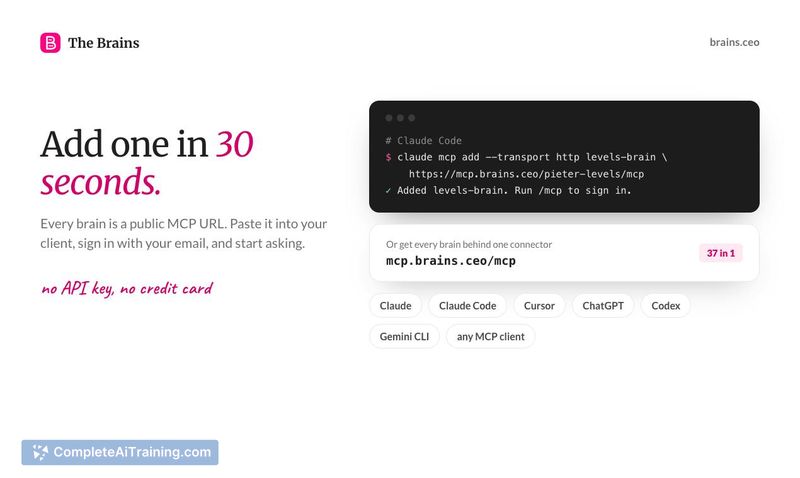
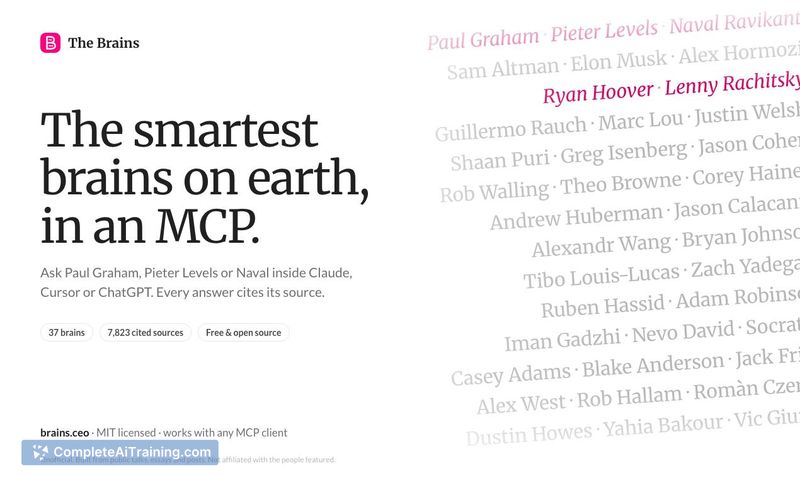
The Brains is an open-source tool that converts the public talks, essays, interviews, and social media posts of founders, CEOs, and investors into searchable MCP servers. Each "brain" can be queried through AI clients like Claude, Cursor, ChatGPT, or Codex, and every response includes a direct citation linking back to the source material. The project currently contains 37 brains and is released under an MIT license.
Review
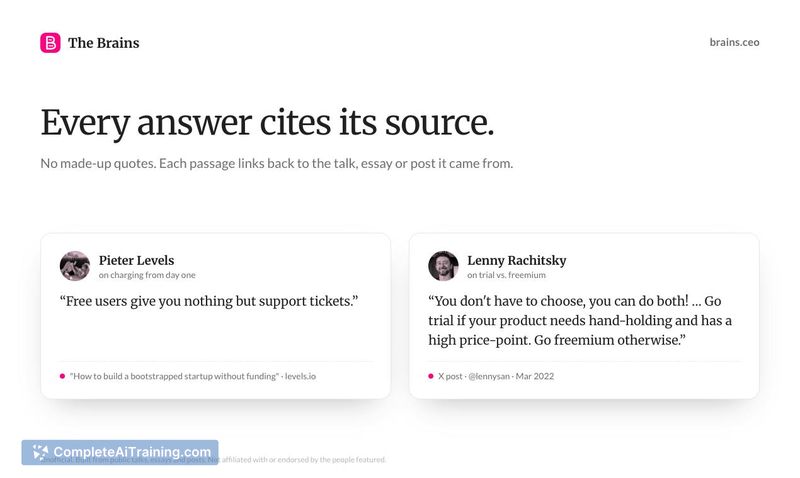
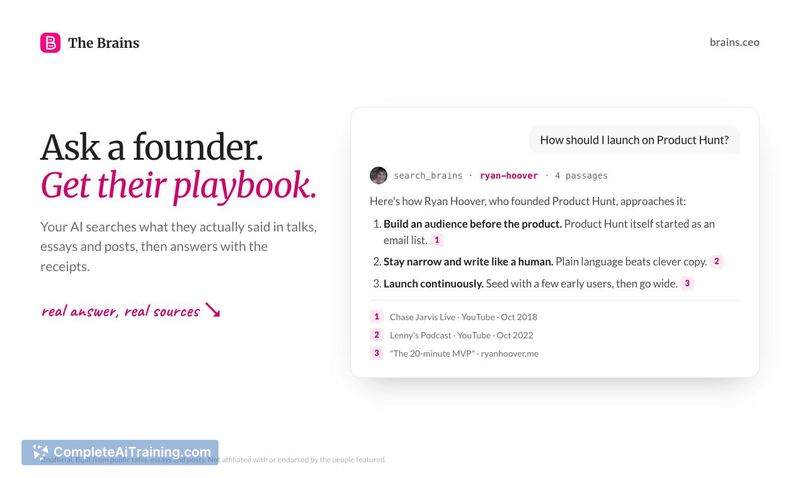
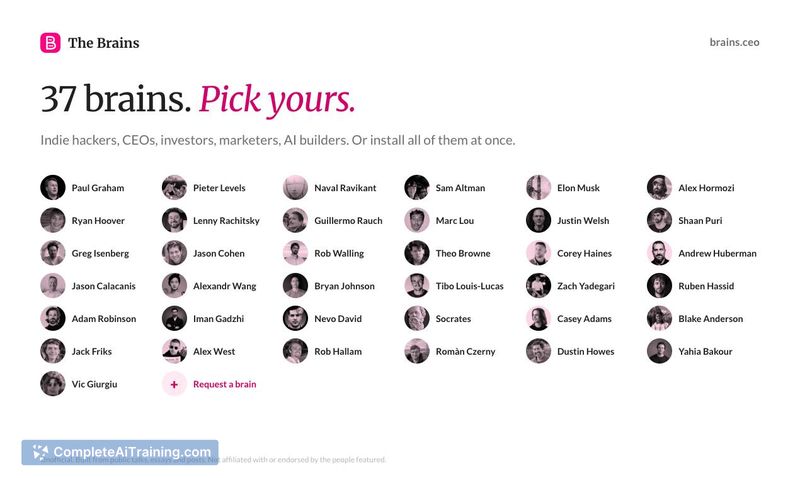
The Brains addresses a specific friction point when using AI for product or business advice: distinguishing between what a known figure actually said and what a language model generates as plausible-sounding filler. By structuring public statements into an MCP server format, it lets an AI query a constrained corpus of attributed material rather than relying on general training data. The tool is unofficial, built entirely from public content, and the maker has stated that individuals can request corrections or removal of their brain.
Key Features
- MCP server endpoints for each of the 37 brains, with a single connector URL available for querying all of them at once.
- Cited answers that quote the original source and include a link, so users can verify context and publication date.
- Compatibility with Claude, Claude Code, Cursor, ChatGPT, Codex, and any other MCP client.
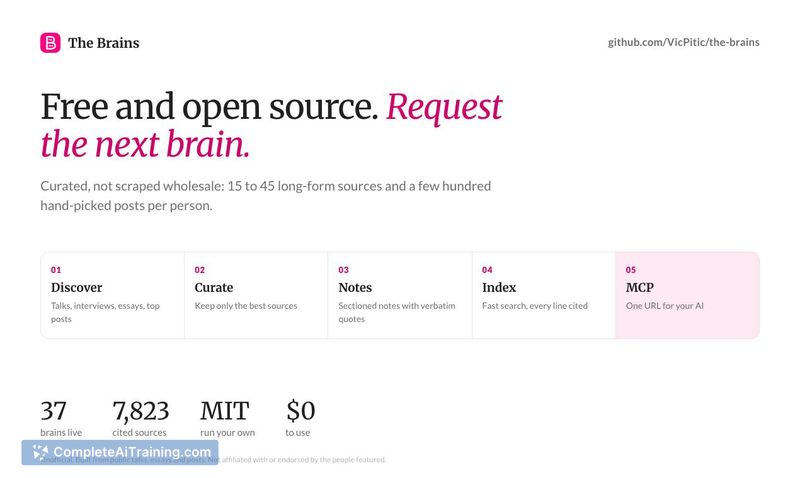
- MIT-licensed codebase that allows self-hosting or building custom brains from public material.
- Pipeline automation using Claude Code to select sources, write cited notes, and build brain manifests.
Pricing and Value
The Brains is free to use. The code is available under the MIT license, and users can run it themselves at their own cost. The maker has disclosed that scraping for the first 10 brains cost approximately $3.50 total via Apify, and the service runs on a single Railway service plus Postgres. No paid tiers, credits, or subscription fees exist for the hosted version at this time.
Pros
- Every answer links to its source, making fact-checking straightforward.
- Works inside tools many developers and founders already use, including Cursor and Claude Code.
- Self-hosting is possible since the entire project is open source under MIT.
- Adding a new brain requires no API credits-Claude Code runs the build pipeline on a flat subscription.
- Single connector URL reduces setup friction when you want to query across multiple brains.
Cons
- The corpus is limited to 37 brains, which narrows the range of perspectives available for any given question.
- Contradictory statements from the same person over time can both appear with valid citations, requiring the user to weigh the date of each source.
- The tool is not well suited for users who need private, proprietary, or non-public knowledge-it only indexes what is already publicly available.
The Brains fits scenarios where a founder or developer wants to reference specific, attributed opinions from a known set of tech and startup figures directly inside their coding or writing environment. It's less useful for broad market research or for topics where the 37 included individuals have little public commentary. The open-source nature means teams with niche needs can fork the project and build brains from their own curated sources.