AI tool
EkLine
EkLine analyzes how AI search tools answer buyer questions about your product, identifies gaps in your content across websites, docs, and help centers, then proposes and drafts fixes. It is for go-to-market and product teams who want to improve th...
About EkLine
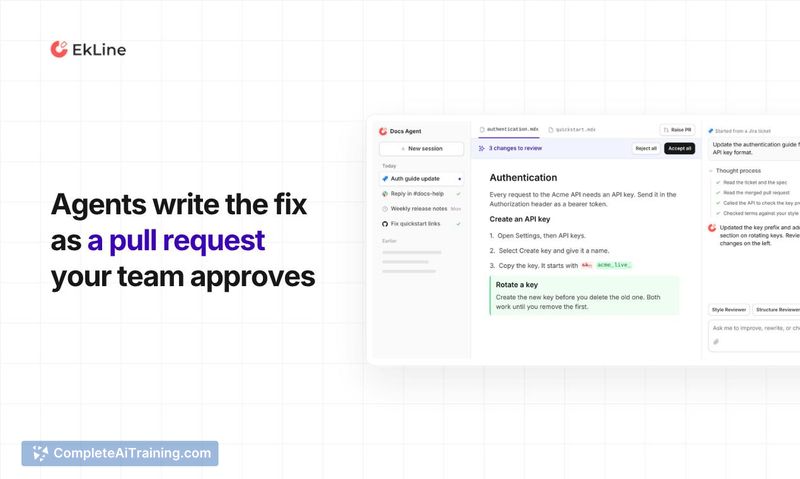
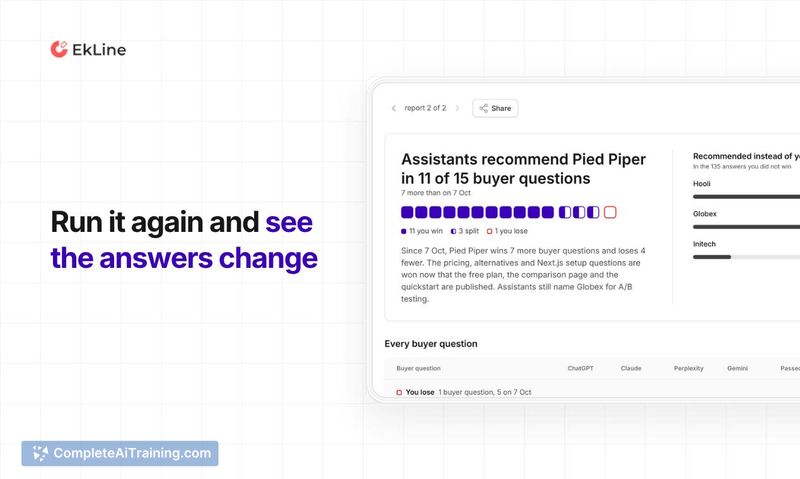
EkLine is a tool designed for API-first companies and developer tool makers who want to understand and improve how AI models describe and recommend their products. Its agents audit websites, documentation, GitHub repositories, and community content to identify gaps where AI misunderstands or can't implement a product correctly. The platform then generates code-grounded fixes as pull requests for team approval and retests AI responses to measure what changed.
Review
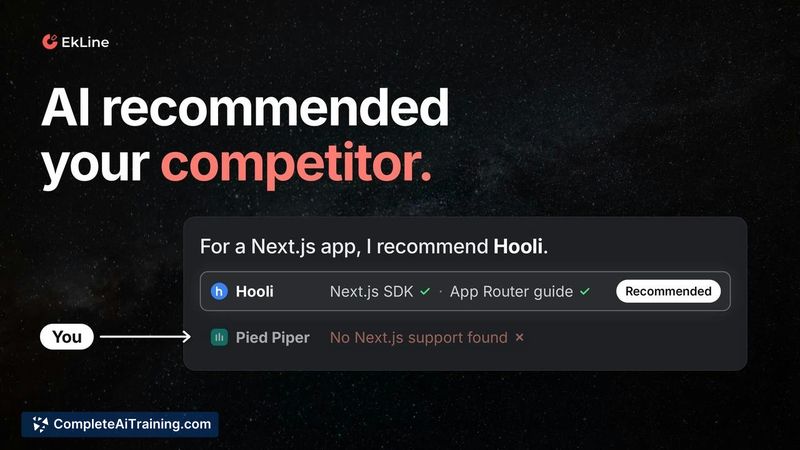
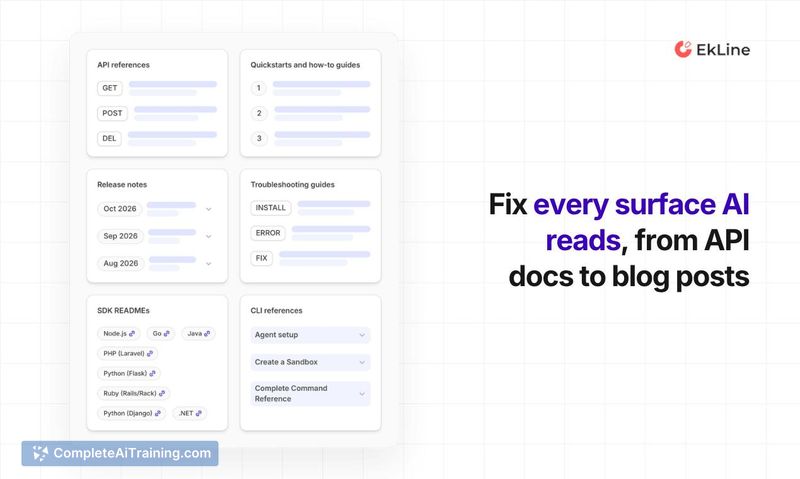
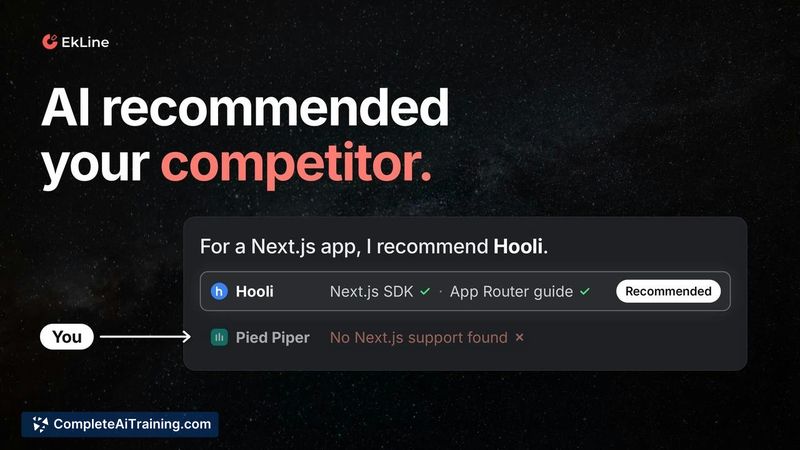
EkLine addresses a specific problem that's grown with the rise of AI-assisted development: your buyers ask ChatGPT which tool to use, then ask Cursor or Claude Code to build with it. If your docs are stale or your SDK examples are outdated, the AI produces broken code and the developer blames your product. EkLine's approach is to audit your entire public surface area-website, docs, GitHub, community threads-and show you exactly what AI sees, then help you fix it.
Key Features
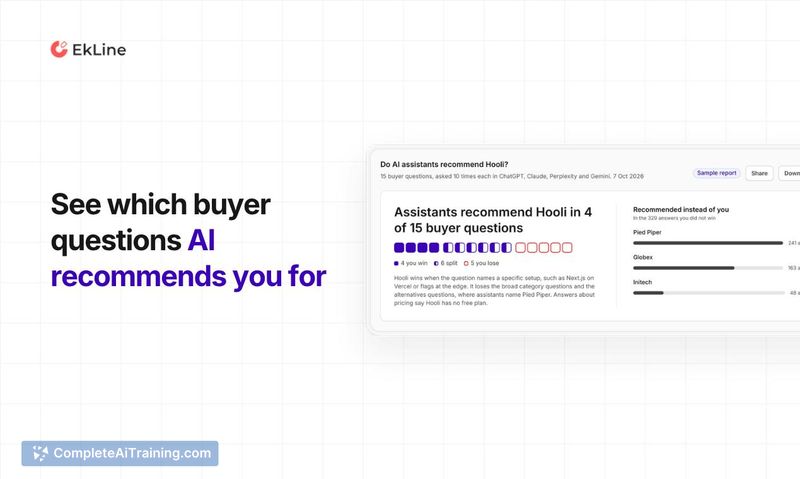
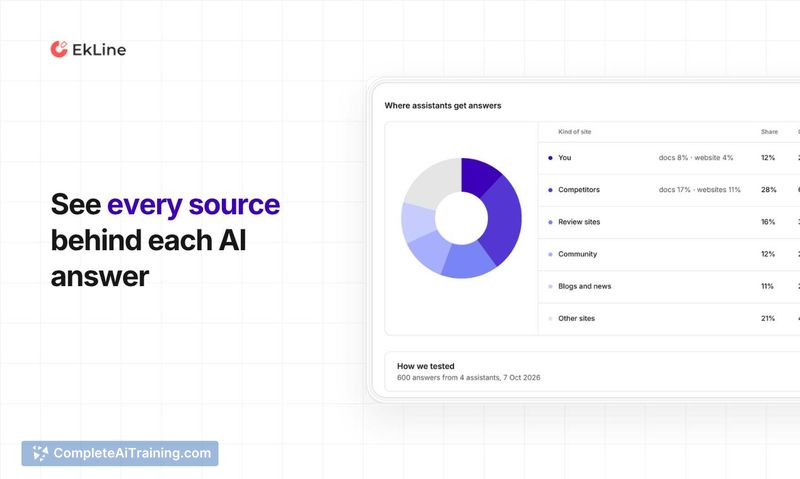
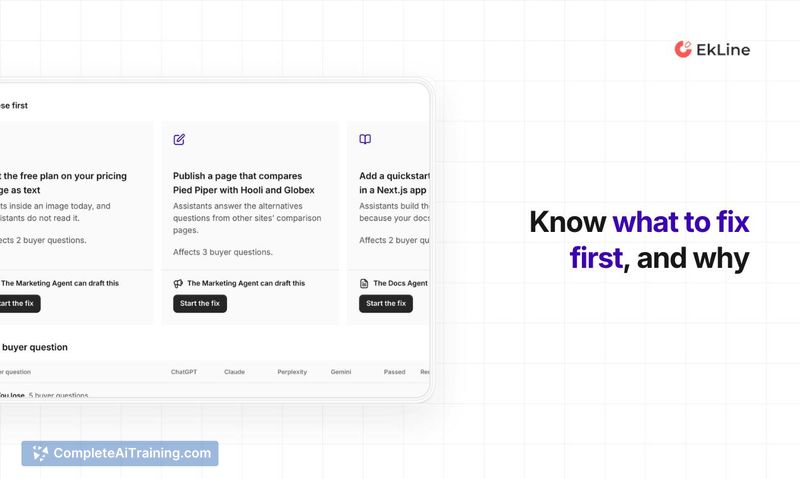
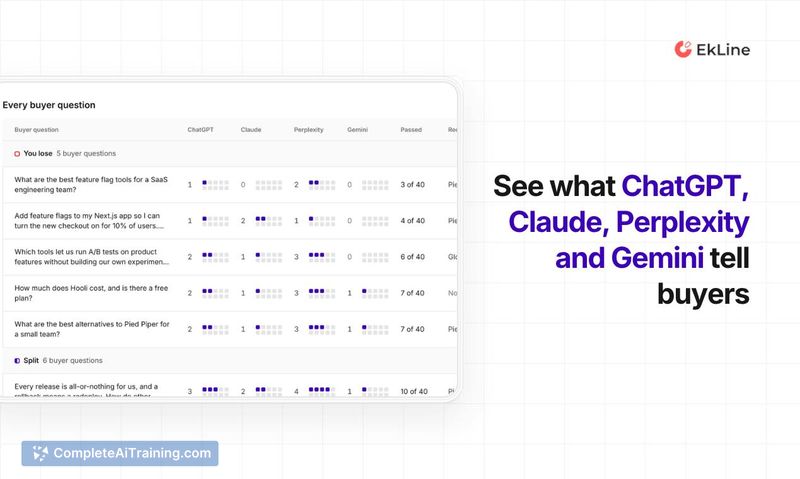
- AI Answer Auditing: EkLine asks AI the questions your buyers ask and shows every source behind each answer, including sources you don't own like Reddit threads and comparison posts. It identifies gaps and ranks what to fix first.
- Coding Agent Test: The platform gives Claude Code and Codex a real task with your product-like a first integration-and checks whether the agent finished, whether your steps worked in the order written, and where it hit contradictions.
- Docs Drift Detection: When a PR changes your SDK, EkLine reads the diff and checks it against your documentation. If a code sample no longer matches, it comments on the PR or opens a docs PR with the fix.
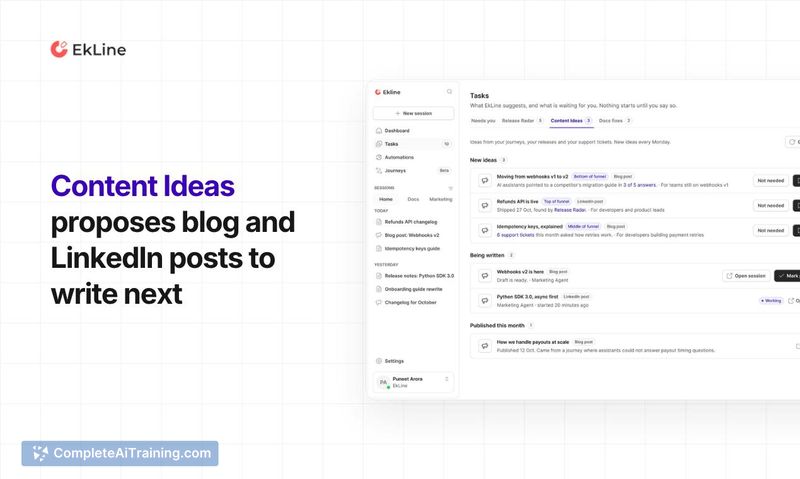
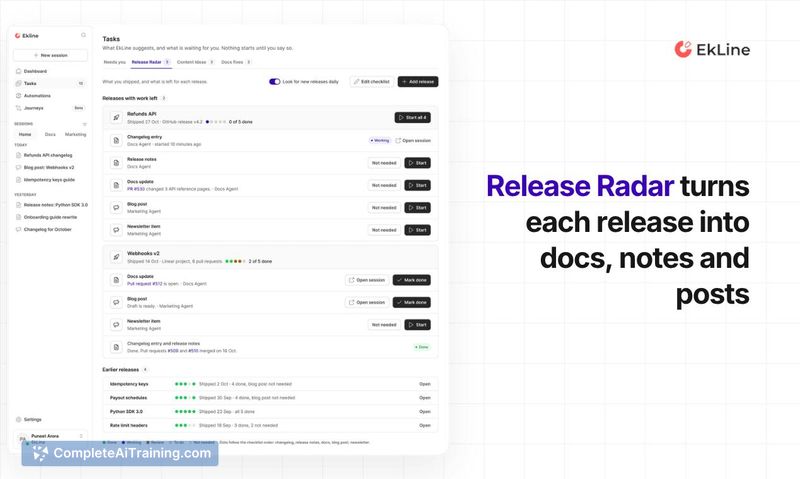
- Release Radar: A feature that reads what your team merged and released each day, then lists what each feature needs-changelog entry, docs update, blog post. You pick one and an agent drafts it.
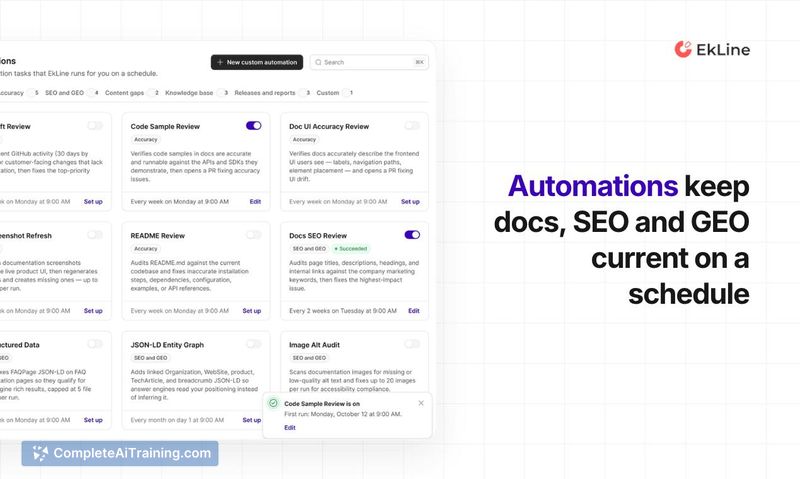
- Code Sample Review: A scheduled automation that checks code samples against the current SDK and API version, opening a PR when something is behind. EkLine runs this on their own docs and reports catching samples that no longer matched their CLI.
Pricing and Value
EkLine launched with a $50 credit for new sign-ups using a work email, with no code required. The pricing model beyond these initial credits is not yet defined on their current Product Hunt launch page. The platform runs on usage-based billing powered by Autumn. A free report on how AI recommends your product is available upon sign-up.
Pros
- Shows the exact sources AI uses to answer buyer questions, including third-party sites you can't directly control.
- Generates fixes as pull requests that reference your actual code, Jira issues, and Notion docs, so changes match what your product does today.
- Release Radar automates the tedious work of tracking what documentation needs updating after each merge.
- Code Sample Review catches outdated examples that look correct on the page but send developers down the wrong path.
- Reports run on public-facing content without requiring access to your codebase, so you can get initial insights quickly.
Cons
- Agents currently run on EkLine's hosted models only. Teams that require AI processing within their own network or on locally hosted LLMs will need to wait for that capability, which is described as something EkLine would "like to build with a team that needs it."
- The platform is not well suited for companies without a public API, SDK, or developer-facing documentation-its entire auditing process depends on these surfaces existing.
- Pricing beyond the initial $50 launch credit remains unclear, making it difficult for teams to forecast costs for ongoing use.
EkLine fits teams where marketing owns the website, engineering owns the docs, and nobody owns the answer AI gives a buyer. It's most relevant for API-first companies and developer tools whose documentation drifts from the product as engineers ship changes. If your team already struggles to keep code samples and quickstart guides current, the drift detection and automated PR workflow address that directly.