AI tool
Gemini 4 Carbon
Gemini 4 Carbon is an AI model for cyber defenders that detects, validates, and remediates software vulnerabilities. It handles uncertainty by flagging missing information and executes multi-step plans reliably.
About Gemini 4 Carbon
Gemini 4 Carbon is a foundation model from Google, described as its next frontier model. The tool concentrates on cybersecurity capabilities, long-horizon task execution, and handling uncertainty by identifying gaps in information before proceeding. It launched this week and is initially rolling out to cyber defenders through the Fairwind Program, with broader access planned for developers, businesses, and consumers.
Review
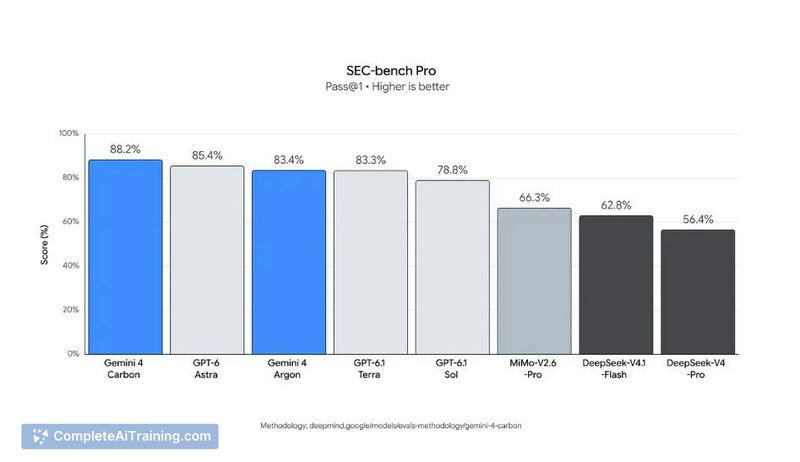
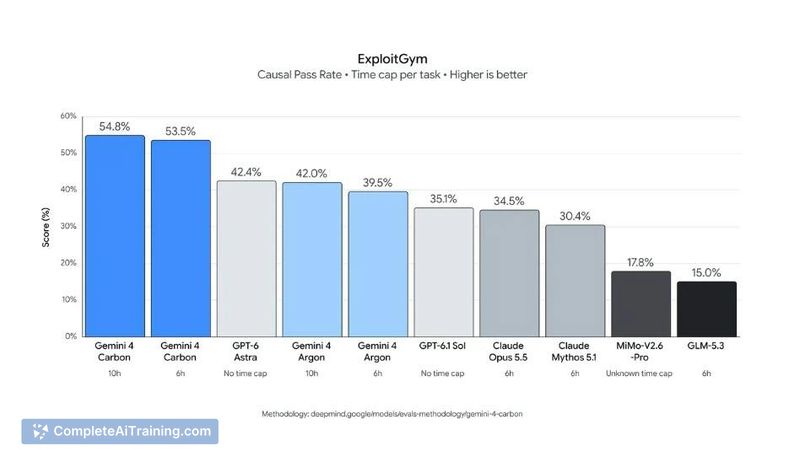
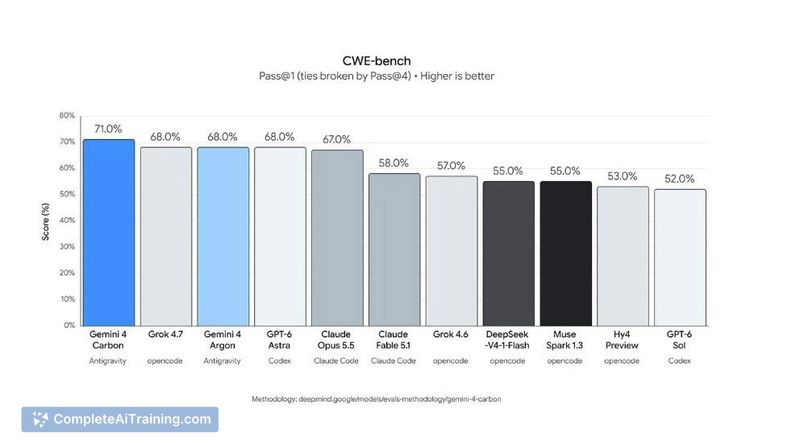

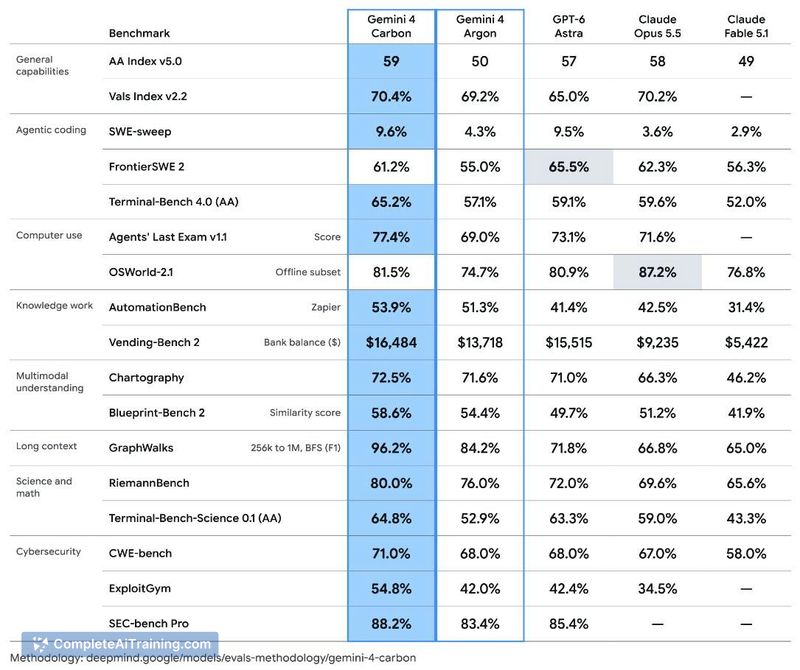
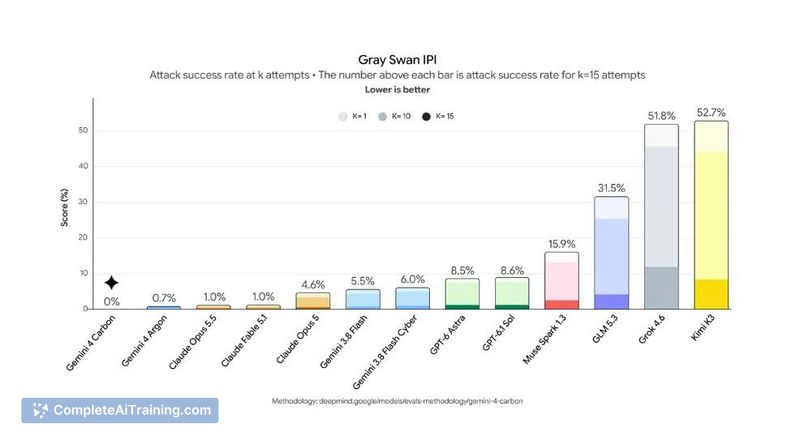
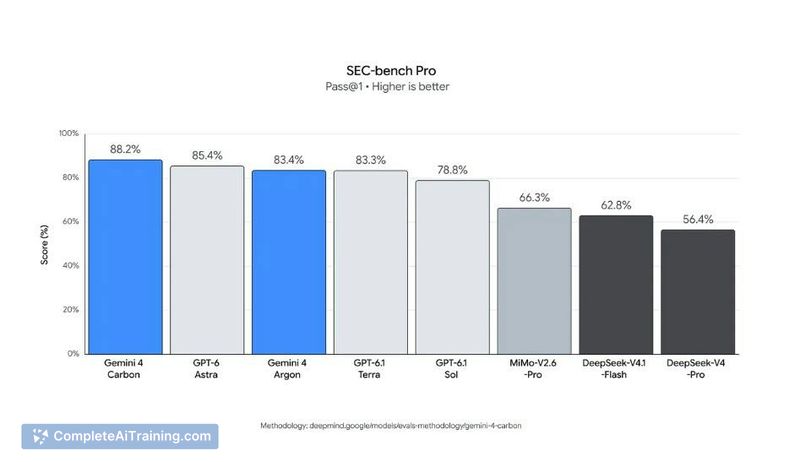
Gemini 4 Carbon arrives with a clear emphasis on security benchmarks and agentic reliability. The published performance data shows 88.2% on SEC-bench Pro, 71.0% on CWE-bench, and a 0.0% attack success rate on Gray Swan's Indirect Prompt Injection Benchmark. Access is currently limited, making hands-on evaluation difficult, but the specification sheet outlines a model built for autonomous execution within defined project boundaries.
Key Features
- State-of-the-art cybersecurity across vulnerability detection, validation, and remediation, as stated in the launch materials.
- Uncertainty handling that flags missing information before acting, rather than proceeding with incomplete data.
- Multi-step plan execution that respects project boundaries, confining actions to the assigned scope.
- 0.0% success rate on Gray Swan's Indirect Prompt Injection Benchmark, indicating resistance to a specific class of adversarial input.
- Long horizon capabilities for tasks requiring sustained reasoning over extended sequences.
Pricing and Value
Pricing is not yet defined. The launch page mentions free options exist, but no specific tiers, credits, or per-token costs have been published. The initial distribution channel is the Fairwind Program, which appears to be a gated access initiative for security professionals. Broader commercial availability and associated pricing details remain on the roadmap.
Pros
- Benchmark scores on SEC-bench Pro and CWE-bench place it competitively in security-focused evaluation categories.
- Behavioral design choices, like pausing to flag missing information, address common failure modes in autonomous agents.
- The indirect prompt injection result of 0.0% suggests targeted hardening against prompt-level attacks.
- Project boundary enforcement reduces the risk of scope creep during multi-step tasks.
- Rollout through a cybersecurity-focused program aligns initial availability with the tool's core strengths.
Cons
- Public access is extremely limited at launch; most developers and businesses cannot test the model yet.
- Pricing structure and general availability timeline are unannounced, leaving procurement planning on hold.
- The tool is not well suited for teams needing a broadly available, general-purpose model that they can integrate immediately without joining a specialized access program.
Gemini 4 Carbon fits organizations running red-team exercises, vulnerability research, or autonomous workflows where scope containment matters. The benchmark results and architectural focus on security make it worth tracking for cybersecurity teams once wider access opens. Teams outside the Fairwind Program, or those with immediate production deadlines, will need to wait for the planned broader rollout.