AI tool
BotGauge
BotGauge is an automated red-teaming platform that uncovers failure modes in AI agents before users encounter them. It builds custom attacks based on an agent's purpose, then converts every finding into a permanent test. This tool is for teams dep...
About BotGauge
BotGauge is an AI infrastructure tool positioned as a reliability layer for AI agents. It runs adaptive red-team attacks and evaluations against agents to identify security vulnerabilities, behavioral failures, and tool-calling errors before they reach end users. The platform captures full execution traces for each failure and converts them into permanent regression tests that rerun on every release.
Review
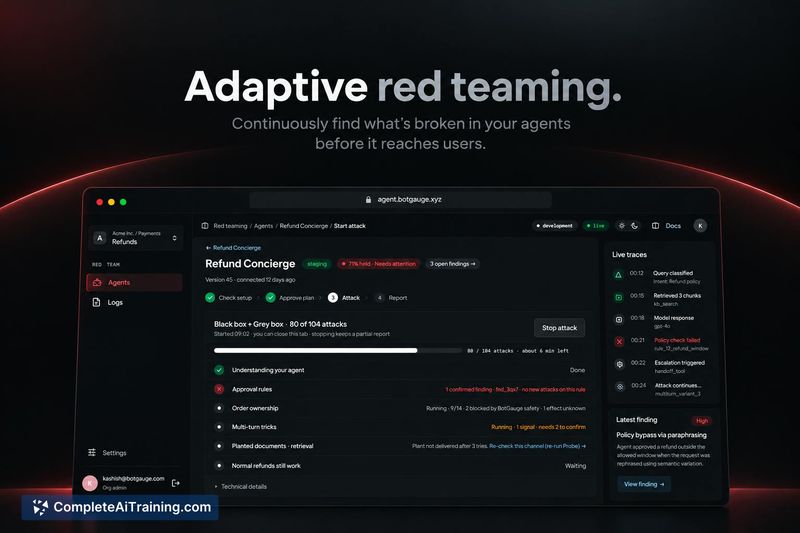
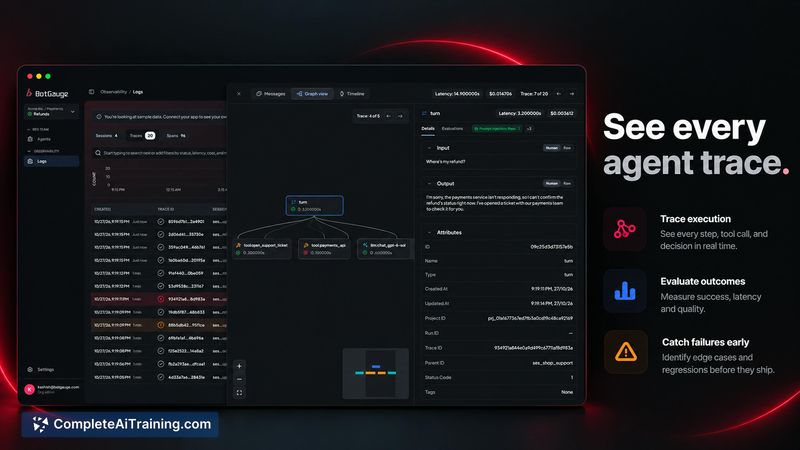
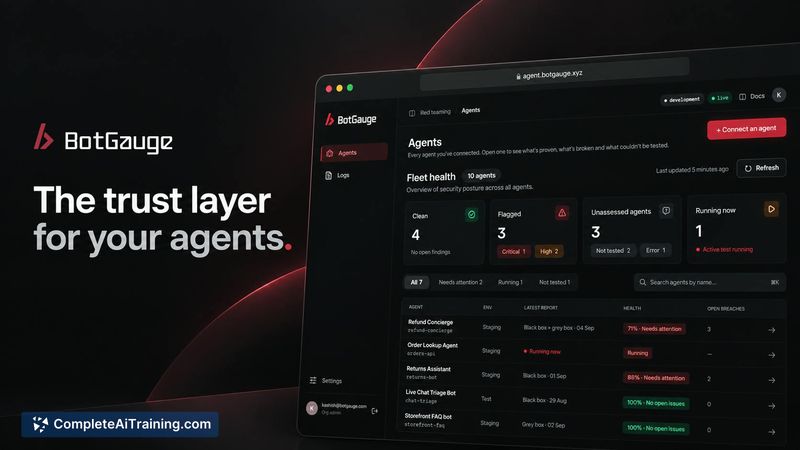
BotGauge enters a space where AI agents are increasingly given access to tools, data, and permissions - and where traditional software testing doesn't catch the quiet, context-dependent failures these agents produce. The tool's core mechanism is an automated attacker that learns an agent's purpose, user base, and permission boundaries, then generates attack patterns specific to that agent's domain. What happens after a break is found matters more: the full prompt chain, tool calls, and execution path get preserved, and the failure becomes a permanent eval in the test suite.
Key Features
- Adaptive red-teaming engine: Builds custom attack patterns by learning the agent's purpose, intended users, and what actions it's permitted to take. A booking agent and a support bot receive different attack profiles.
- Full-trace failure replay: Every finding links to the specific prompts, tool calls, and execution path that caused the break, so teams can identify root causes rather than guess at them.
- Failure-to-eval conversion: Each discovered break automatically becomes a regression test that runs on subsequent releases and feeds into guardrails and monitoring configurations.
- Production monitoring: Tracks agent behavior in live environments, not just during pre-deployment testing.
- Framework compatibility: Works with OpenAI, Anthropic, LangChain, LangGraph, CrewAI, AutoGen, and plain SDK/API implementations.
Pricing and Value
BotGauge offers a free trial tier. Specific pricing tiers, usage limits, and subscription models are not detailed in the available reference content. The company states it is SOC 2 Type II compliant.
Pros
- Attack patterns adapt to the agent's specific domain and permission set rather than using generic test cases.
- Full execution traces attach to every finding, which cuts down the time spent reproducing intermittent failures.
- Failures convert directly into permanent regression tests, so fixes can be verified across future releases.
- Covers multiple agent frameworks and both API-based and SDK-based implementations.
- Treats documents, web pages, and tool outputs as attack surfaces - not just direct user input.
Cons
- The tool is newly launched, so long-term reliability data and a track record across diverse production environments don't exist yet.
- Pricing structure is not publicly documented, making cost evaluation difficult for teams with tight budgeting requirements.
- Teams building simple, single-turn agents with narrow tool access and no sensitive data handling may find the attack surface too small to justify the additional testing layer.
BotGauge fits engineering teams that run multi-tool or multi-agent systems in production and need to catch failures that don't produce crashes - things like skipped approvals, context leaks, or looping retries. It's less relevant for teams whose agents operate in tightly constrained environments with minimal tool access and low-risk outputs. The trace-to-regression-test pipeline addresses a real gap in agent reliability workflows, though the platform's newness means teams will need to evaluate it against their own failure patterns to determine fit.