AI tool
Hyperresearch
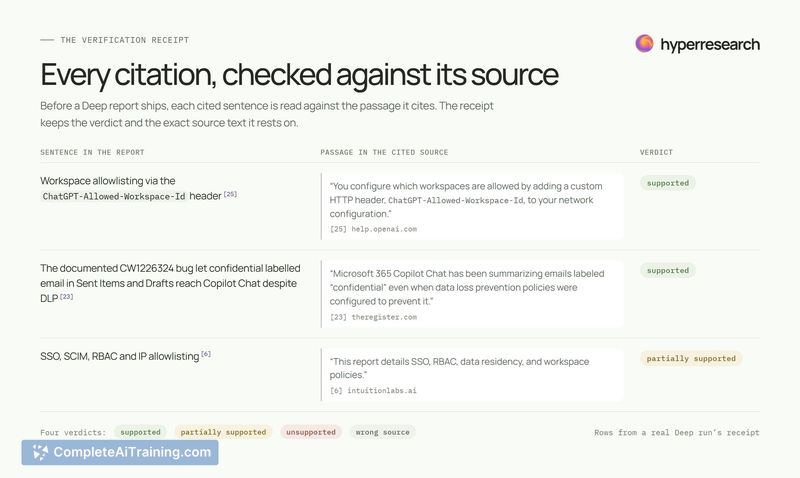
Hyperresearch runs deep research reports across 150 to 200 sources, checking each cited claim against its source, and keeps those sources in a searchable vault. It is for researchers and developers who need durable, verifiable answers.
About Hyperresearch
Hyperresearch is a research agent that runs deep searches and returns cited reports. Each cited claim is checked against its source, and every source a run reads stays in a searchable vault. The project began as an open-source repo (MIT licensed) and launched publicly this week. It combines four AI search engines and 40+ other data sources.
Review
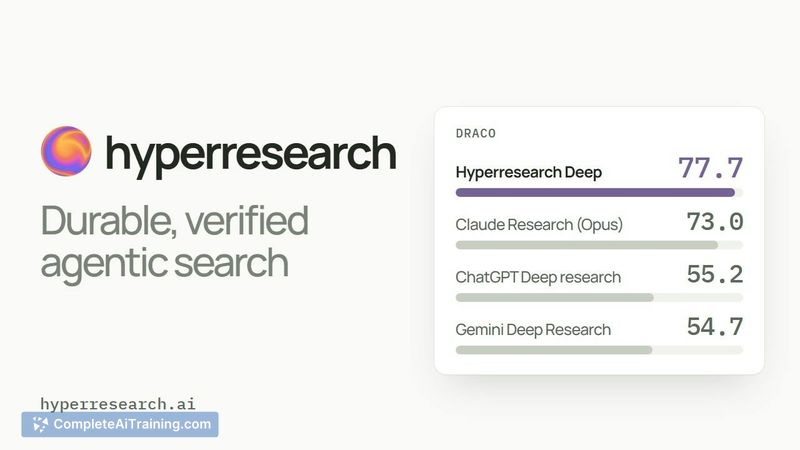
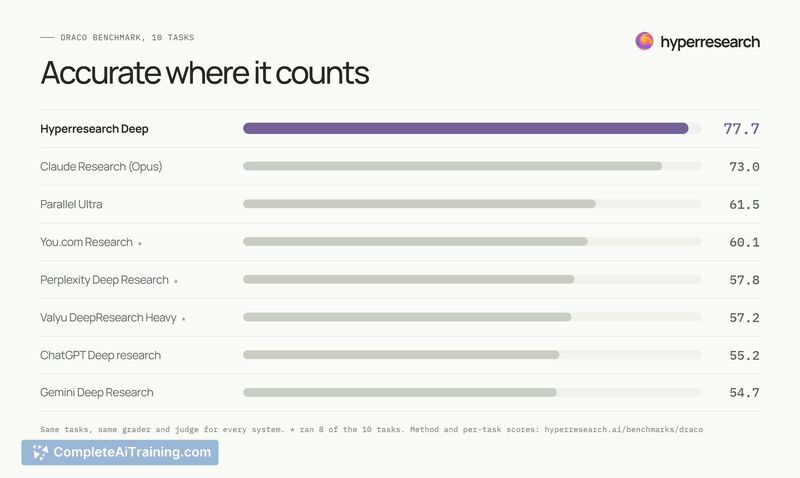
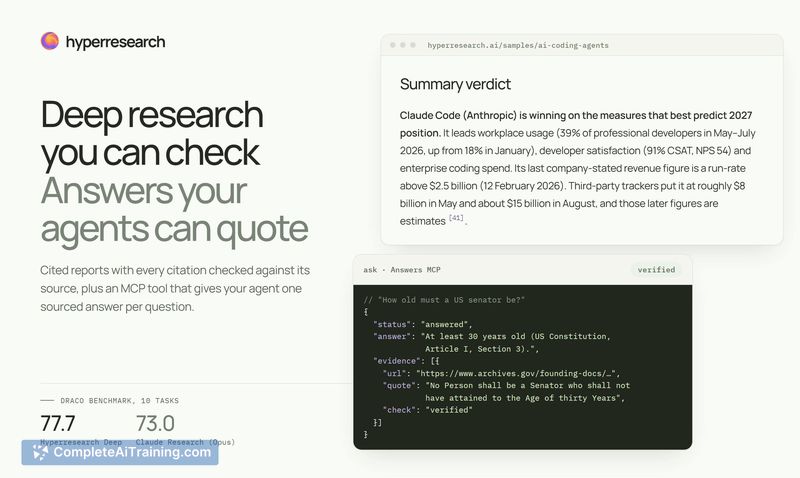
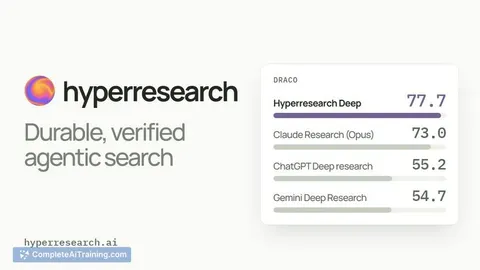
Most research agents return an answer and leave you to trust it. Hyperresearch takes the opposite route: it keeps the evidence, checks each cited claim against the page it came from, and says "not found" rather than guessing. That approach has measurable backing, and the maker reports first place on the DRACO deep research benchmark. Note that the benchmark figures below come from the maker's own claims, not an independent test.
Key Features
- Research reports. Deep Search runs for 3 to 5 hours across roughly 150 to 200 sources. Every cited claim is double-checked against its source before the report is released.
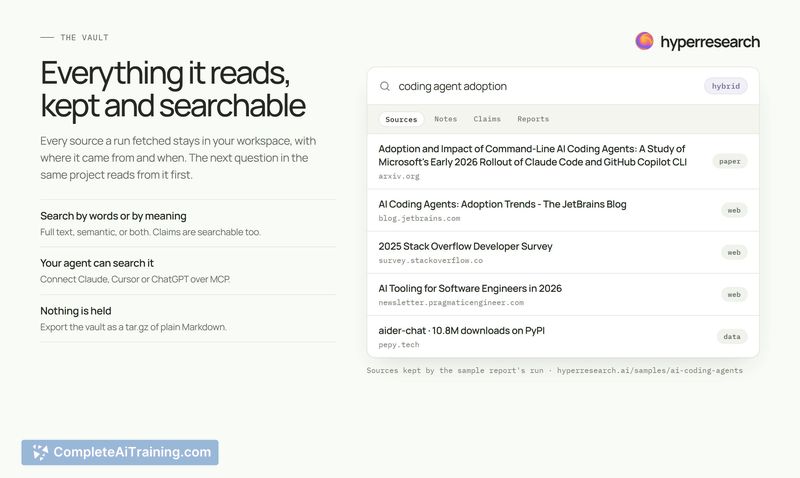
- Source vault. Sources a run reads remain in your workspace, searchable by words or by meaning, from the console or through MCP.
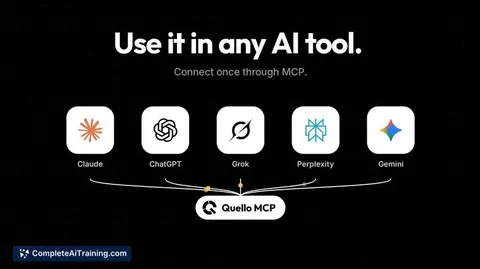
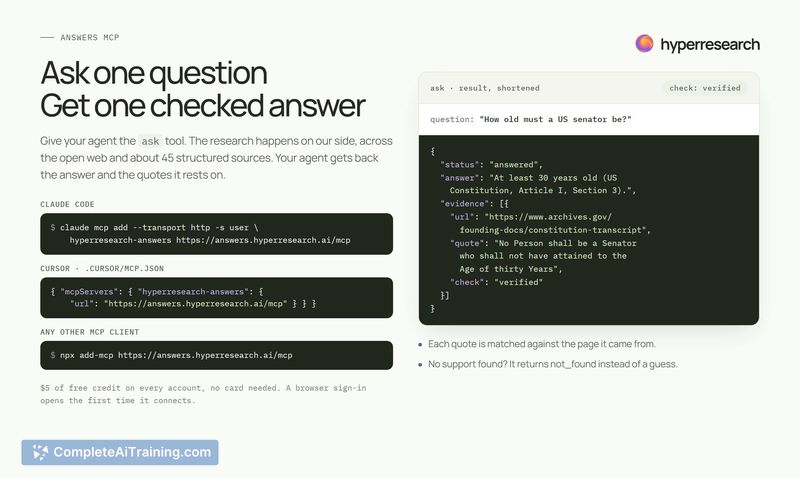
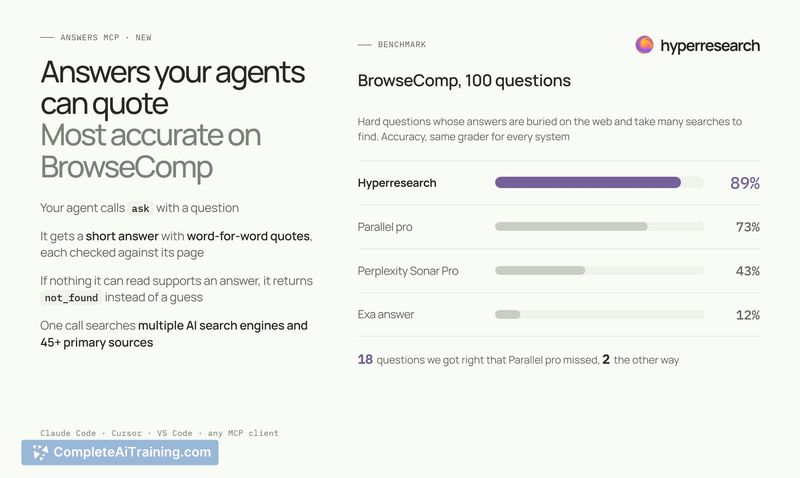
- Answers MCP (new this week). Add hyperresearch-answers to Claude Code, Cursor or any MCP client. The ask call returns a short answer with word-for-word quotes checked against their pages, or not_found instead of a guess. The search call returns ranked sources with passages copied verbatim.
- API access. The same answer and search calls are reachable through an API, aimed at agents that need a lookup with a verifiable result.
- Multi-provider coverage. Four AI search engines and 40+ other data sources are combined, on the reasoning that each provider sees a different slice of the web and overlapping them covers gaps.
Pricing and Value
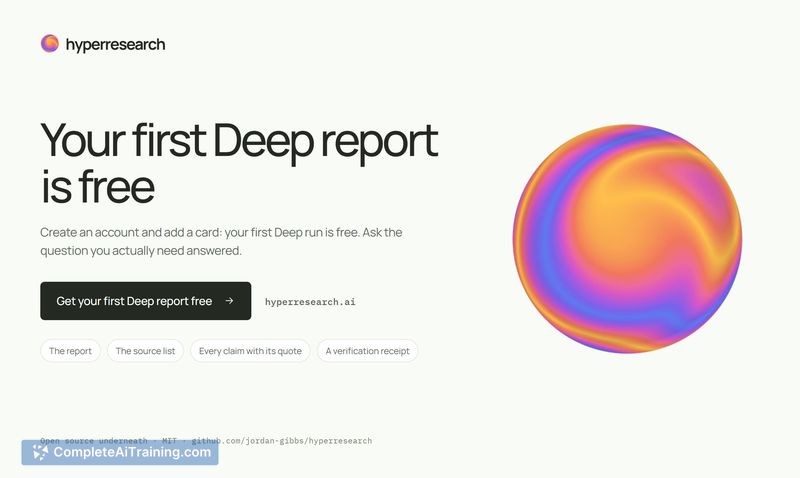
Every account gets $5 of free credit with no card required. Adding a card makes your first Deep run free. No subscription tiers or per-run prices are listed on the page, so the cost of regular Deep Search use is not yet defined. The maker's benchmark claims, if they hold up in your own testing, put Answers at 89% on 100 BrowseComp questions against 73% for Parallel pro, 43% for Perplexity Sonar Pro and 12% for Exa answer. The practical value sits in the vault: a 3-to-5-hour run across 150 to 200 sources isn't wasted, since follow-up questions can build on sources already collected instead of starting over.
Pros
- Every cited claim in a report is checked against its source before release.
- Answers returns not_found rather than a made-up answer when it can't verify a claim.
- The source vault keeps evidence from long runs searchable, so follow-up questions don't repeat the original search.
- Citations resolve to the version of a page the run actually read, per the maker, and sources can be updated afterward through the search API.
- Entry cost is low: $5 of free credit without a card, and the first Deep run is free once a card is added.
Cons
- Deep Search takes 3 to 5 hours per run, which rules out quick lookups; the Answers MCP is the faster path but returns short answers, not full reports.
- Pricing beyond the free credit and first free Deep run isn't published, so ongoing costs are hard to plan for.
- Not well suited to users who want instant, uncited summaries or who won't act on a not_found response; the tool is built for work where every claim needs a traceable source.
Researchers, analysts and developers building agents that need cited, verifiable lookups fit this tool best, particularly when a question justifies hours of search and the evidence needs to stay around afterward. Anyone needing a fast general-purpose chatbot answer should look elsewhere. The benchmark numbers are the maker's own, so run a few of your own lookups through the free credit before committing.