AI tool
Lune
Lune is a connector for ChatGPT and Claude that grounds AI research answers in full-text academic papers. It helps researchers find gaps, brainstorm, design experiments, and write papers backed by top-tier conference literature.

About Lune
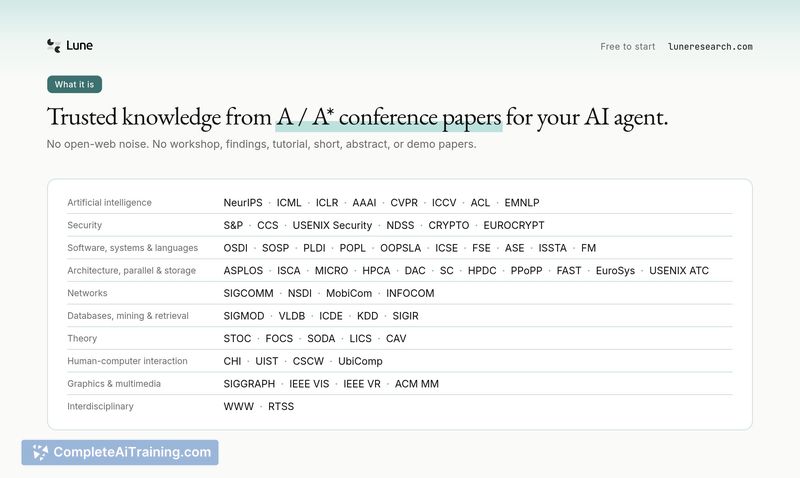
Lune is a search and grounding service that connects AI agents to scientific research. It indexes full-text papers from top-tier academic conferences, including equations and appendices, and lets AI tools retrieve and cite them during research tasks. The tool works as a connector plugin for ChatGPT, Claude, and over 40 other AI applications that support MCP.
Review


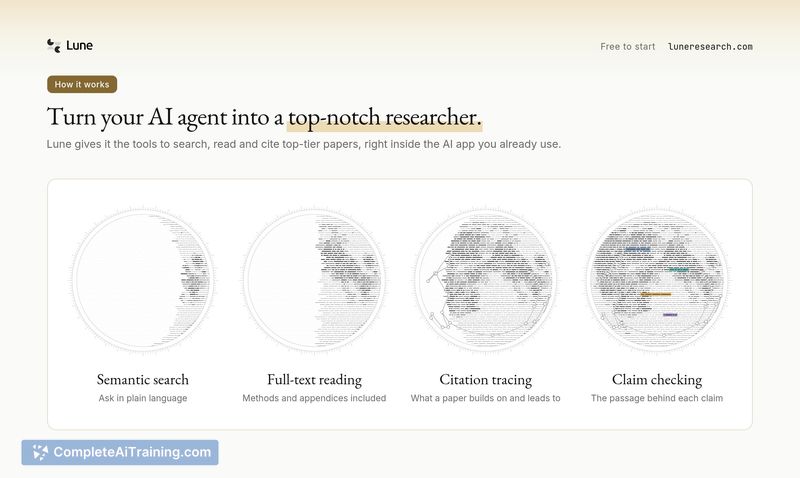
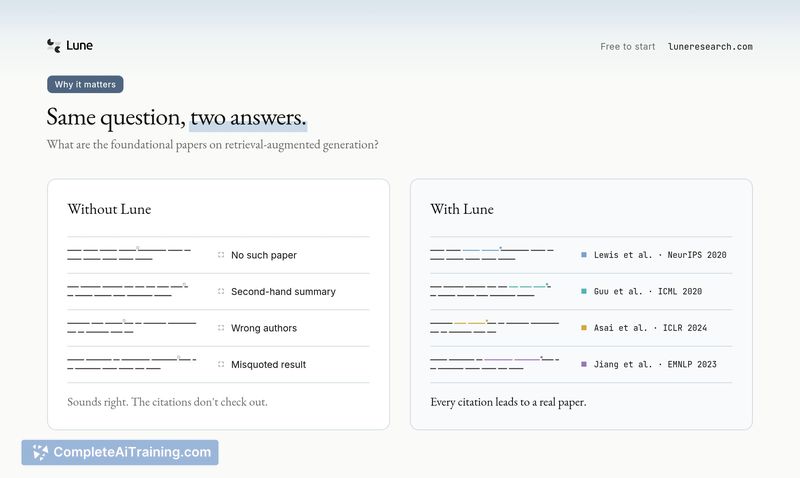
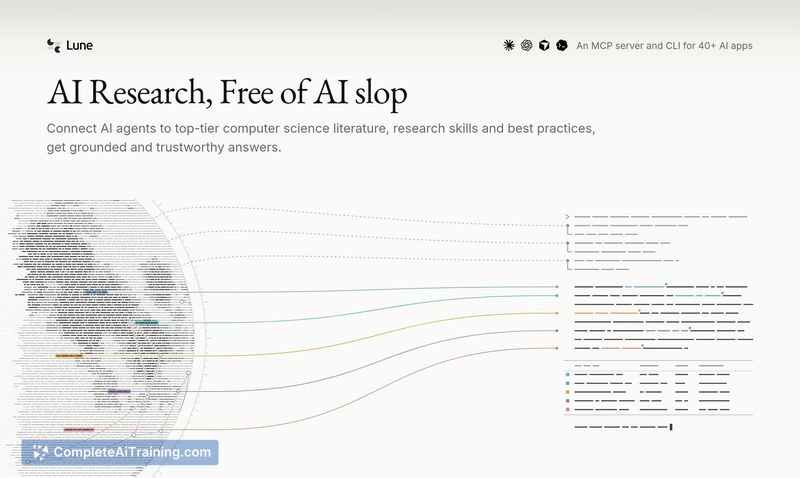
Lune addresses a specific pain point for researchers: AI-generated answers that mix credible findings with unreliable web noise. Instead of asking a general-purpose chatbot to summarize a field, you route the query through Lune, and the AI pulls from its index of conference papers before responding. The result is an answer grounded in identifiable sources, with citations you can check against the actual papers.
Key Features
- Conference paper index. Lune indexes full-text papers from top-tier academic venues, down to equations and appendices, so AI agents can search beyond abstracts.
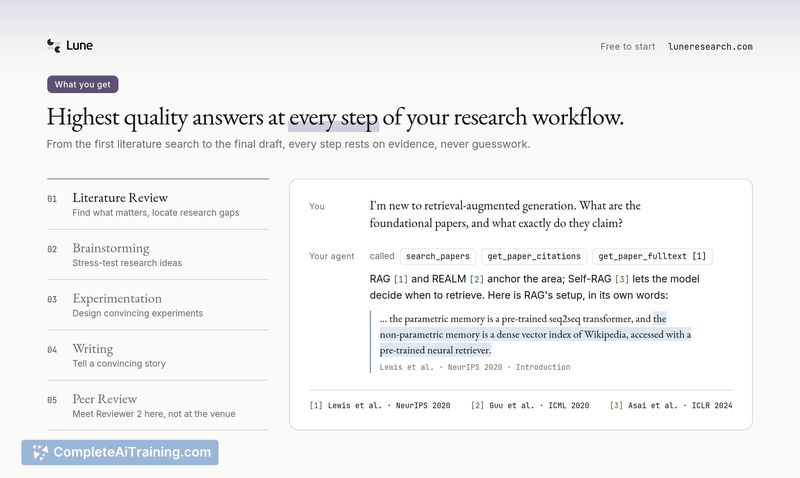
- Grounding service for AI agents. When an AI tool uses Lune, it performs retrieval-augmented generation against the paper index before answering. Each claim can be traced back to a specific paper.
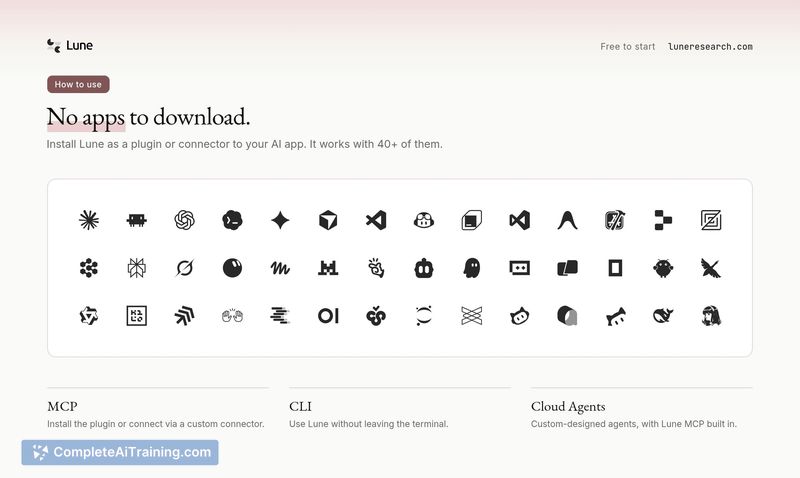
- One-click connector installation. Users add Lune to ChatGPT or Claude through a connector plugin. It also integrates with Cursor, Codex, and other apps via MCP.
- Workflow support across research stages. The tool covers literature review, gap analysis, experiment design, and writing-each step pulling from the same paper index.
Pricing and Value
Lune is free to start. The reference content does not specify paid tiers, usage limits, or future pricing models. For now, new users can access the service without entering payment details.
Pros
- Grounds AI responses in full-text conference papers rather than surface-level web summaries.
- Integrates with widely used AI tools like ChatGPT, Claude, and Cursor without requiring a separate interface.
- Indexes papers down to equations and appendices, which matters for technical fields where key details live outside the abstract.
- Free entry point lets researchers test the grounding quality before committing to any paid plan.
- Over 1,000 researchers already use it daily, indicating a functional product rather than a concept demo.
Cons
- The index is limited to top-tier conference papers. Researchers in fields where important work appears in journals, preprints, or less prominent venues may find gaps in coverage.
- Lune is not well suited for users who need to search across patent databases, industry white papers, or non-academic technical reports.
- Pricing beyond the free tier remains undefined. Teams that need predictable costs for budget planning don't have that information yet.
Lune fits researchers and technical teams who already use AI assistants and want their answers backed by peer-reviewed conference papers instead of generic web content. It makes the most sense for computer science, machine learning, and adjacent fields where top-tier conference proceedings drive the research frontier. If your work depends on journal articles, preprints, or grey literature, the current index may not cover enough of what you need.