AI tool
openring
OpenRing is a self-hosted voice agent platform that speaks Vapi's API, letting you run AI voice calls on your own infrastructure with your own API keys. It is built for developers who want to avoid per-minute platform fees, offering a free local m...
About openring
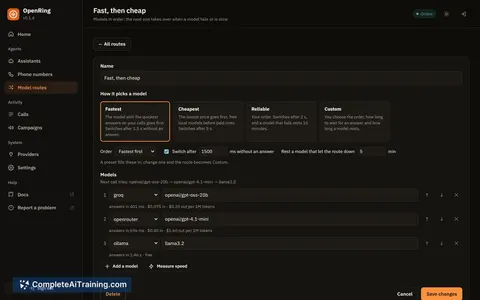
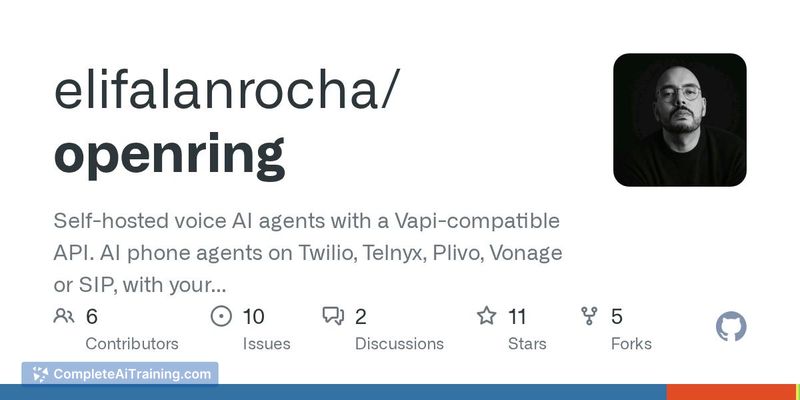
openring is an open-source tool for running voice AI agents on your own infrastructure. It speaks a Vapi-compatible API, so existing clients can switch by changing a base URL. The software handles AI phone agents through Twilio, Telnyx, Plivo, Vonage, or SIP - using your own API keys - and also includes a fully local, free mode that runs on Whisper, Ollama, and Kokoro without per-minute platform fees.
Review
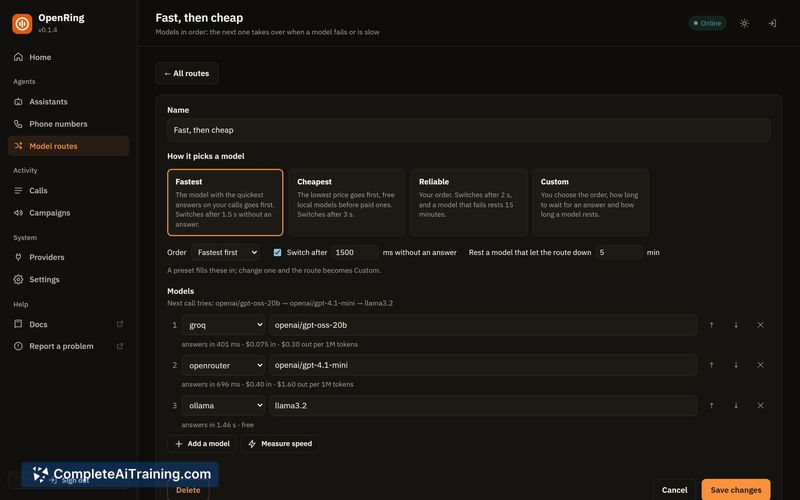
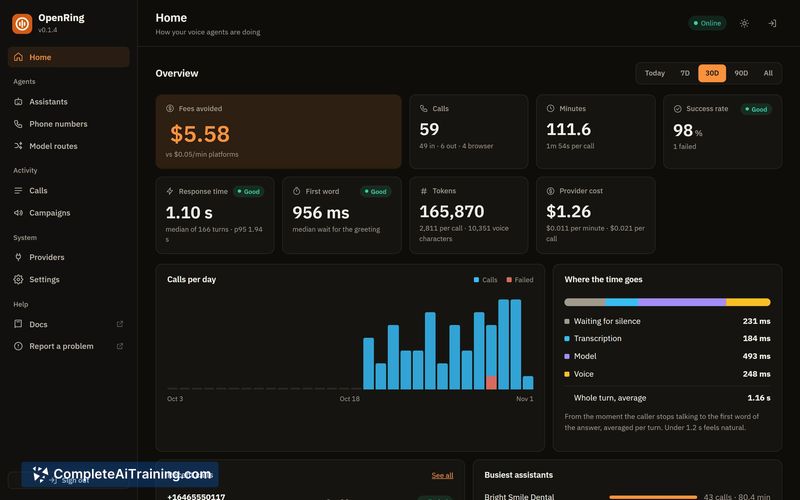
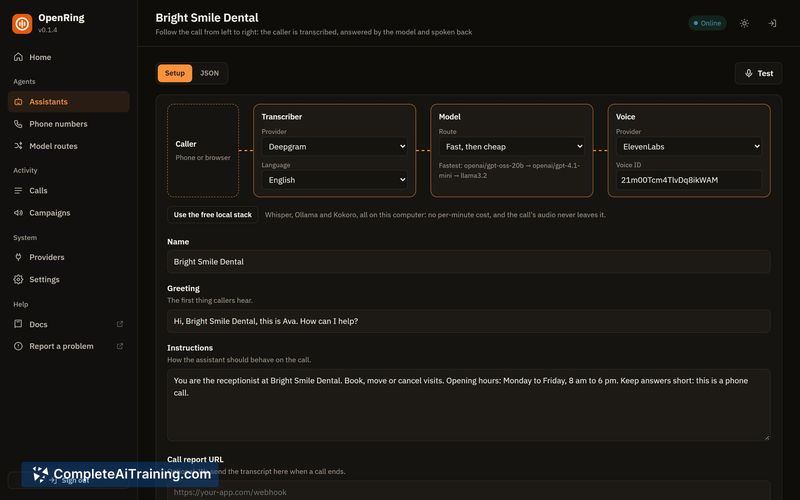
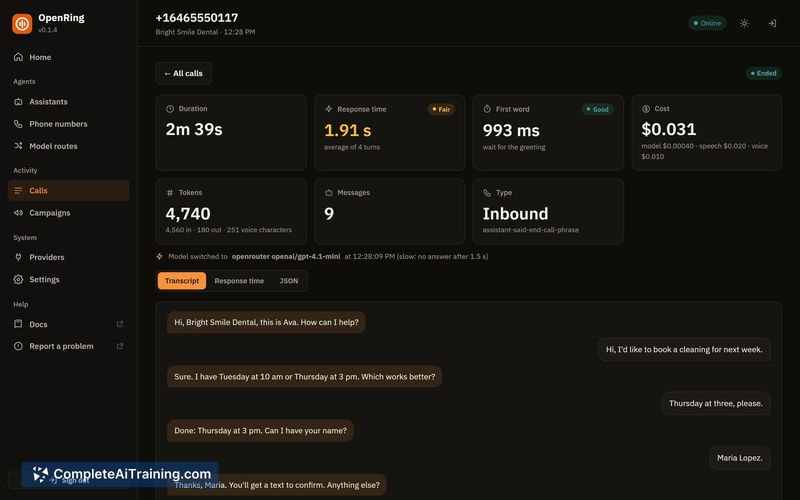
openring enters a space where most hosted voice-agent platforms charge by the minute. It puts the stack on your own hardware, which shifts cost and control to the user. The trade-off is that you also take on the operational responsibility.
Key Features
- Vapi-compatible API - clients built for Vapi can connect to openring by changing the base URL
- Self-hosted deployment on your own computer or server, using your own API keys
- Carrier integration with Twilio (tested on real calls), plus Telnyx, Plivo, Vonage, and SIP in beta
- Free local mode that runs entirely offline with Whisper, Ollama, and Kokoro
- No platform fee - you pay only for the third-party services you bring
Pricing and Value
openring itself is free and open-source. There is no per-minute platform fee. Your costs come from the third-party services you connect - LLM providers, transcription services, and telephony carriers - all using your own keys. If you run the fully local mode with Whisper, Ollama, and Kokoro, the voice pipeline can operate at zero additional cost beyond your hardware.
Pros
- Eliminates the per-minute platform fee that hosted voice-agent services charge
- Vapi-compatible API reduces the effort of migrating existing integrations
- Local mode keeps all data on your own hardware, which matters for sensitive use cases
- Carrier flexibility - Twilio is confirmed working, with several others available in beta
- Full source code access lets teams audit, modify, or extend the system
Cons
- Requires self-hosting skills - you handle deployment, scaling, and uptime on your own infrastructure
- Telnyx, Plivo, Vonage, and SIP support are still in beta, so production reliability on those carriers isn't yet established
- Not well suited for teams that want a managed service with SLAs and hands-off maintenance
openring fits teams that already run their own servers and want to cut the recurring per-minute costs of hosted voice agents. It also makes sense for projects where data locality is a hard requirement. Teams without DevOps capacity or those who need carrier support beyond Twilio right now may want to wait until the beta integrations mature.