AI tool
Operum
Operum is a desktop tool that runs six specialized AI agents to handle planning, coding, testing, marketing, and community support for software projects. It is built for developers and teams who want AI to manage full engineering workflows directl...
About Operum
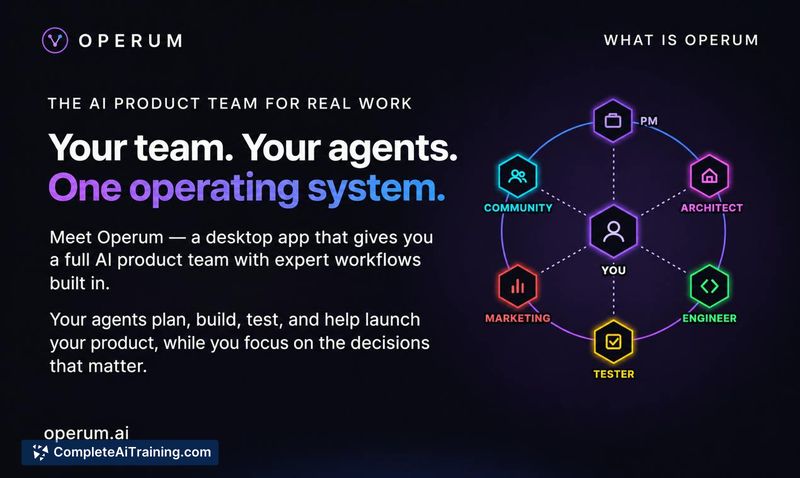
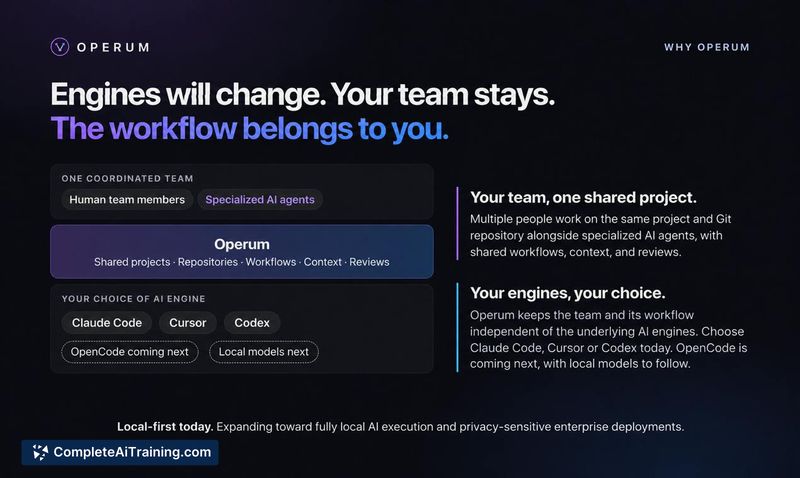
Operum is a desktop application that deploys a coordinated team of six specialized AI agents - Project Manager, Architect, Engineer, Tester, Marketing, and Community - to build and launch software. Users describe a goal in chat, and the agents plan, code in a connected GitHub repository, independently test changes, and assist with launch tasks. The tool works with existing AI engines like Cursor, Claude Code, or Codex, and includes built-in approval workflows with an optional auto-merge setting.
Review
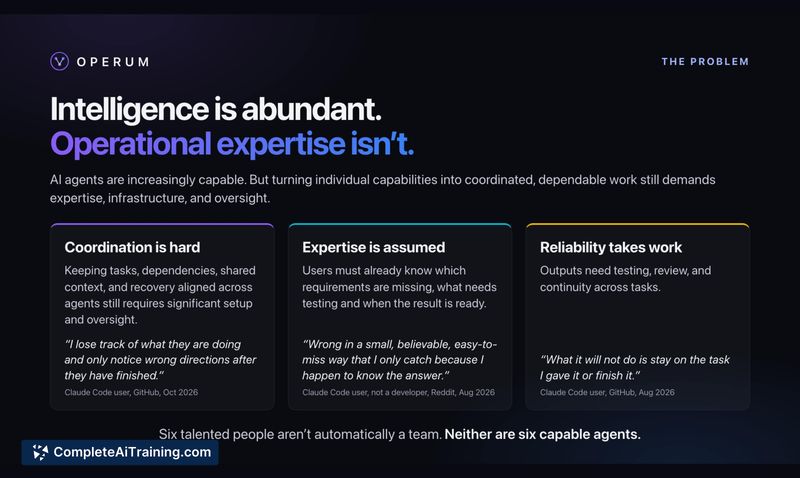
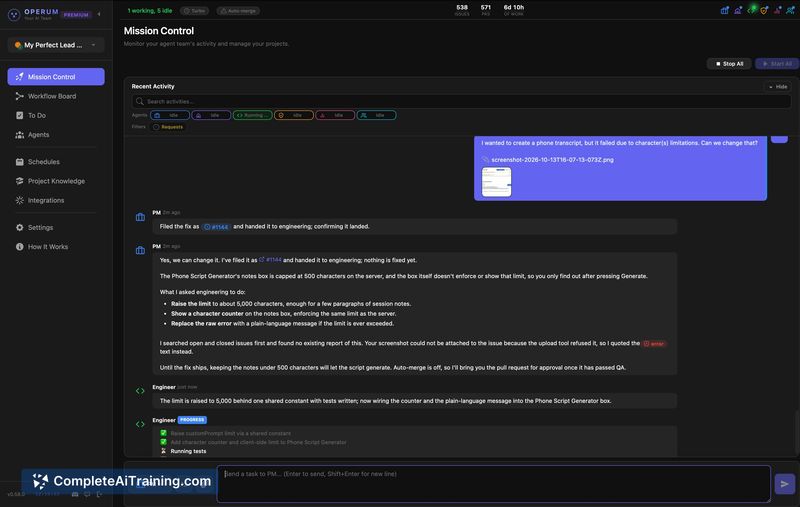
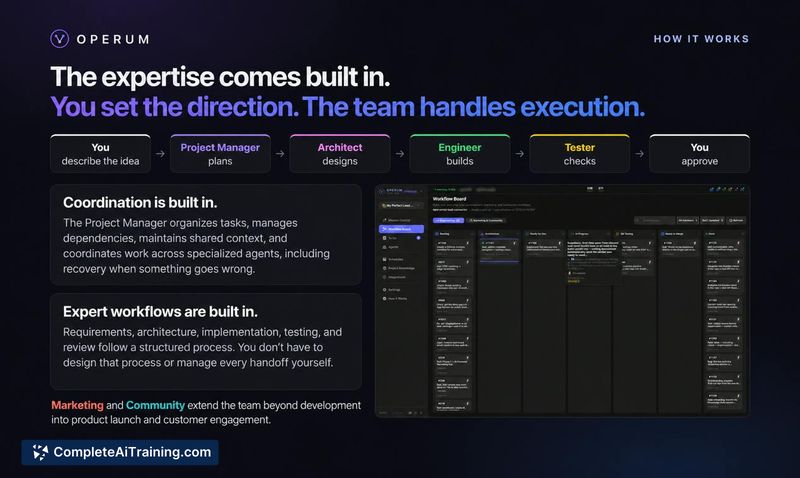
Operum approaches AI-assisted development by splitting the work across distinct agent roles rather than funneling everything through a single coding assistant. The agents operate directly in your GitHub repo, where every task becomes an issue and every change a pull request, with labels moving work between roles. A free plan and a 14-day Premium trial (extended to one month for sign-ups during launch week) are available, with no credit card required for the trial.
Key Features
- Six role-based AI agents - PM, Architect, Engineer, Tester, Marketing, and Community - each with a defined scope and separate workspace copy.
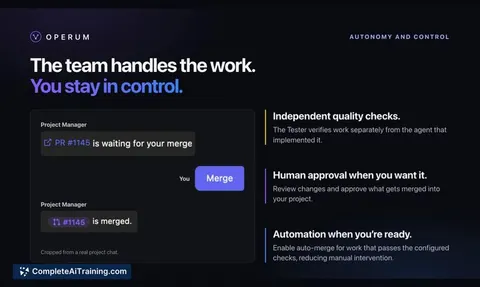
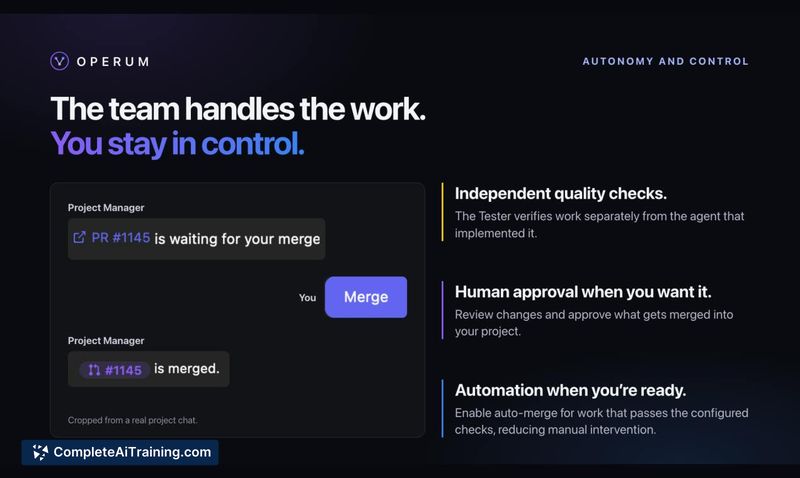
- Mandatory maker-checker workflow: the agent that writes code cannot approve it. A separate Tester agent must pass the changes, and CI checks must be green before merging.
- Approval controls let users require manual sign-off on every merge or allow the team to plan, build, test, and merge end-to-end.
- Agents run in OS-level sandboxes on macOS and Linux (Windows support is on the roadmap) and treat text from issues or files as data, not commands, to contain prompt injection risks.
- Secrets stay in the operating system keychain and are never printed or committed to the repository.
Pricing and Value
Operum offers a Free plan alongside a Premium tier. A 14-day Premium trial is available without a credit card, and launch-week sign-ups receive an extension to a full month. The makers have not published specific Premium pricing details yet. The tool integrates with third-party AI engines that carry their own costs - Cursor operates on a subscription, while Claude Code and Codex use API keys billed separately.
Pros
- Role separation introduces a hard check between code creation and approval, making unverified AI-written code harder to ship.
- Agents work directly in the user's own GitHub repository using standard issues and pull requests, not a proprietary project layer.
- Supports multiple AI engines (Cursor, Claude Code, Codex), with OpenCode and local models listed on the roadmap.
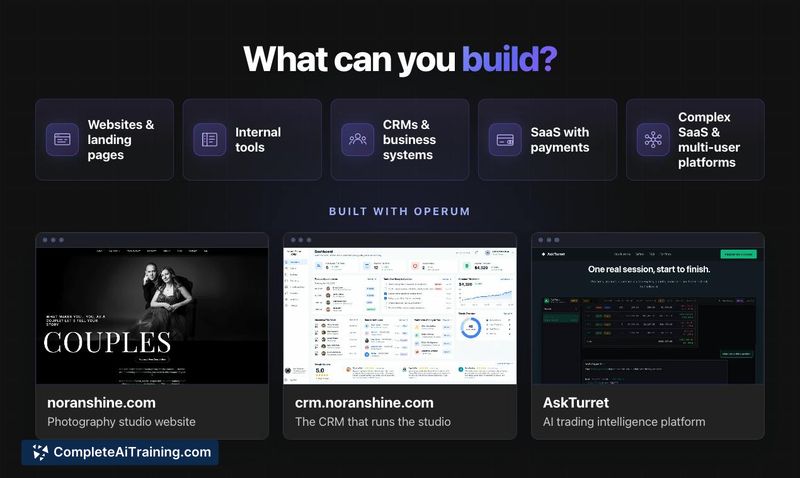
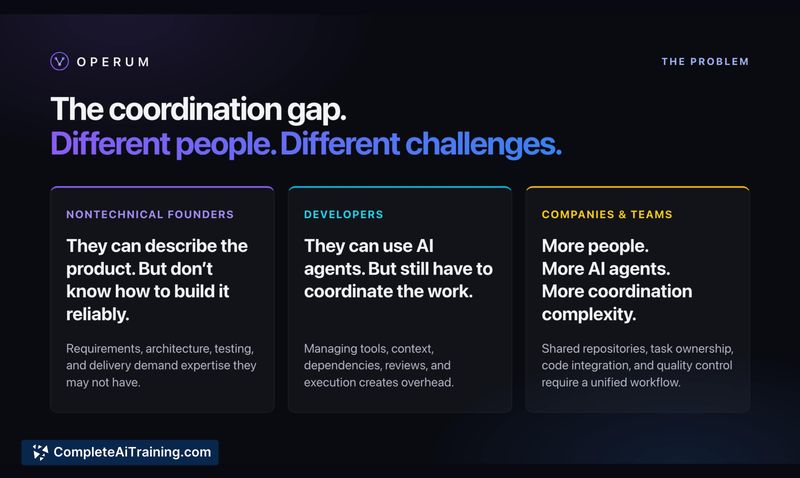
- Non-technical users can direct the agent team with chat-based instructions and review summarized changes without reading code.
- The desktop app captures crash data from both the Rust backend and UI via Sentry, tagged by release version.
Cons
- The tool is not well suited for teams that need compliance-grade security audits, as the makers state it is no replacement for a security audit on sensitive applications.
- Windows sandboxing is not yet available, leaving that platform without the OS-level isolation present on macOS and Linux.
- Premium pricing remains undefined, which makes cost projection difficult for teams evaluating long-term use.
Operum fits solo founders and small teams who already use GitHub and want to hand off planning, testing, and launch tasks to a structured AI workflow rather than managing each step manually. It also serves non-technical users who can describe a product in chat and let the agent team handle the technical execution, provided they stay involved in product decisions and review. The tool's fixed agent roles and approval gates make it a practical option for shipping working software, though teams with strict security requirements will need additional review processes.