AI tool
Overmind
Overmind turns raw data into labeled training sets and manages the full MLOps lifecycle, from drift monitoring to model retraining. It is built for data scientists and ML engineers who need to define labels and select useful signals across large, ...

About Overmind
Overmind is an open-source platform built for AI teams that want to train specialized models from their own production data. It turns agent traces into versioned datasets, runs evals on live traffic, and handles fine-tuning plus deployment. The platform ships as a plugin for Cursor and also works inside Claude Code, letting developers kick off training without leaving their editor.
Review


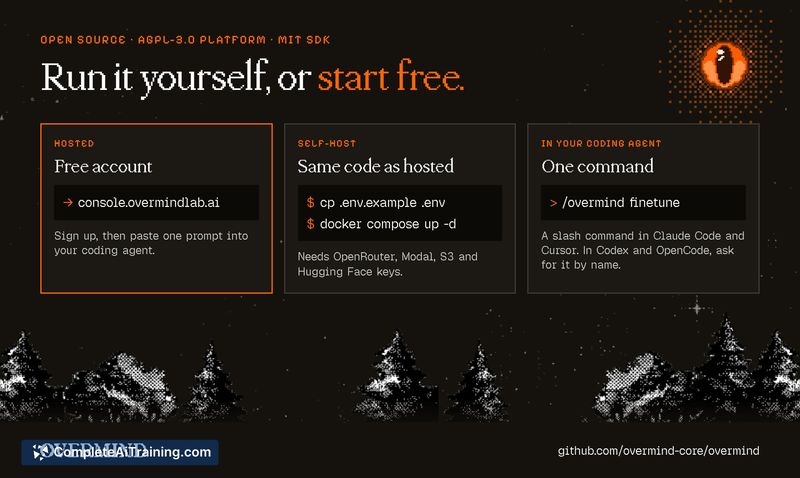
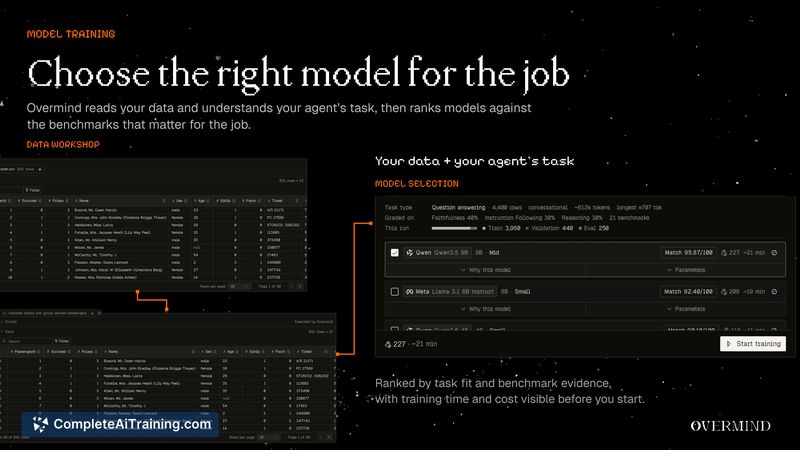
Overmind addresses a specific friction point: most teams rely on the same few frontier models, but training a smaller model on your own agent's actual traffic is a different workflow entirely. The platform packages tracing, dataset versioning, eval scoring, and fine-tuning into a single loop. It's open source and runs on your own infrastructure, so the data stays in-house.
Key Features
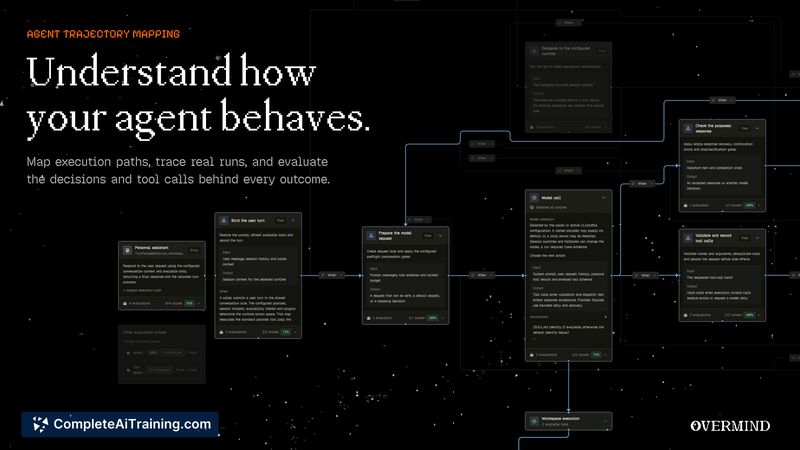
- Tracing - OpenTelemetry traces get scored as they arrive and matched to the specific part of your agent that produced them.
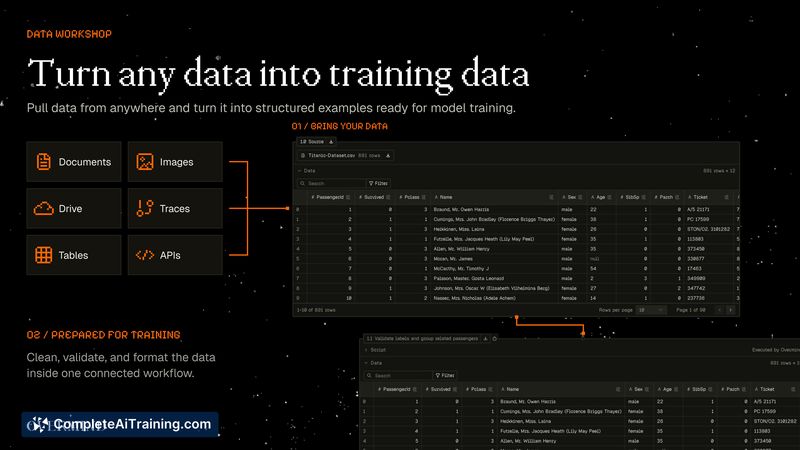
- Datasets - Production traces convert into versioned eval and training sets that freeze for reproducible benchmarking.
- Evals - Teams define what "good" means per capability, and Overmind measures it continuously on live traffic.
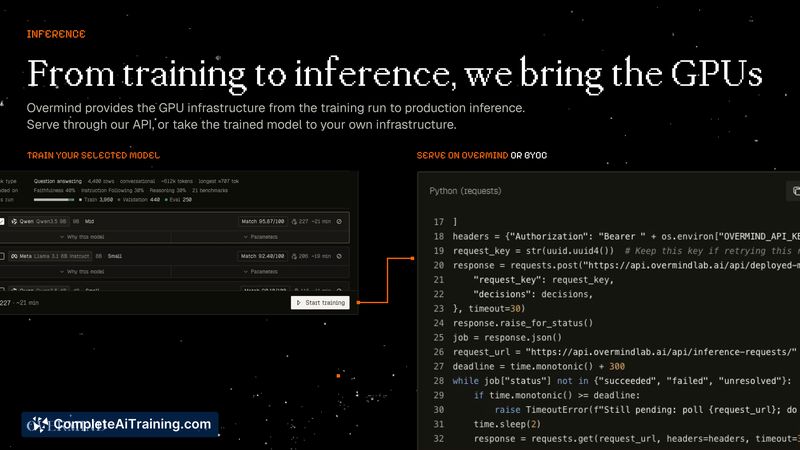
- Fine-tuning - Small specialized models train on your data, benchmark against your current model, and export weights you can download.
- Inference - Your own models and frontier models sit behind one OpenAI-compatible API, letting you run them side by side and compare cost.
Pricing and Value
Overmind is open source and free to use. The reference content does not describe any paid tiers, usage limits, or enterprise pricing. How the team plans to sustain development financially isn't yet defined in the available material.
Pros
- Runs on your own infrastructure, so training data and model weights never leave your environment.
- Traces get scored on live traffic, which surfaces drift as it happens rather than after the fact.
- New models must beat the current one on a frozen eval set before deployment, enforcing an objective gate.
- The Cursor plugin and Claude Code integration let you trigger fine-tuning with a single prompt.
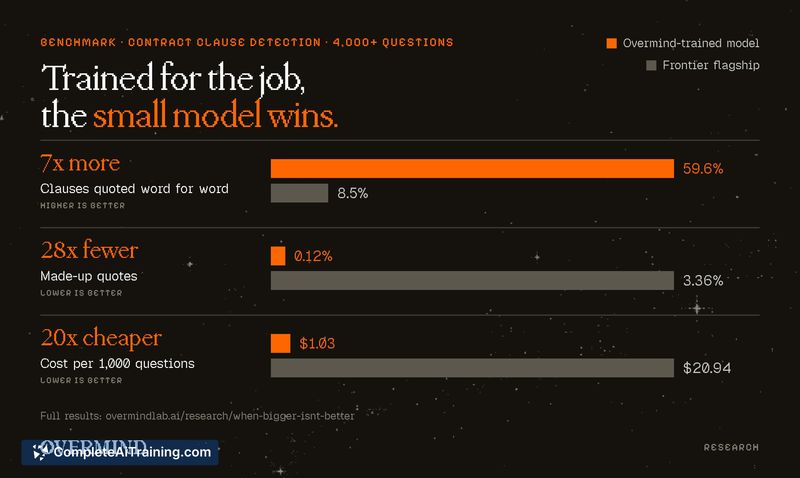
- Published benchmarks include a 9B Qwen fine-tune that outperformed a frontier flagship on its specific task.
Cons
- Teams without an existing agent in production won't benefit, since the platform depends on live traces as its starting point.
- The eval definitions still require domain knowledge - the tool measures what you tell it to measure, so poorly defined evals produce unreliable signals.
- Documentation and onboarding materials are light at this stage, which may slow down teams that want to evaluate the tool quickly.
Overmind fits teams that already have an agent handling repetitive, high-volume decisions - routing support tickets, classifying leads, extracting fields from documents - and want to replace expensive frontier API calls with a smaller model they control. It's less suited for early-stage projects that haven't yet accumulated production traces, or for tasks where defining a clear "good" answer is still ambiguous. The open-source approach and local infrastructure requirement will appeal to regulated teams that can't send data to third-party APIs.