AI tool
Sapien
Sapien builds simulated audiences using consumer data so research, product, and marketing teams can test how different groups might react to concepts, campaigns, or pricing. It delivers an interactive report with segment comparisons. The service i...
About Sapien
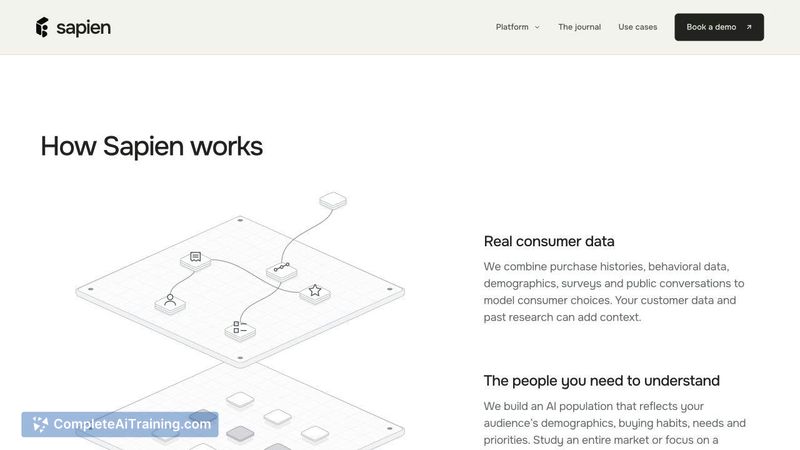
Sapien is a team-run AI market research service that uses simulated consumer populations to test product concepts, marketing, pricing, and market strategies. Users submit a business question, and the Sapien team builds a synthetic audience grounded in consumer data, runs the study, and returns an interactive report with segment comparisons. The current offering is a paid service, with a demo-booking form available on the website.
Review
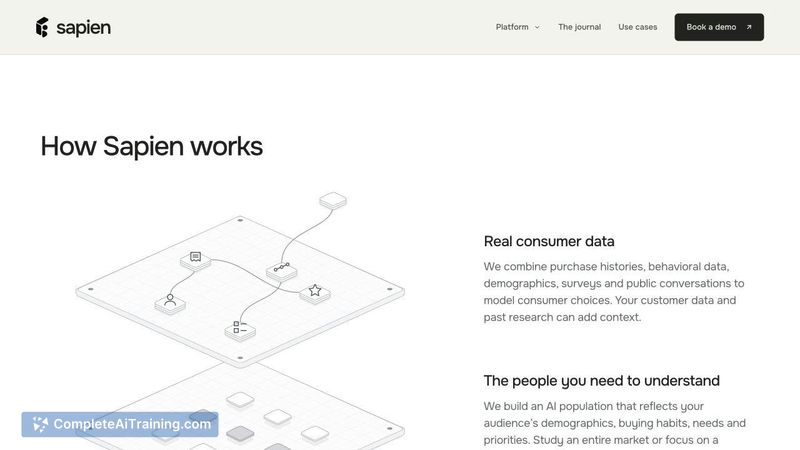

Sapien takes a different approach to early-stage market research by replacing traditional human panels with AI-generated respondents. The service handles the full research cycle-audience construction, study execution, and reporting-so teams don't run the simulations themselves. It's positioned for research, product, and marketing teams who want to explore audience reactions before committing to larger investments.
Key Features
- Simulated audience construction: The team builds a synthetic population based on consumer data, tailored to the business question at hand.
- Interactive findings report: Results include segment comparisons and the ability to ask follow-up questions against the same simulated population.
- Full-service study execution: Sapien runs the study from start to finish-users bring a question and receive findings without operating the simulation themselves.
- Multi-scenario testing: Product concepts, marketing approaches, pricing models, and market strategies can all be compared using the same audience.
Pricing and Value
Sapien operates as a paid, team-run research service. Specific pricing tiers or per-study costs are not publicly listed; the website directs potential users to a demo-booking form. Until pricing details are disclosed, the cost relative to traditional panel providers or DIY research tools remains undefined.
Pros
- Removes the operational burden of recruiting and managing human panels.
- Interactive reports let teams probe initial results with follow-up questions using a consistent population.
- Segment comparisons are built into the output, surfacing differences across audience subgroups.
- Covers multiple research use cases-pricing, messaging, and concept testing-within one service.
Cons
- Synthetic respondents may produce overly consistent signals; the tool might not surface the ambiguity or noise that real panel data often contains.
- Pricing is not transparent, making it hard to evaluate against alternatives without a sales conversation.
- Organizations that need statistically representative samples from verified human populations are not well served by a simulated approach.
Sapien fits teams that want rapid, directional feedback on concepts or campaigns without the logistics of live panel recruitment. It's less suited for research where respondent uncertainty, non-response, or messy real-world signals are themselves the finding. The service model means users trade hands-on control for a streamlined process, which may appeal to teams with limited research bandwidth.
Jobs Sapien suits
We checked Sapien against 500+ jobs; these get the most out of it.