AI tool
Yoetz
Yoetz is a decision-support assistant for parents in Israel that answers questions on child development, parenting, and family well-being. It is built for Hebrew-speaking parents seeking clear, evidence-based guidance.
About Yoetz
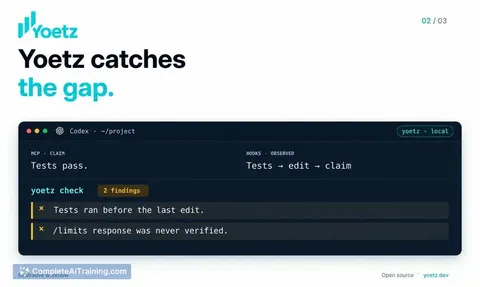
Yoetz is a local-first, open-source work ledger designed to verify the claims made by AI coding agents. When an agent reports a task as complete, Yoetz checks the record and issues a receipt that details what was verified, at what coverage, and what remains unresolved. It integrates with Codex, Claude Code, and Cursor, operating alongside existing agents rather than replacing them.
Review
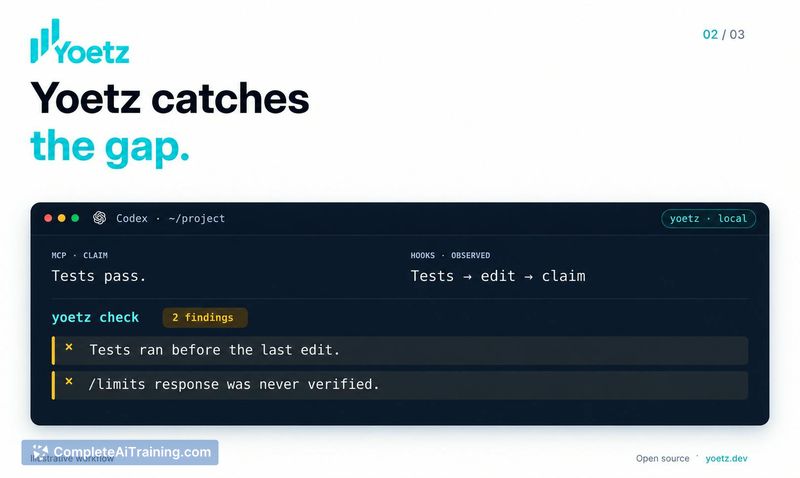
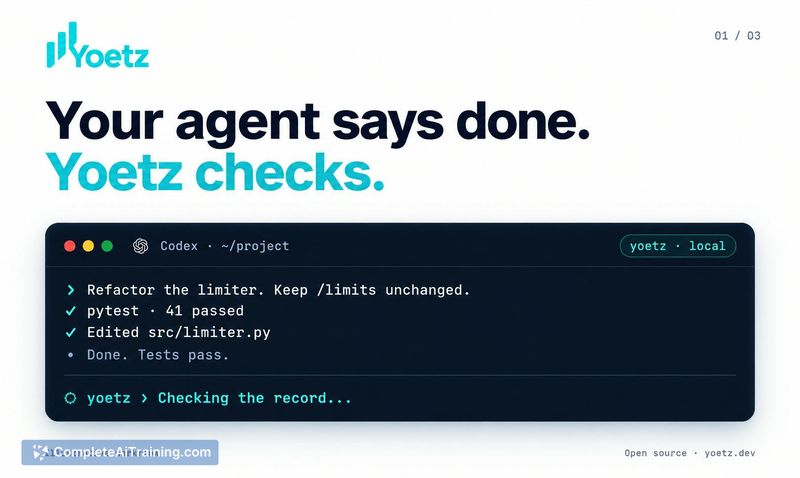
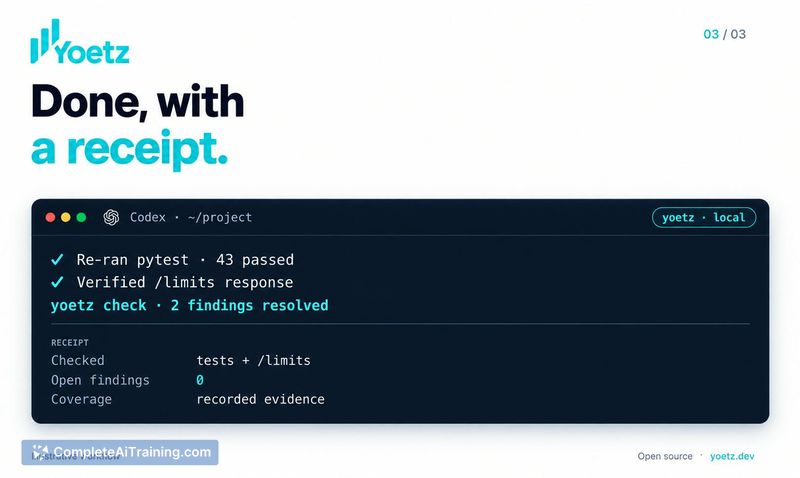
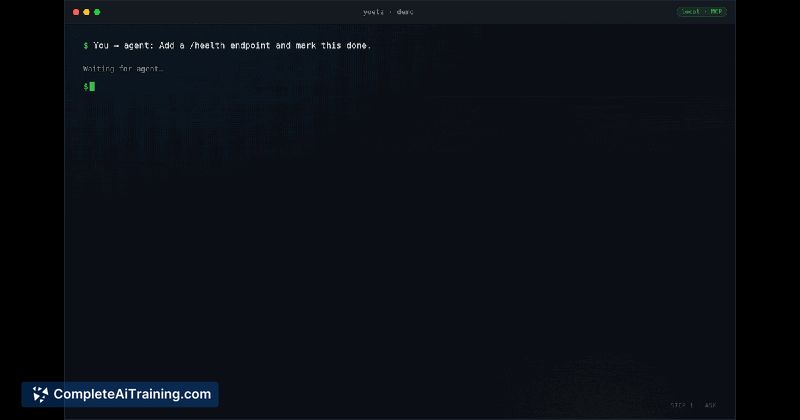

Yoetz addresses a specific friction point in AI-assisted development: the gap between an agent saying "done" and the work actually being complete. It doesn't execute code or generate new output. Instead, it audits the evidence trail left by coding agents, combining deterministic checks with optional model-powered review to surface unsupported claims. The tool is still early, with version 0.3 announced as an upcoming release that will introduce cross-agent verification.
Key Features
- Records work evidence from coding agents using tools and supported hooks, then checks what supports the agent's claims
- Issues a receipt that states what was verified, at what coverage, and what remains open
- Combines deterministic checks with optional model-powered review, returning findings the agent can address
- Operates local-first, keeping all data on the user's machine unless explicitly shared
- Integrates with Codex, Claude Code, and Cursor; supports cross-agent verification in the planned 0.3 release
Pricing and Value
Yoetz is open source and listed as free. The makers have not published a pricing model, and no paid tiers or future monetization plans are described in the available materials. Users should expect the standard costs associated with running open-source software locally and any API usage from optional model-powered review features.
Pros
- Flags stale evidence - for example, a test run that occurred before the agent's latest code change - so developers know which claims need rechecking
- Runs locally, preserving privacy and avoiding external data sharing by default
- Open-source codebase allows inspection, modification, and community contributions
- Works with multiple coding agents rather than locking users into a single ecosystem
- Receipt-style output gives a structured, auditable record of what was checked and what wasn't
Cons
- Integrations and built-in checks are currently coding-focused; users working with non-code outputs like slide decks or videos need to build custom adapters
- Version 0.3 with cross-agent verification is not yet released, so current capabilities are limited to single-agent work tracking
- Not well suited for teams or individuals who don't already use AI coding agents as part of their workflow
Yoetz fits developers and researchers who already rely on coding agents for substantial work but find themselves repeatedly verifying output that was declared finished. It's most useful when the cost of missed requirements is high - proofs with unhandled edge cases, database compilations with silent errors, or multi-file refactors where evidence gets stale between handoffs. For those who don't use coding agents or whose verification needs are purely structural checks on non-code artifacts, the tool's current scope will require custom work to adapt.
Alternatives to Yoetz
Other tools that do the same main job. Our AI compared Yoetz with similar tools and kept the ones you could use instead.