AI tool
AskDoozy
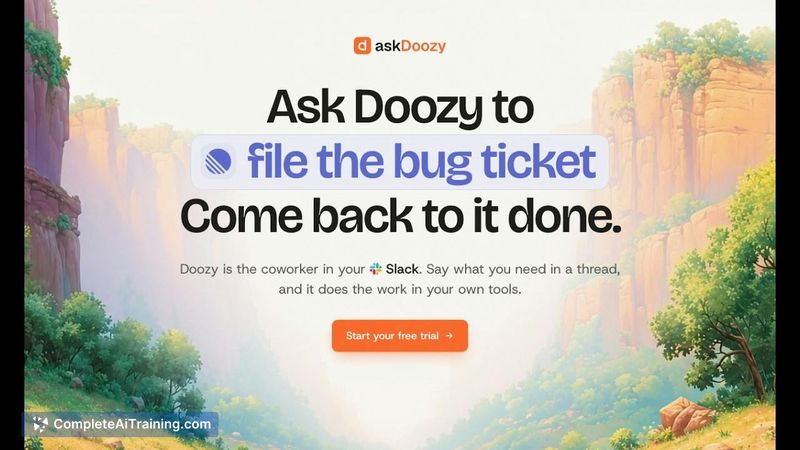
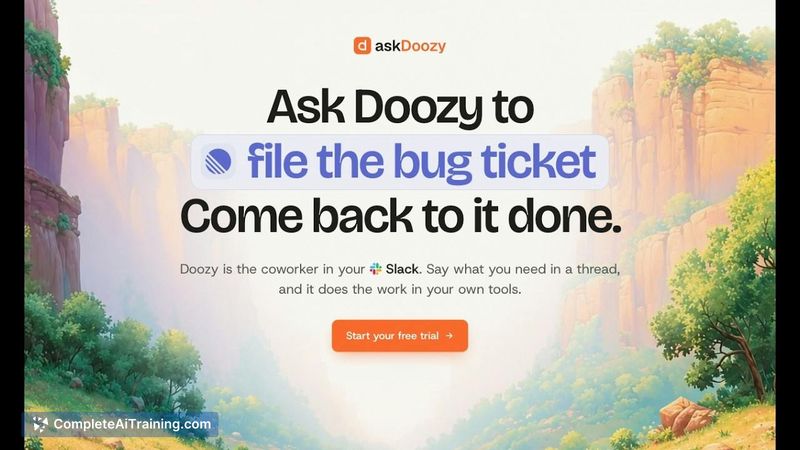
AskDoozy is a Slack bot that runs queries and performs tasks inside your own systems when you mention it in a thread. It is built for support, operations, and engineering teams who need answers from their data without pulling an engineer away.
About AskDoozy
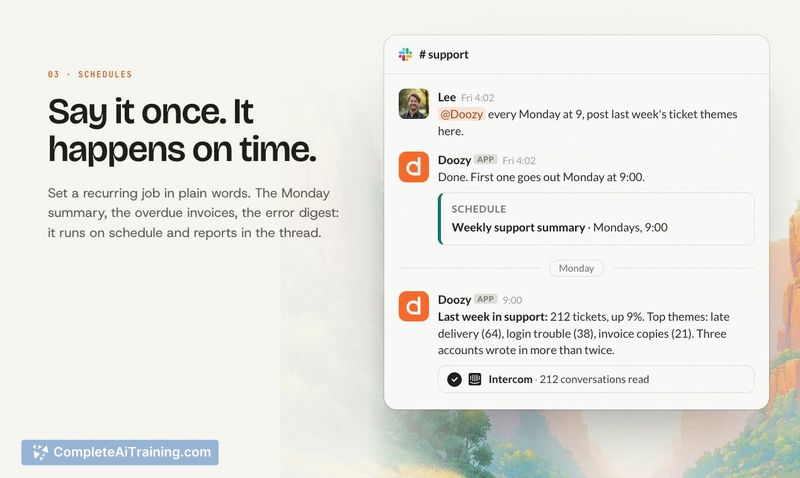
AskDoozy is an AI coworker that operates inside Slack. Someone mentions @Doozy in a thread with a task-like pulling a report or checking a billing issue-and it executes the work directly in the company's own systems (databases, Stripe, GitHub, Linear, and other tools with an API). The answer lands back in the same thread, along with files and a receipt showing every action the tool took.
Review
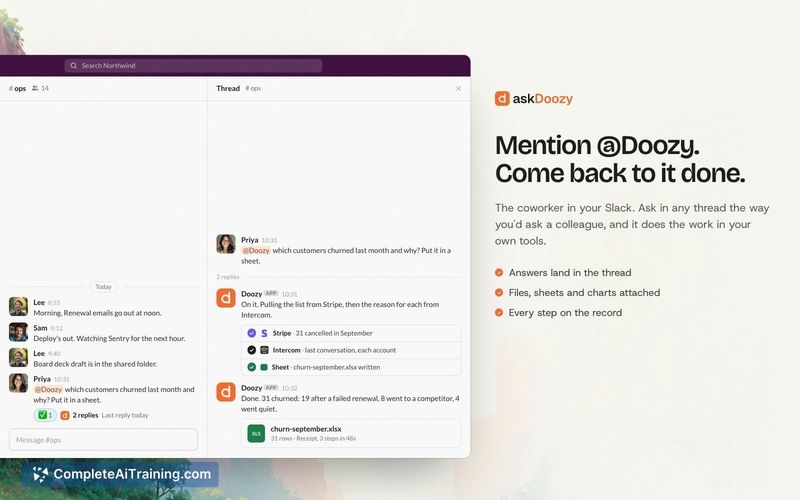
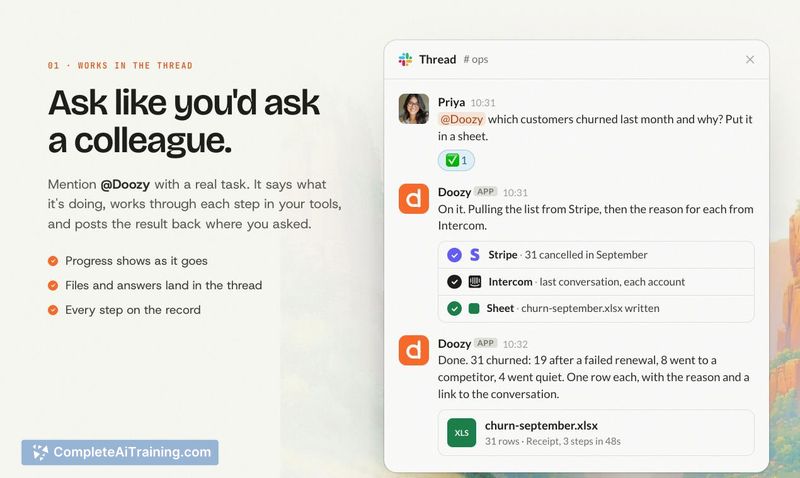
AskDoozy takes the "ask an engineer in Slack" pattern and hands it to an AI agent that runs queries and actions in production systems. It's built for teams where non-technical staff frequently need data pulled or routine operations performed, and where the engineers currently doing that work would rather not be interrupted. The tool has been used internally at Spur since August, handling about 2,000 requests per month across 13 people.
Key Features
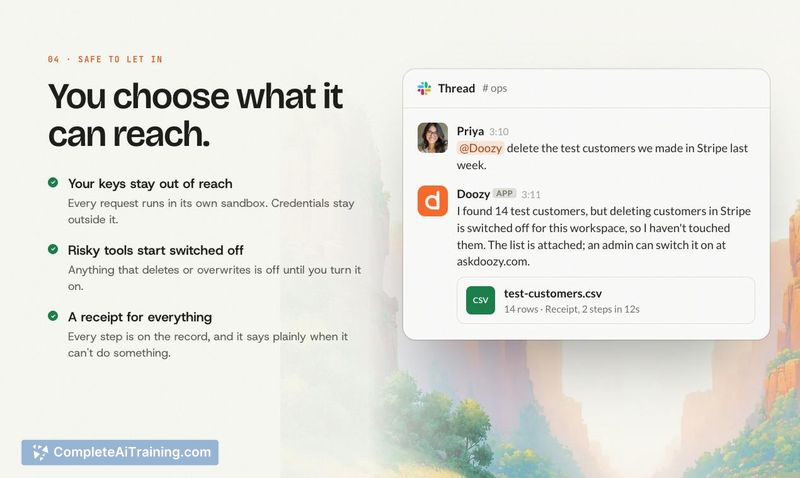
- Runs tasks inside its own sandbox per request. API keys and database credentials live in a separate gateway that injects them into each call, so the agent never has direct access to secrets.
- Destructive tools-refunds, deletions-are disabled by default. A workspace owner must explicitly turn them on. Every action produces a receipt, and an immutable audit log records everything.
- Maintains notes about the business in plain Markdown that users can read and edit. Users can also write custom procedures called Skills to teach the agent repeatable workflows.
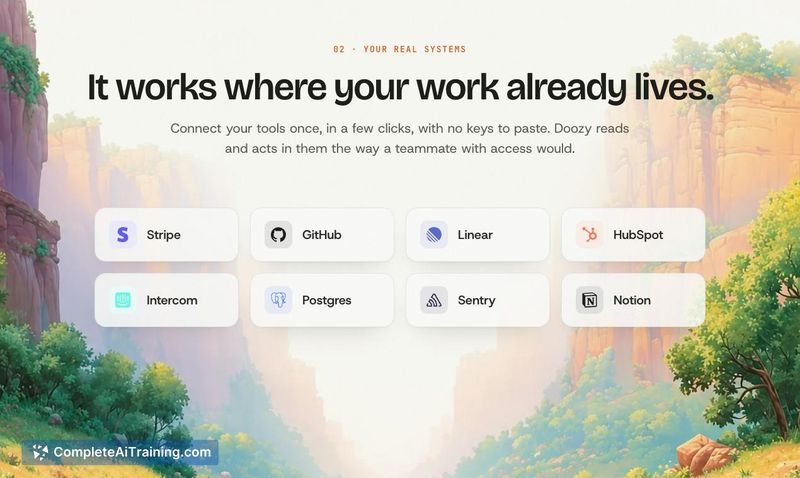
- Works with any system that exposes an API. The agent can interact with databases, Stripe, GitHub, Linear, PostHog, HubSpot, and more.
- Single workspace price covers everyone. Usage runs on an allowance model; when the limit is hit, the tool pauses and asks-it doesn't auto-bill for overages.
Pricing and Value
AskDoozy charges one price per workspace, with all members included. There are no per-seat fees and no credit-based billing. A 14-day free trial is available without requiring a credit card. Specific pricing figures are not yet defined publicly. The allowance-based usage model means the tool stops and prompts for approval at the limit rather than automatically charging extra.
Pros
- Credentials are handled through a gateway layer, which reduces exposure risk compared to giving an AI agent direct key access.
- Destructive actions stay off until a workspace owner deliberately enables them, and the audit log is tamper-proof-even the builder can't edit it.
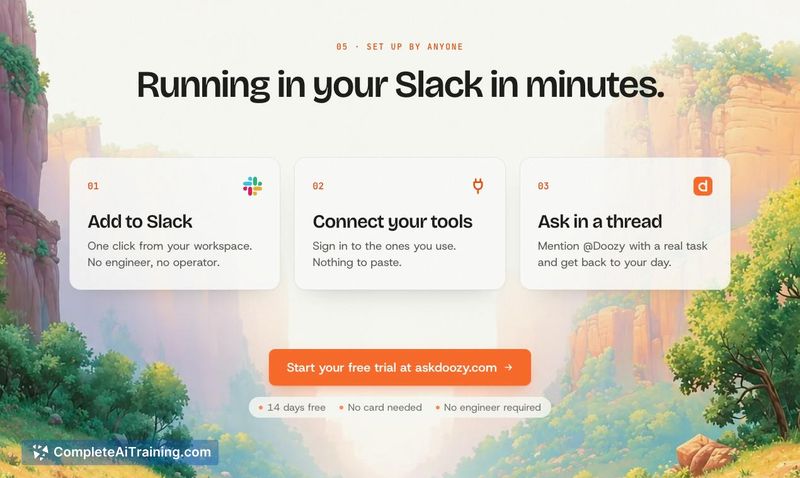
- Setup doesn't require an engineer, according to the builder, and the free trial needs no payment details.
- Notes stored in plain Markdown are human-readable and correctable, so the team can verify what the agent "knows" about the business.
- One flat workspace price with an allowance cap means costs are predictable and there are no surprise bills.
Cons
- Giving an AI agent production access carries inherent risk, even with sandboxing and gateway-separated credentials-teams with strict compliance or security requirements may find the model difficult to approve.
- The tool is early-stage; it launched this week and the public track record beyond Spur's internal use is short.
- It's not well suited for organizations that don't use Slack as their primary communication platform, since Slack is the only interface.
AskDoozy fits teams already deep in Slack who spend noticeable time fielding repetitive data requests and running routine operational queries. It's worth a look for smaller companies that want to offload those tasks without building internal tooling, provided the security model passes their review. Companies outside the Slack ecosystem or with rigid compliance rules around AI accessing production systems will likely need to wait and watch how the product matures.