AI app for insurance · no coding needed
Gamer Health Coverage
Cover built for professional gamers, with premiums that follow real training load and claims paid in hours.
Made for: Esports team managers and full-time streamers earning over $80k a year
What it does for you
The problem
Professional gamers lose income when their hands give out and traditional insurance misunderstands repetitive strain, burnout or equipment failure.
What it gives you
Risk-adjusted insurance policy, rest alerts, instant claims payments, equipment replacement coverage
What you give it
Gameplay telemetrywearable biometric dataself-reported practice hoursmedical reportshardware diagnostics
How it works, step by step
- Ingest wearable and gameplay telemetry nightly
- Recalculate risk scores and premiums automatically
- Parse uploaded medical documents for diagnosis and validity
- Trigger rest nudges and voice alerts when risk spikes
- Monitor hardware diagnostics for equipment failure risk
- Pay out approved claims within hours via bank transfer
What you see on screen
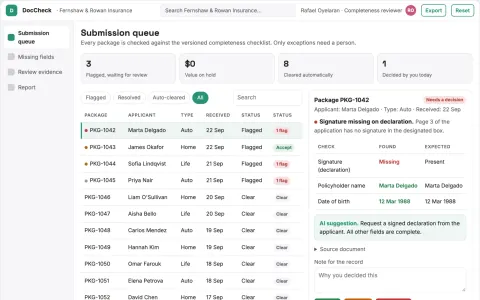
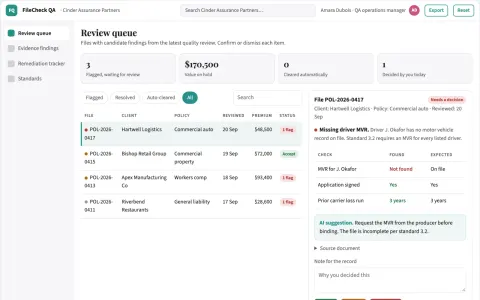
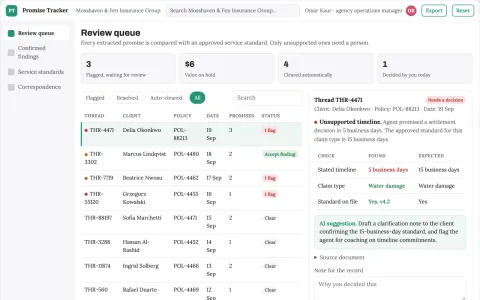
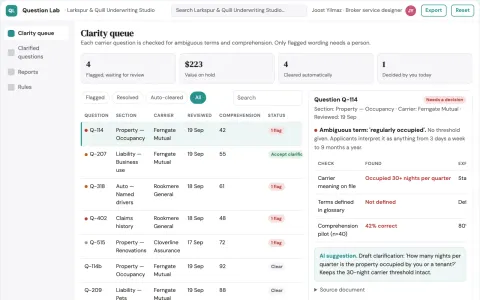
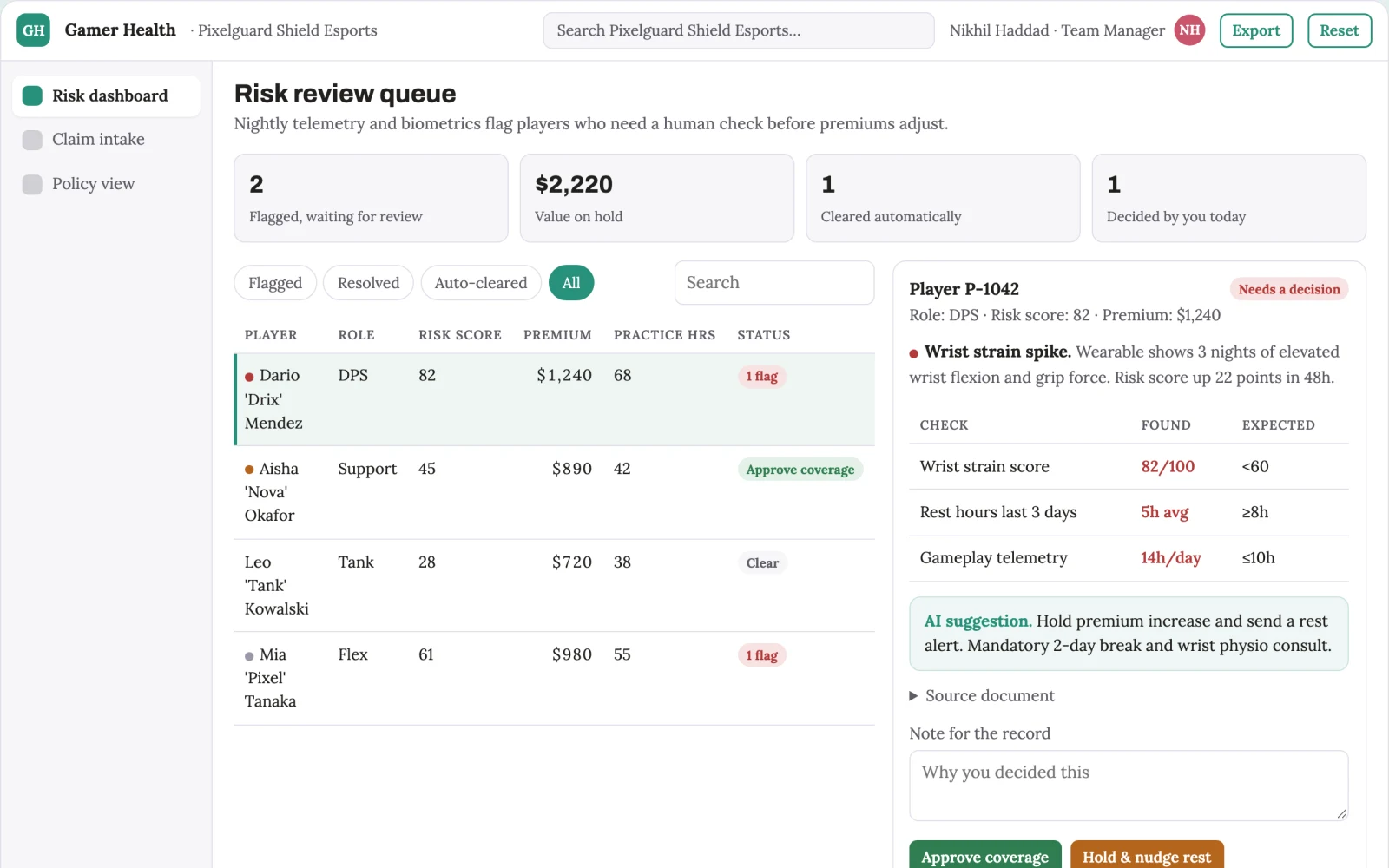
- Risk dashboard
- claim intake
- policy view
Jobs this app suits
Our AI checked this app against 500 jobs; these get the most out of it. Each job links to its learning path.
Build it yourself with your AI system
Build this app yourself, no coding needed
Start with a quick version you can try in a few minutes. Like it? Then build the full app by copying and pasting our step-by-step instructions: everything is prepared for you.
Sign in to see how to build it yourself
Build a quick version to try, or get the full app pack for Gamer Health Coverage with the step-by-step building instructions. You don't need any technical skills: you copy, paste and answer a few questions. Both are included in the membership.
4 Have it built for you days to a few weeks
Rather not do it yourself, or want it fully tailored to your data, your way of working and your brand? Nexibeo builds Gamer Health Coverage with you.
What's in the app pack
Included in the Complete AI Training membership.
- The building instructions your AI follows, step by step
- The questions your AI will ask you about your business before it starts
- A clickable demo you can open in your browser, to see how it should work
- A detailed blueprint of the screens, the information it keeps and the checks it runs
Become a member to get the app packAlready a member? Sign in
The files, for the technically curious
- START-HERE.mdHow to build it with your own AI (read first)3 KB
- README.mdOverview and links1 KB
- questions.mdQuestions to answer before you build2 KB
- prompt-cloudflare.mdThe full build prompt, hosted on Cloudflare20 KB
- prompt-vps.mdThe same build on your own server (Docker)20 KB
- spec.jsonData model, API, AI pipeline, acceptance criteria10 KB
- demo/index.htmlThe working demo on sample data193 KB
Questions
Do I need to know how to code?
No. You copy and paste the prompts on this page into ChatGPT or Claude, and the AI does the building. When it asks you something, you answer in your own words.
What does it cost?
The quick version, the app pack and the step-by-step instructions are for members: you pay the membership price, not a price per app (see the plans). Building the full app uses your own ChatGPT or Claude subscription. Putting it online is often cheap or no cost at the start, and your AI tells you before anything costs money.
How long does it take?
The quick version: about two minutes. The real app: an afternoon for a first version you can use, longer if you want every feature.
Can I change it to fit my business?
Yes. Tell your AI what to change in plain words, like “add a column for the price” or “use our logo and colours”. Or have Nexibeo build and customise it for you.
More detailsHow the AI works, safeguards and what to build first
For esports team managers and full-time streamers, turn gameplay telemetry, wearable biometric data and medical documents into real-time risk-adjusted coverage and instant claims decisions. Address the recurring problem: professional gamers lose income when their hands give out and traditional insurance misunderstands repetitive strain, burnout or equipment failure. The value hypothesis is a faster, more personalised policy that adapts to daily strain, with claims paid in hours not weeks; the pilot must establish whether regulators accept dynamic pricing and whether the risk model holds.
Connect gaming accounts and wearable, collect baseline health metrics, run nightly risk recalculation, review alerts and premium changes, upload a claim document, verify diagnosis with AI, and release payment. Start with gameplay telemetry, biometric data and medical reports and finish with risk-adjusted coverage and instant claims decisions.
How the AI works
Use language models to read and extract diagnoses from medical documents, and a separate model trained on injury patterns to interpret telemetry and biometrics. A human underwriter reviews any premium change above a threshold and a claims officer confirms the diagnosis before payment.
Safeguards
Must not adjust premiums without human review for changes above 10% in a week. Must not share biometric data with third parties. Must not deny claims without a human override. Must provide clear rest alerts and never encourage overtraining.
What to build first
First buyer is esports team managers insuring their rosters. Use case is hand and wrist injury coverage. First two modules are risk dashboard and claim intake. Manual review of all premium changes and claims before payment.
What it can connect to
Start with a common wearable API (e.g. Apple Health or Garmin), game platform APIs for telemetry (e.g. Steam, Riot), and a bank payment API for payouts.
The screens in detail
Use a live dashboard showing each player's risk score, premium trend and rest alerts, with a central feed of daily updates. The claim intake screen lets users upload a photo of a medical report and tracks parsing status. The policy view shows current coverage, adjustments and history. In this product, the first view is risk dashboard, followed by claim intake and policy view.