AI app for operations · no coding needed
Utility Carbon Reporter
A single pipeline that turns raw utility bills into a client-ready, methodology-cited report with a human approval step built in, without spreadsheets.
Made for: Sustainability leads at facilities management companies, commercial property managers and mid-sized logistics firms
What it does for you
The problem
Manual sustainability reporting from utility bills is repetitive, error prone and steals time from client relationships.
What it gives you
Client-ready carbon reports with methodology notes, charts, source citations and year-on-year comparisons
What you give it
Utility invoicesmeter data feedsclient templatesemissions factor preferences
How it works, step by step
- Extract line items from utility invoices and meter feeds
- Classify energy, water and waste categories
- Map each line to an emissions factor from a maintained library
- Calculate scope 1 and 2 emissions with standard factors
- Build a draft report in the client's template with charts and citations
- Route the draft to a human reviewer for approval or correction
What you see on screen
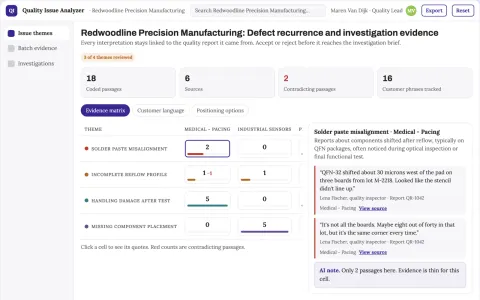
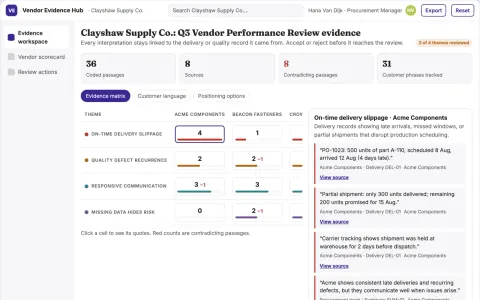
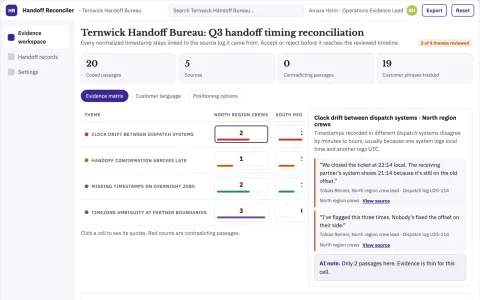
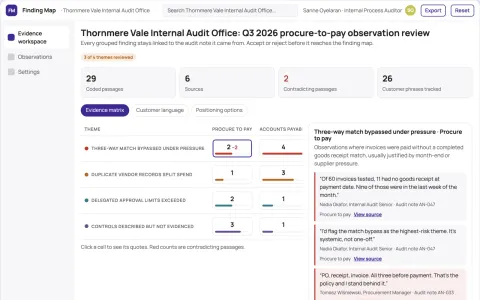
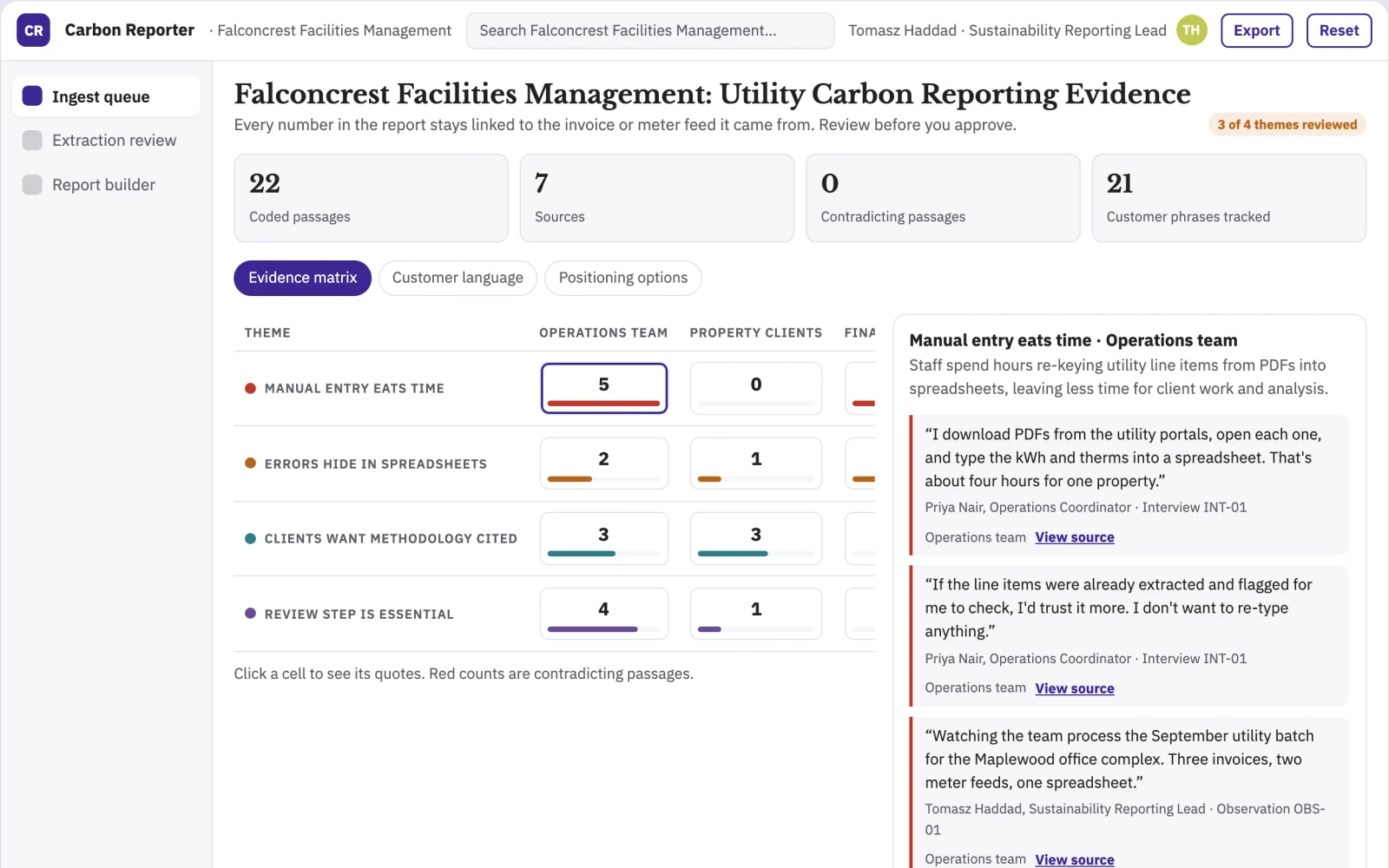
- Ingest queue
- extraction review
- calculation workspace
- report builder
Jobs this app suits
Our AI checked this app against 500 jobs; these get the most out of it. Each job links to its learning path.
Build it yourself with your AI system
Build this app yourself, no coding needed
Start with a quick version you can try in a few minutes. Like it? Then build the full app by copying and pasting our step-by-step instructions: everything is prepared for you.
Sign in to see how to build it yourself
Build a quick version to try, or get the full app pack for Utility Carbon Reporter with the step-by-step building instructions. You don't need any technical skills: you copy, paste and answer a few questions. Both are included in the membership.
4 Have it built for you days to a few weeks
Rather not do it yourself, or want it fully tailored to your data, your way of working and your brand? Nexibeo builds Utility Carbon Reporter with you.
What's in the app pack
Included in the Complete AI Training membership.
- The building instructions your AI follows, step by step
- The questions your AI will ask you about your business before it starts
- A clickable demo you can open in your browser, to see how it should work
- A detailed blueprint of the screens, the information it keeps and the checks it runs
Become a member to get the app packAlready a member? Sign in
The files, for the technically curious
- START-HERE.mdHow to build it with your own AI (read first)3 KB
- README.mdOverview and links1 KB
- questions.mdQuestions to answer before you build2 KB
- prompt-cloudflare.mdThe full build prompt, hosted on Cloudflare21 KB
- prompt-vps.mdThe same build on your own server (Docker)21 KB
- spec.jsonData model, API, AI pipeline, acceptance criteria11 KB
- demo/index.htmlThe working demo on sample data199 KB
Questions
Do I need to know how to code?
No. You copy and paste the prompts on this page into ChatGPT or Claude, and the AI does the building. When it asks you something, you answer in your own words.
What does it cost?
The quick version, the app pack and the step-by-step instructions are for members: you pay the membership price, not a price per app (see the plans). Building the full app uses your own ChatGPT or Claude subscription. Putting it online is often cheap or no cost at the start, and your AI tells you before anything costs money.
How long does it take?
The quick version: about two minutes. The real app: an afternoon for a first version you can use, longer if you want every feature.
Can I change it to fit my business?
Yes. Tell your AI what to change in plain words, like “add a column for the price” or “use our logo and colours”. Or have Nexibeo build and customise it for you.
More detailsHow the AI works, safeguards and what to build first
For sustainability leads at facilities management companies, commercial property managers and mid-sized logistics firms, turn utility invoices and meter data feeds into client-ready carbon reports with methodology notes and year-on-year comparisons. Address the recurring problem: manual reporting is repetitive, error prone and steals time from the actual client relationship. The value hypothesis is a faster, more accurate reporting cycle that frees staff for client work; the pilot must establish whether that benefit is real.
Connect utility accounts or forward invoices, ingest and extract line items, classify categories, map emissions factors, calculate scope 1 and 2 totals, generate draft report with charts and methodology, review and approve, then export client-ready PDF. Start with utility invoices and meter data feeds and finish with client-ready carbon reports with methodology notes and year-on-year comparisons.
How the AI works
Use language models and OCR to extract and classify line items from varied invoice formats, and rule-based mapping to emissions factors. Keep extracted values in structured fields with confidence scores. A human reviewer checks numbers and adds notes before any report is sent.
Safeguards
Limit access to approved reviewers only, require human approval before any report is exported, log all corrections and overrides, and never auto-send reports without an explicit approval step. It must not calculate emissions for categories without a verified factor.
What to build first
One buyer: facilities management companies. One use case: electricity reporting. First two modules: invoice ingestion and emissions calculation with a single global factor. Manual review of every report before export.
What it can connect to
Utility provider portals and APIs, email inbox for forwarded invoices, PDF parsers, and export to PDF or CSV for client reports.
The screens in detail
Use a dashboard for incoming bills and data feeds, a line-item extraction view with confidence flags, a calculation panel with emissions factors, and a report preview with charts and methodology notes. Display statuses: ingested, extracted, calculated, awaiting review, approved. In this product, the first view is ingest queue, followed by extraction review and report builder.