
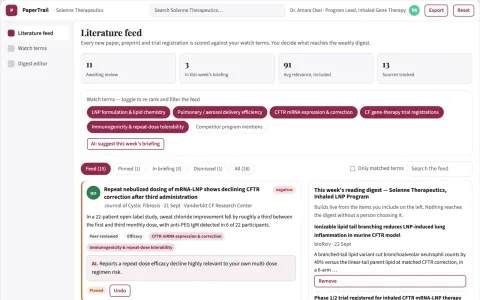
Specialist literature monitoring
Narrow relevance criteria and inspectable inclusion decisions.
Build your own version · 2,418 apps
Narrow relevance criteria and inspectable inclusion decisions.
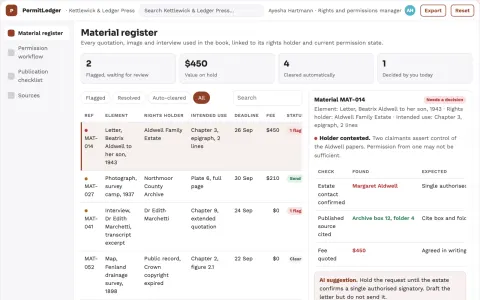
A traceable permissions workflow for every borrowed element.
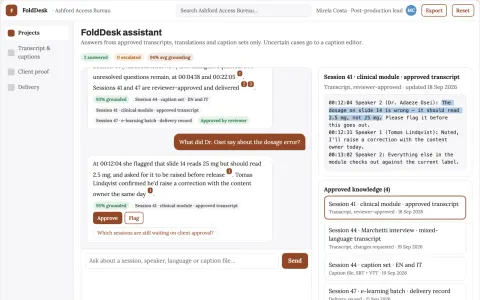
Reduce caption and transcript rework while keeping speaker labels, timing and meaning intact.
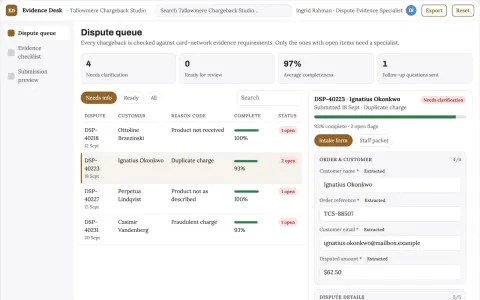
A traceable dispute packet with visible missing evidence.
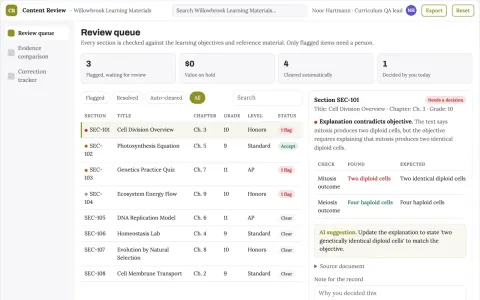
Checks the relationship between explanations, objectives and assessments.
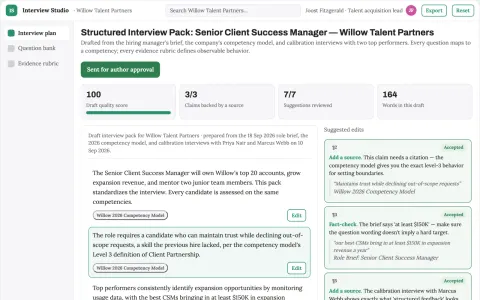
Structured preparation with evidence-based rubrics and interviewer control.
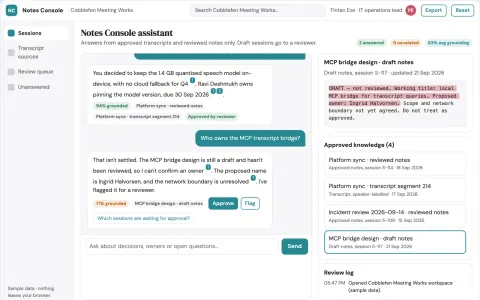
Keep recordings, transcripts and notes on the device while producing reviewed meeting outputs.
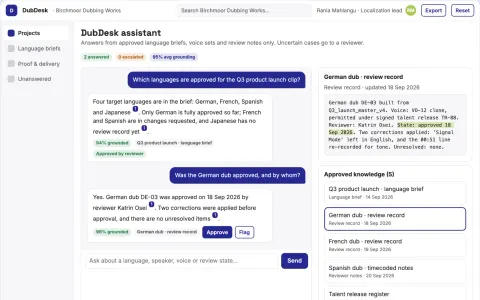
Reduce the number of rented subscriptions and manual handoffs while keeping one approved localized version per language.
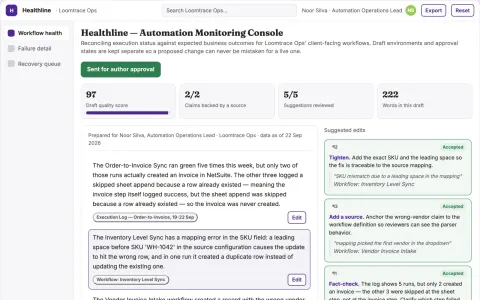
Checks business outcomes as well as technical execution status.
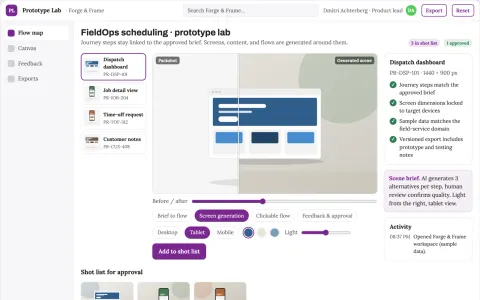
Prototypes center on a testable customer task and realistic content.
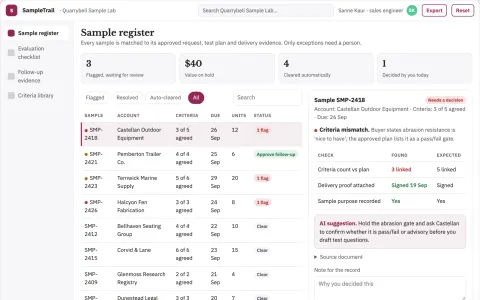
Tie each sample to a documented evaluation plan.
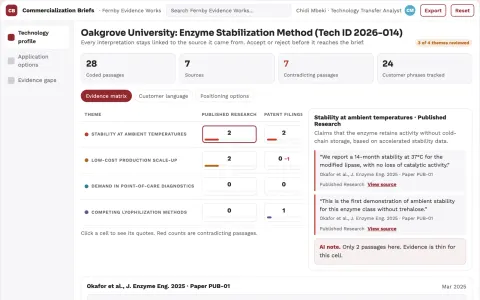
Separates demonstrated science from untested commercial opportunity.
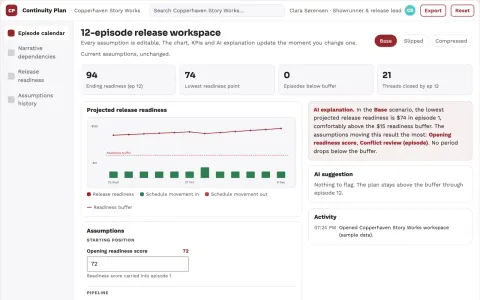
Coordinate serialized storytelling with publication commitments.
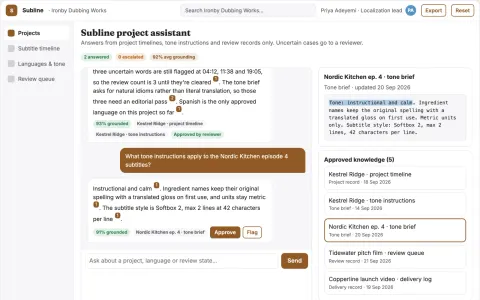
Reduce subtitle production cycles while keeping timing, tone and review state in one owned workspace.
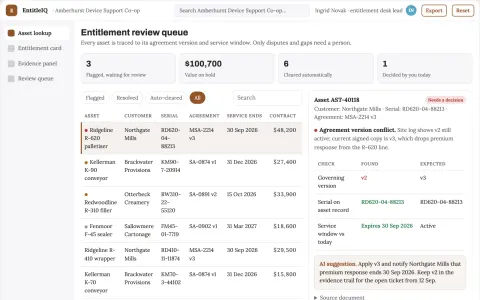
Trace service entitlement to the exact asset and agreement.
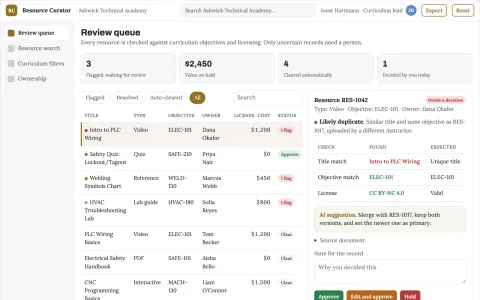
Curriculum-aware discovery with visible ownership and reuse permissions.
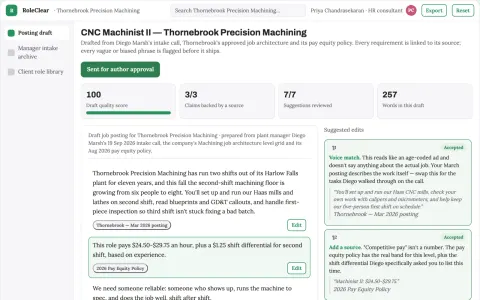
Starts from real work and outcomes rather than generic job templates.
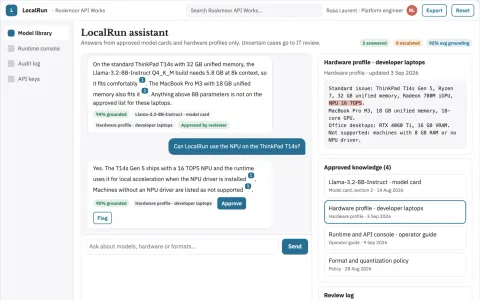
Run AI models locally on your own device instead of in the cloud.
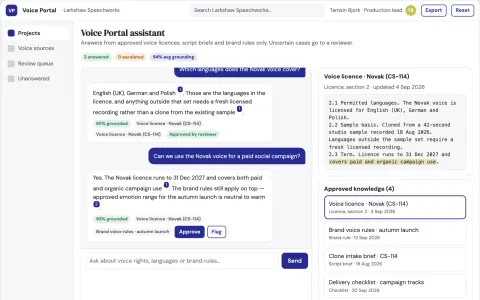
Reduce tool sprawl and review cycles while keeping voice rights and brand approval in one place.
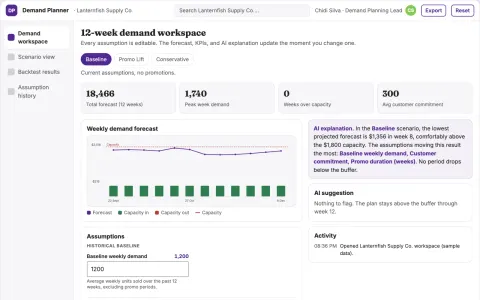
Versioned assumptions and honest error measurement for planners.
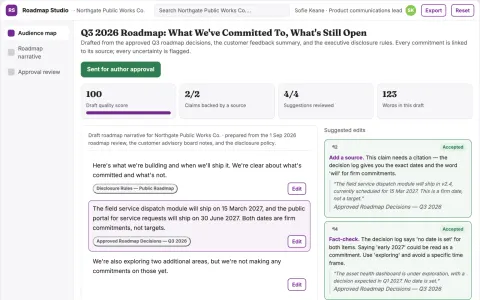
Clear commitment language and evidence-based rationale across audiences.
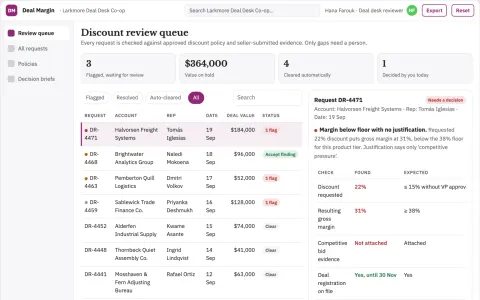
Make discount justification reviewable before approval.
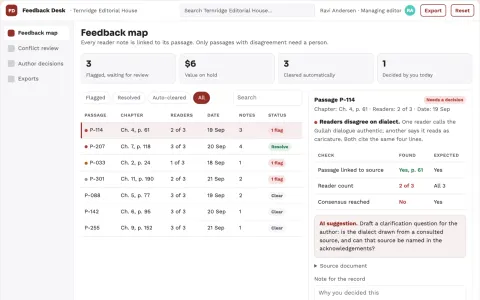
Preserve nuanced reader feedback without treating it as a universal verdict.
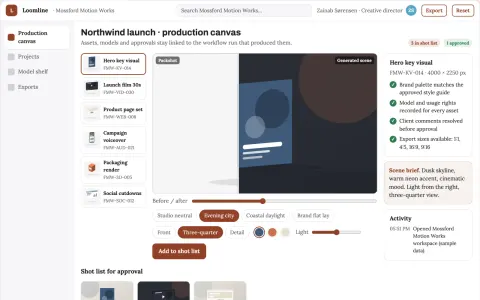
Replace several rented AI tools with one owned platform that runs the team's workflow and keeps assets, models and approvals in one place.