
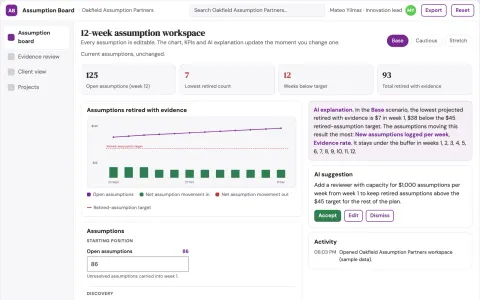
Assumption-driven planning and decision workspace
Reduce decision rework while keeping assumptions and evidence visible.
Build your own version
Reduce decision rework while keeping assumptions and evidence visible.
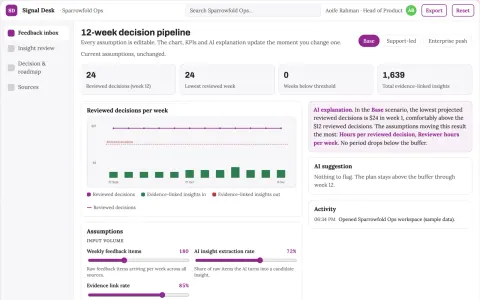
Reduce the time from raw feedback to a reviewed, evidence-linked build decision while keeping the assumptions and their evidence visible.
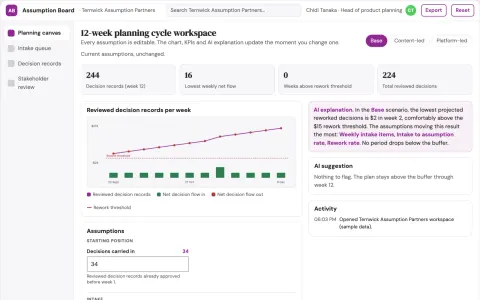
Reduce planning rework while keeping decisions traceable to evidence.
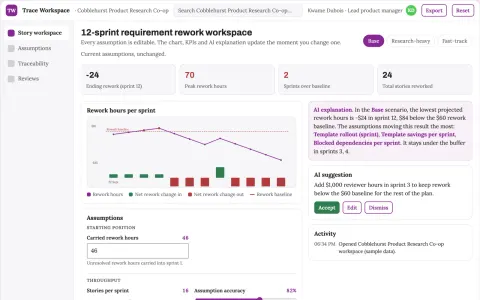
Reduce requirement rework while keeping every story traceable to its source assumption.
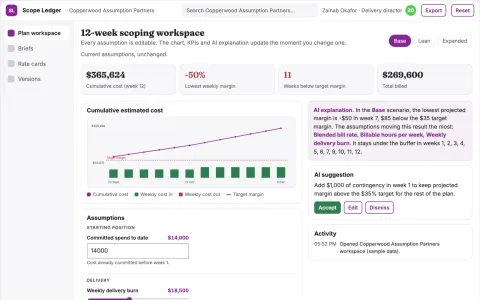
Reduce rework in project scoping while keeping every estimate traceable to its assumptions.
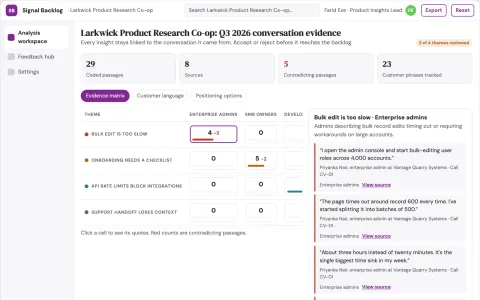
Reduce manual feedback triage while keeping every insight linked to its source conversation.
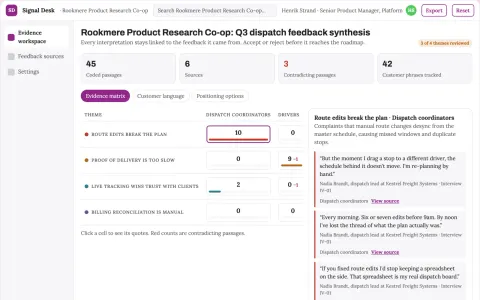
Reduce the time from raw feedback to a prioritized, evidence-backed product decision.
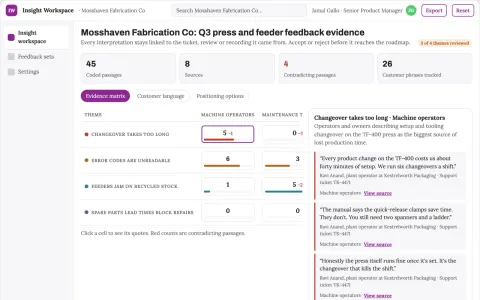
Reduce manual consolidation while keeping every insight traceable to its source.
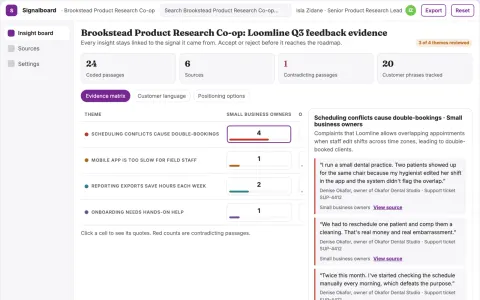
Turn scattered feedback into source-grounded, prioritized product insights.
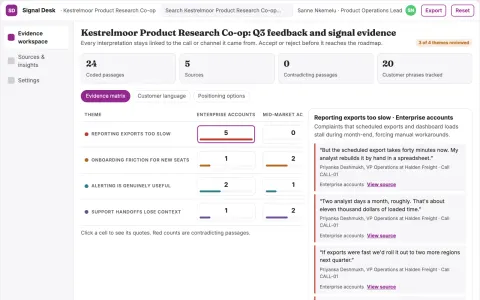
Reduce missed feedback and late action while keeping every insight traceable to its source.
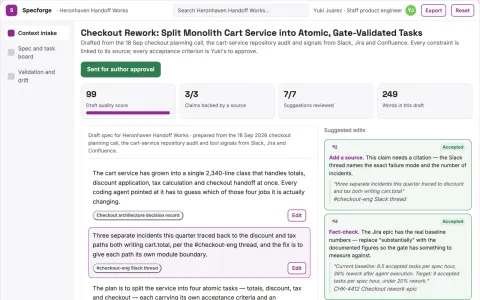
Reduce spec-to-working-code cycles while keeping the plan and its evidence current.
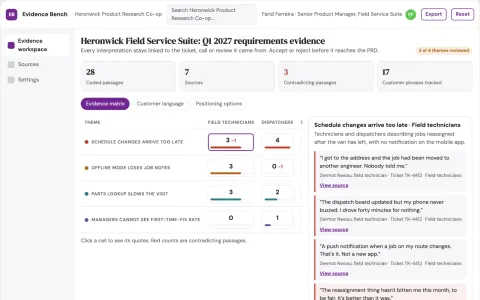
Reduce manual consolidation and rework while keeping every product claim tied to a source.
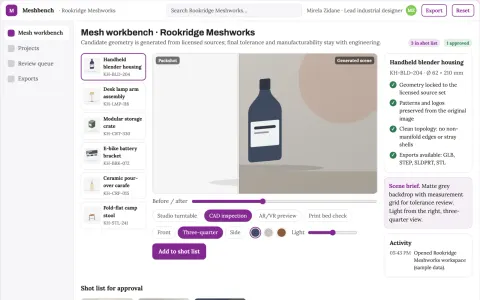
Reduce tool sprawl and manual mesh cleanup while keeping one reviewed 3D asset pipeline.
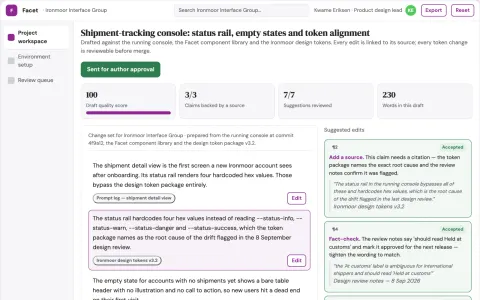
Reduce hand-coded interface work while keeping every change reviewable and reversible.
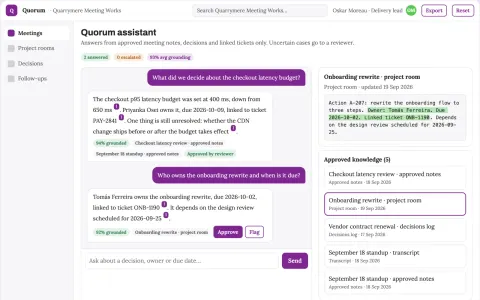
Reduce manual note-taking and re-entry while keeping decisions traceable to the transcript.
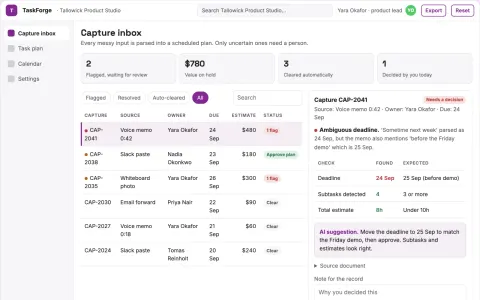
Reduce the time from messy input to a scheduled, actionable to-do list.
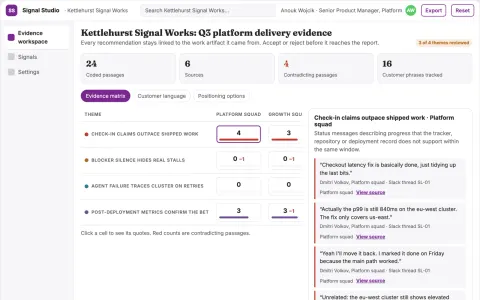
Reduce manual status gathering while keeping every recommendation tied to its evidence.
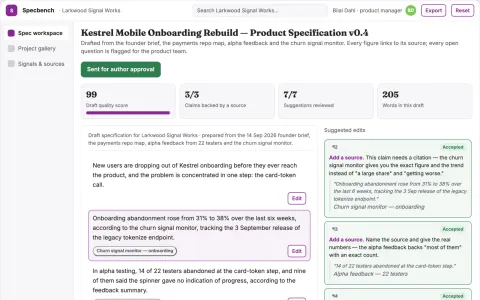
Reduce spec drafting and rework cycles while keeping the product team's decisions in one owned workspace.
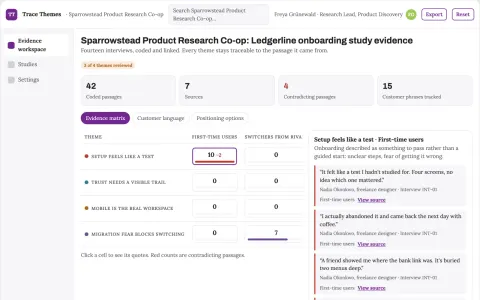
Reduce manual coding and reporting effort while keeping every theme traceable to participant evidence.
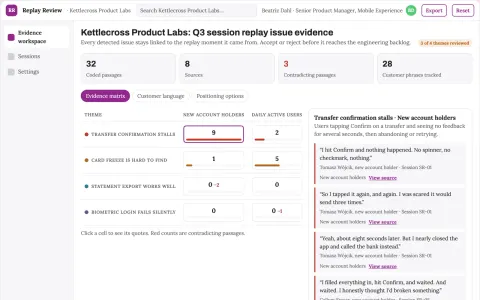
Reduce manual replay review while routing evidence-backed issues to the people who fix them.
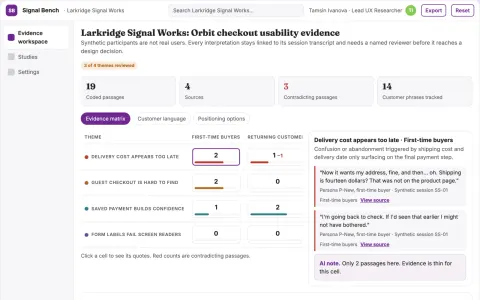
Reduce reliance on live participants for early usability checks while keeping evidence and human review.
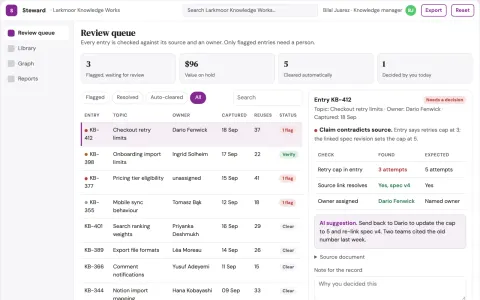
Reduce time spent searching for existing knowledge while keeping the team's content in one owned library.
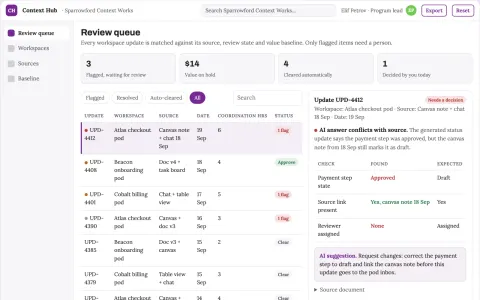
Reduce tool switching and context loss while keeping project decisions traceable.
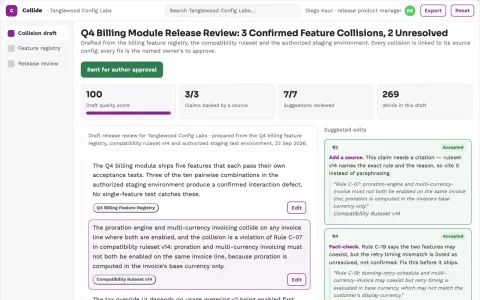
Catch interaction failures missed by single-feature validation.