
Prompt course · 9 lessons · 24 prompts · 1 hour · Beginner
AI for Psychiatrists
A prompt course built for psychiatrists. Learn to draft notes, explain medications, prepare therapy materials, and handle paperwork with AI, while keeping your clinical judgment at the center.
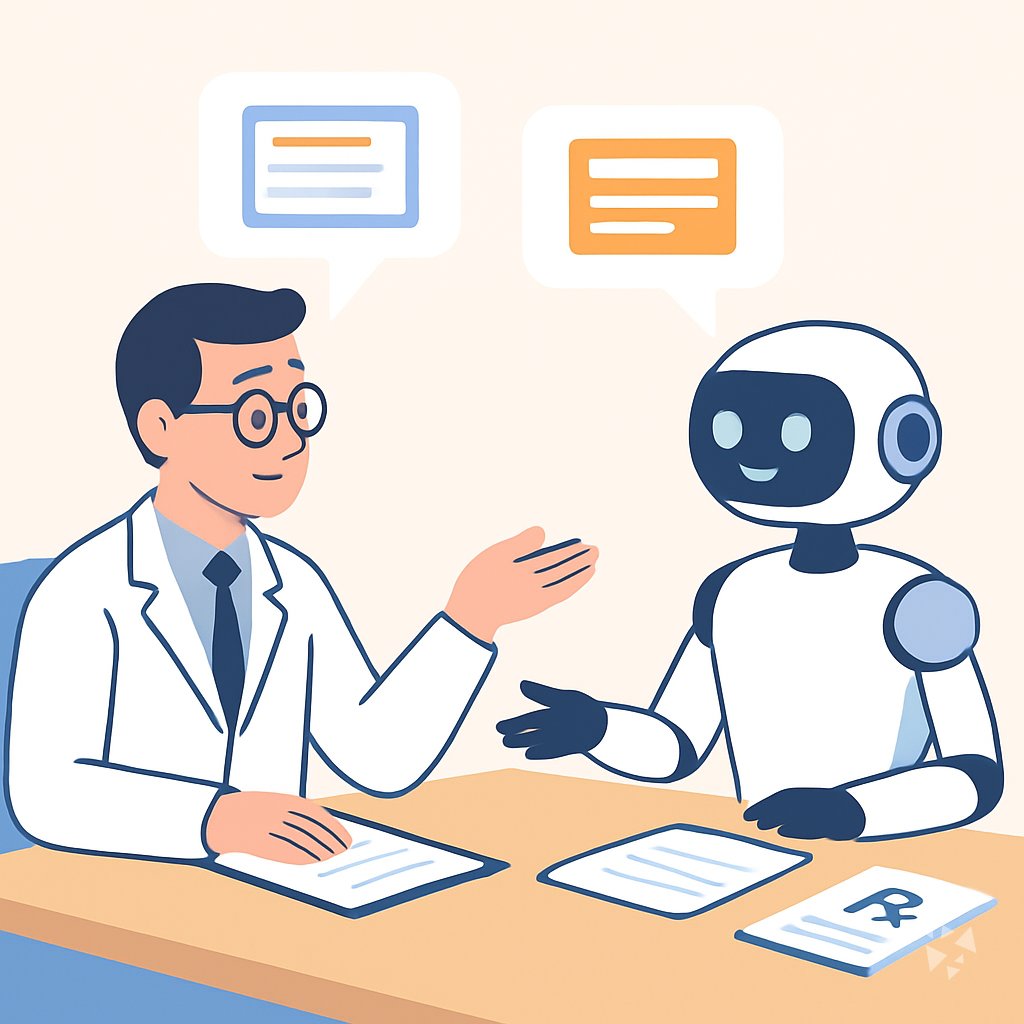
What you'll learn
- Clinical notes: Turn rough session notes into clear, structured evaluations you can review and sign.
- Patient explanations: Create plain-language handouts about diagnoses and medications that patients can take home.
- Therapy materials: Generate worksheets, psychoeducation handouts, and guided scripts for your sessions.
- History summaries: Distill long charts and past notes into short summaries for quick review before a visit.
- Medication support: Draft schedules, checklists, and interaction reminders to support safer prescribing.
- Progress monitoring: Summarize progress data and update treatment plans without starting from a blank page.
- Care coordination: Draft clear messages to therapists, primary care, and other providers on the care team.
- Practice paperwork: Write insurance letters, prior authorizations, and other practice documents more quickly.
What's inside
9 lessons · 24 prompts- Before you start · framework course CARE Prompt Framework: Context, Action, Result, ExampleThe CARE framework fits psychiatry because one complete case example, such as a depression treatment plan, guides consistent care.
- Start here Priya's Thursday, two waysA day in the life of a Psychiatrist, before and after these prompts.
- 01 Lesson 1 · 3 prompts Draft Clinical Notes and Evaluations
- 02 Lesson 2 · 3 prompts Explain Diagnoses and Medications
- 03 Lesson 3 · 3 prompts Prepare Therapy and Psychoeducation Materials
- 04 Lesson 4 · 3 prompts Review and Summarize Patient History
- 05 Lesson 5 · 3 prompts Support Medication Management
- 06 Lesson 6 · 3 prompts Monitor Treatment and Adjust Plans
- 07 Lesson 7 · 2 prompts Coordinate Care with Therapists
- 08 Lesson 8 · 2 prompts Handle Insurance and Practice Paperwork
- 09 Lesson 9 · 2 prompts Advanced Complex Case Formulation
About this course
7 topicsPrompts for Psychiatrists: Notes, Handouts, and Paperwork
This course gives you a set of prompts made for the work you do every day. You will learn how to turn rough notes into clear evaluations, explain diagnoses and medications in plain language, and prepare therapy materials without starting from scratch.
Each lesson is short and practical. You will see the prompt, try it with your own de-identified examples, and learn how to check the output so it meets your standards.
The lessons
- Draft Clinical Notes and Evaluations: Use AI to turn rough notes into clear, well-structured clinical documentation.
- Explain Diagnoses and Medications: Use AI to create plain-language explanations and handouts that patients can understand.
- Prepare Therapy and Psychoeducation Materials: Use AI to generate therapy worksheets, psychoeducation handouts, and guided scripts for sessions.
- Review and Summarize Patient History: Use AI to distill long charts and past notes into useful summaries for quick review.
- Support Medication Management: Use AI to help draft schedules, checklists, and interaction reminders for safer prescribing.
- Monitor Treatment and Adjust Plans: Use AI to summarize progress data and update treatment plans efficiently.
- Coordinate Care with Therapists: Use AI to draft clear communication with therapists and other providers in the care team.
- Handle Insurance and Practice Paperwork: Use AI to draft insurance letters, prior authorizations, and other practice paperwork.
- Advanced Complex Case Formulation: Use AI to organize complex clinical information for formulation and peer discussion.
What the course covers
The course has nine lessons. They move from drafting clinical notes and explaining medications to preparing therapy materials, summarizing patient history, supporting medication management, monitoring treatment, coordinating care, handling insurance paperwork, and organizing complex case formulations.
Each lesson gives you a prompt you can copy, adjust, and use right away. You will also see examples of what good output looks like and what to watch for.
How the lessons connect
The lessons build on each other. You start with notes and explanations, which are the most common writing tasks in a psychiatrist's day. Then you move to therapy materials and history summaries, which support your sessions and reviews.
Later lessons cover medication management, progress monitoring, care coordination, and paperwork. The final lesson on complex case formulation brings everything together for peer discussion.
How to use the prompts well
A good prompt gives the AI a clear role, the context it needs, and the format you want. For example, you can ask for a progress note in SOAP format, or a patient handout at a sixth-grade reading level.
Always review the output. Check for errors, add your own clinical judgment, and make sure the tone fits your practice. The prompts are starting points, not final drafts.
Who this course is for
This course is for psychiatrists in any setting: outpatient clinics, hospitals, private practice, or community mental health. It is also useful for residents and fellows who want to build good habits early.
You do not need any prior experience with AI. If you can use a web browser, you can follow along.
Safety and privacy for this job
Patient privacy is not optional. The course teaches you to remove names, dates, locations, and other identifying details before you paste anything into an AI tool. You will learn what to leave out and how to follow your workplace policies.
You will also learn to treat AI output as a draft that needs your review. Never sign or send anything without checking it against your own knowledge and the patient's chart.
Your next step
Start with the first lesson on clinical notes. Pick a recent session, remove identifying details, and try the prompt. See how it feels to have a draft ready in seconds.
Then move through the lessons at your own pace. By the end, you will have a set of prompts you can use every day and a clear sense of how AI fits into your practice.