
AI news ·
5th Circuit calls judge's AI error order a 'pretty serious matter'
A federal appeals court is weighing whether to remove a Mississippi judge after his chambers used Perplexity to draft an order with fabricated citations and nonexistent parties. The 5th Circuit heard arguments Monday on the July 2025 order blocking a state law that prohibits DEI programs.
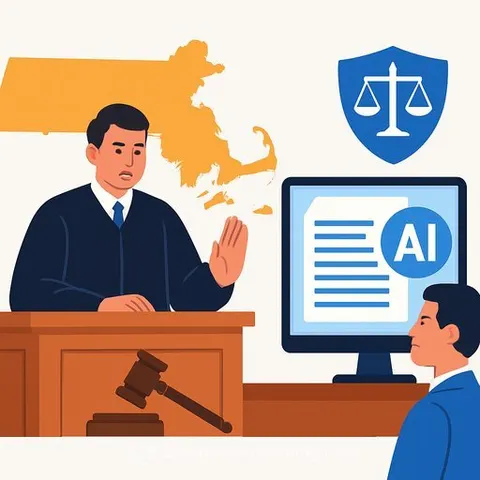
A federal appeals court is weighing whether to remove a Mississippi district judge from a case after he admitted his chambers used Perplexity to draft an order containing fabricated citations and nonexistent parties. The 5th U.S. Circuit Court of Appeals heard arguments Monday on the challenge, which stems from a July 2025 temporary restraining order blocking a state law that prohibits diversity, equity, and inclusion programs.
U.S. District Judge Henry T. Wingate of the Southern District of Mississippi withdrew the initial order after the state attorney general's office flagged multiple errors. The ruling referenced allegations and parties not in the lawsuit, cited declarations by four people that did not exist, and included language absent from the Mississippi law being challenged. Wingate later said a law clerk used the generative AI tool to synthesize docket information, and that the order was an early draft that skipped the court's standard multi-layer review process.
Hallucinated citations persist in amended order
Despite the withdrawal and correction, problems lingered. During Monday's hearing, 5th Circuit Judge Jerry Smith pressed attorneys on why an erroneous AI-generated citation still appeared in the amended order filed by Wingate. "Don't you think that's a pretty serious matter?" Smith said, according to Law.com. "If after all that had happened with getting rid of the initial order, that there still would be an AI hallucination in what was finally issued?"
The exchange highlights a growing tension in federal courts as generative AI tools become more accessible to chambers staff. The incident raises questions about supervision protocols for law clerks and the reliability of AI-assisted legal drafting when standard review procedures break down. For legal professionals navigating these tools, understanding their limitations is now a practical necessity - not a theoretical concern.
Attorneys clash over remedy for the AI error
Robert McDuff of the Mississippi Center for Justice, representing student groups challenging the state law, argued that a subsequent preliminary injunction should stand because Wingate himself made the decision, not an AI tool. Deputy Mississippi Solicitor General Anthony M. Shults pushed for a different outcome, urging the 5th Circuit to vacate the order and reassign the case to another district judge.
"In the preliminary injunction order, the court didn't disclaim the TRO and actually embraced it and relied on the legal reasoning in the flawed TRO, which we think is very concerning," Shults said. The state's position is that the original error contaminated the legal reasoning that followed, even after Wingate issued a corrected version.
Why this matters for legal professionals
The 5th Circuit's handling of this case will likely set expectations for how trial courts must disclose and verify AI-assisted work product. For practicing attorneys, the message is clear: AI-generated drafts require the same rigorous verification as any other research - and judges who fail to enforce that standard risk losing cases on appeal. Law firms and courts investing in Perplexity AI Courses should treat technical proficiency and verification protocols as equally essential skills.
Beyond the immediate procedural questions, the case underscores a practical reality for anyone using AI for Legal Professionals. The tools can accelerate drafting and research, but their output is only as reliable as the human review process surrounding it. When that process collapses - as it did here, with an early draft bypassing standard checks - the consequences can include public judicial reprimands and vacated orders.