
AI news ·
US court weighs copyright for meme made with seven AI prompts
A US federal court heard arguments Monday on whether AI-generated content can be copyrighted, centering on a meme character created with seven prompts in roughly 15 minutes.
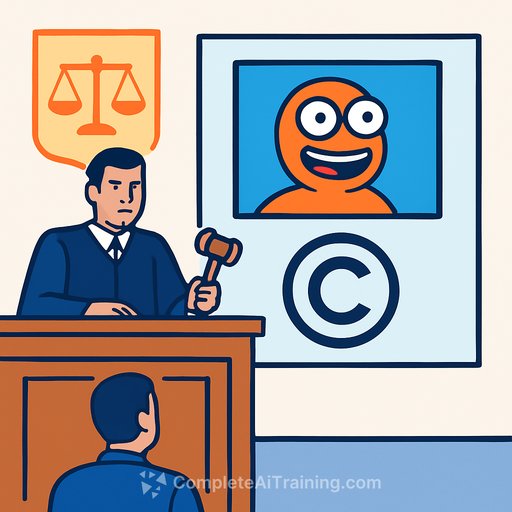
A US federal court heard arguments Monday in a copyright dispute that tests whether AI-generated content can qualify for legal protection. The case centers on Tung Tung Tung Sahur, a meme character created by Indonesian teenager Noxa in 2025 using OpenAI's image generator, which has since amassed billions of views across YouTube and TikTok and appeared in games, cosplay, and merchandise.
Mementum, a French agency representing Noxa, sued Do Big Studios for using the character in a Roblox game without permission. The agency argues that AI-assisted work should qualify for copyright when a human provides sufficient creative direction - in this case, seven prompts entered over approximately 15 minutes.
The legal question at stake
US copyright law requires human authorship, a standard the US Copyright Office has reinforced repeatedly in recent years. The court must now decide where the line falls between using AI as a tool - similar to a camera or editing software - and generating content that lacks the human creative spark the law demands.
James Grimmelmann, a professor of digital and information law at Cornell University, told The Guardian AI that sparse prompting may not clear that bar. "The question is whether the prompts reflect sufficient creative choices about the expressive elements of the output," he said. "Seven prompts in 15 minutes is not a lot."
Mementum's legal team countered that Noxa refined the character through iterative prompts, selecting and discarding outputs until the drum-like figure matched his vision. They point to the character's distinct design and global recognition as evidence of creative authorship.
Industry implications ripple beyond memes
The case has drawn attention from game studios, media companies, and legal scholars who see it as a bellwether for AI-generated content rights. Do Big Studios and other defendants, including Spyder Games LLC and Speedy Simulator Gaming LLC, argue that AI outputs currently fall outside copyright protection and remain in the public domain.
Aaron Moss, a copyright attorney at Greenberg Glusker, said the outcome could reshape how agencies and creators approach AI tools. "If courts draw the line at substantial human modification or curation, we'll see workflows adapt accordingly. If they shut the door entirely, that changes the calculus for anyone building a brand on AI-assisted work."
The court has not indicated when it will issue a ruling.
Why this matters for creatives, legal professionals, and communications teams
For anyone producing or managing intellectual property, this case will set practical boundaries. A ruling that requires demonstrable human creative control could force agencies and studios to document their AI prompting processes more rigorously. For legal and PR teams, the decision will clarify what risks exist when using AI-generated assets in commercial work - and what disclaimers or licensing structures may become necessary. Professionals navigating these shifting standards can build relevant expertise through AI Regulatory Compliance Courses and AI Intellectual Property Courses that address the intersection of AI tools and legal frameworks.