
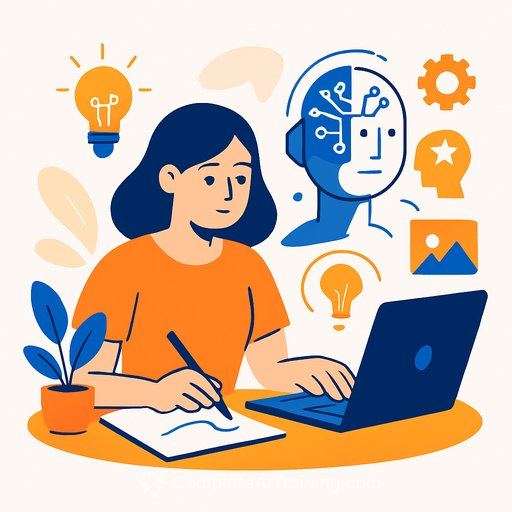
It’s 2025, and AI has settled into everyday life, handling routine tasks smoothly. But for creatives, AI can do much more—it can spark innovation, inspire experiments, and open doors to unexpected ideas.
1. Collaborate With AI
AI can explore angles you might miss, drawing from diverse cultures and hidden patterns. Instead of using AI for basic outputs, treat it like a thinking partner. Writing a novel? Let AI suggest unusual plot twists or character motives that challenge your story. In visual arts, give AI loose guidelines—like a color theme or a chaotic vibe—and see what fresh styles emerge. Graphic designers can ask AI to create new visual systems that break usual rules. Let AI push you into new creative zones, then shape the results with your own touch.
2. Optimize Your Creative Schedule
Creativity often comes in waves, and AI can help you spot when you’re at your best. By analyzing past projects and work habits, AI can suggest ideal times for brainstorming, writing, or resting. Think of it like a personal trainer for your creativity, helping you work smarter, not harder. You might find you’re more inspired late at night or after a meal. The goal is to match your workflow with your natural rhythms, not to force creativity on a fixed schedule.
3. Use AI to Combine Genres
AI can blend styles, mediums, or techniques to create something truly new. Ask it to mix the structure of a classic novel with video game pacing, or combine minimalism with Victorian detail. Filmmakers might fuse sci-fi with noir; musicians could merge jazz and techno. These combinations don’t just join two things—they create fresh experiences that expand your creative possibilities.
4. Create Constraints to Push Creativity
Limits can spark innovation. Instead of endless options, let AI set unusual boundaries: use only certain colors, write only in present tense, or avoid specific words. Design-wise, instruct AI to use only geometric shapes or exclude straight lines. These constraints force you to find unique solutions within a set framework. Many great creative breakthroughs come from working within limits, and AI can help you find those boundaries.
5. Challenge Your Creative Process
It’s easy to stick with familiar habits, but AI can push you beyond comfort zones. Feed AI your ideas or drafts and ask for alternatives that clash with your usual approach. Writers can get unexpected plot twists; designers might receive bold layout changes. When AI suggests something uncomfortable or “wrong,” take a closer look—that’s often where new ideas grow. AI isn’t just a helper; it’s a challenger to your creativity.
6. Mine “Creative Waste” With AI
Creative waste refers to the sketches, drafts, and fragments that don’t fit your final work. AI can analyze these scraps to uncover hidden connections or ideas you missed. Think of AI as an archaeologist, digging through your discarded bits to find overlooked gems. This approach turns what seemed like clutter into valuable creative fuel.
7. Get Real-Time Feedback on Your Work
Getting timely, useful feedback can be tough. AI can simulate audience reactions before you share your work. Writers can get instant analysis on tone, pacing, and emotional impact, with suggestions to better engage readers. Musicians can hear how a piece might affect listeners and get ideas to tweak arrangements. This feedback loop helps you refine your work while it’s still fresh.
Using AI isn’t just about speeding up tasks. With the right mindset and prompts, AI becomes a creative partner that challenges and inspires you. Explore these approaches to make AI a tool that expands your creative possibilities.