
AI news ·
72% of Gen Z consumers have taken action against brands using AI marketing, study finds
72% of Gen Z consumers have taken action against brands using AI-generated marketing, per a Rival Technologies study of 901 participants. Half have unfollowed brands on social media, and 43% have stopped buying entirely over AI-made content.
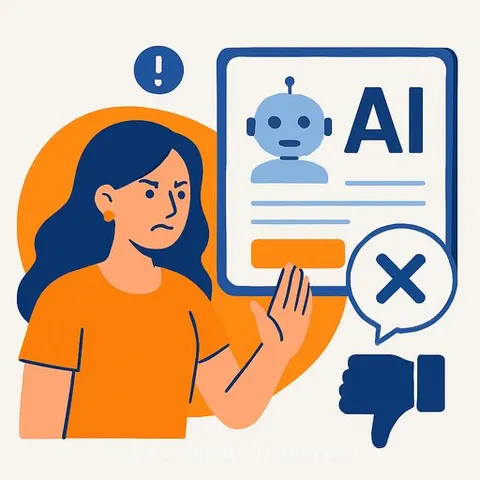
Nearly three in four Gen Z consumers have taken direct action against a brand after encountering AI-generated marketing, according to a new study from Rival Technologies. The research, based on 901 Gen Z participants across the US and Canada, found that 72% have punished a brand - from unfollowing on social media to stopping purchases entirely - after realizing its marketing was made with AI.
The findings pose a direct challenge to marketing teams adopting AI to produce content at scale. With 74% of respondents saying they react negatively when they detect AI-made marketing, and half describing that reaction as very negative, the cost of misusing the technology is measurable.
How Gen Z punishes brands
The backlash shows up in concrete behavior, not just sentiment. Half of respondents have unfollowed a brand on social media, 49% have complained to friends, family or online, 48% have unsubscribed from emails or texts, and 43% have stopped buying from a brand altogether.
Only 8% of Gen Z consumers said they react positively to AI-generated marketing.
The study also found that negative reactions intensify with age. Strong negative responses rise from 44% among 18-to-20-year-olds to 54% among those aged 25 to 29.
Why Gen Z object
The objection is about people, not pixels. Gen Z respondents tied their negative reactions to lost jobs and uncompensated artists, not to how the AI work looks. That distinction matters for brands: messages celebrating AI-driven efficiency alongside workforce reductions could reinforce the concerns consumers already have about how companies use the technology.
"Marketers are moving quickly with AI, and Gen Z is paying attention to how brands use it and what that use says about the company," said Paula Catoira, chief marketing officer of Rival Group. "Their concerns go beyond the content itself to questions about jobs, creativity and how people are being treated. Attitudes toward AI can change quickly, which makes it important for brands to keep listening rather than assume they already understand where Gen Z stands."
Regional differences also emerged. Eighty-four percent of Canadian participants said they react negatively to AI-made marketing, compared with 65% in the US. Nearly half of Canadian respondents (48%) have stopped buying from a brand over AI marketing, versus 38% in the US.
The study was conducted in July 2026 using Rival's mobile-first, conversational research platform, drawing participants from the company's proprietary panels.
Why this matters for marketing professionals
For marketing teams, the takeaway is that AI adoption has a visible cost attached. Using AI to produce content is no longer a neutral efficiency play - it's a brand decision that a significant share of young consumers will interpret as a statement about how the company treats people. The study suggests marketing leaders should pair AI adoption with clear policies around disclosure and creative labor, and test audience sentiment rather than assume AI-generated content is invisible to consumers. Those looking to build AI skills while keeping consumer trust in mind may want to explore structured training like the AI for Marketing Managers path, which covers practical applications and audience considerations. For leadership teams, the AI for CMOs course addresses how to align AI strategy with brand perception at scale.