
AI news ·
73 Agents On Board: How 30-Minute 1:1 Coaching Made AI Stick at LJ Hooker
Ops lead Shawn Hayes turned four LJ Hooker offices into steady AI users with human-first rollout. Smart SMS clear handoffs and 1:1 coaching drove replies, appraisals, and adoption.
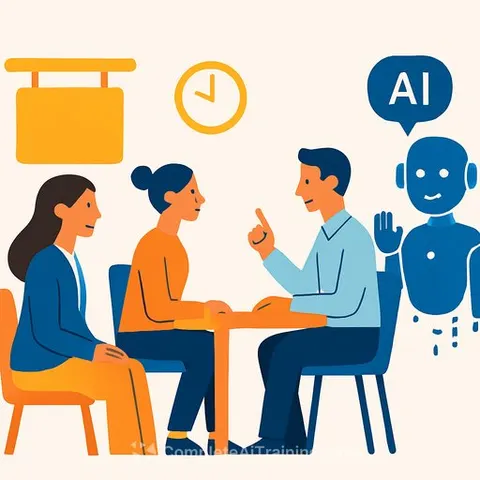
From Sceptics to Daily Users: How an Ops Leader Rolled Out AI Across Four Offices
TL;DR: Regional operations manager Shawn Hayes turned a 73-person, four-office LJ Hooker network into consistent AI users with a human-first rollout. The strategy pairs automated lead nurturing with personal training and clear handoffs to agents. Result: more conversations, more appraisals, and a team that actually uses the tools.
The Real Adoption Problem
Most AI rollouts die after the demo. Leadership is excited, a few reps try it, then tools collect dust while old habits take over. That's a rollout problem, not a tech problem.
Shawn fixed it by treating adoption as a people project. Her plan: simple use cases, one-on-one enablement, and visible wins that spread across the floor.
The Four Types of AI Users (And Why It Matters)
- The Enthusiasts: excited, will try anything.
- The Skeptics: doubtful, need proof.
- The Passives: indifferent, won't initiate.
- The Fourth Group: interested, but don't want to do it themselves. They want results via an assistant or admin.
That fourth group is where ops can win big. Route the work to assistants, keep the agent focused on client conversations, and you'll see adoption without friction.
The SMS Play That Actually Gets Replies
Shawn's team runs automated SMS campaigns via RiTA (now owned by Cotality; formerly CoreLogic). They stopped sending "Want a free appraisal?" and started sending information-first messages that earn a response.
Example: "Hey John and Sandra, did you know that this property around the corner from you just sold for a million dollars? We'd love to gain your insights or if you'd like to chat about what's happening in your street, please give me a call."
Replies went through the roof. People asked "How much?" or "That only just went online," and continued the conversation as if it were written just for them.
Human-in-the-Loop, By Design
AI handles the first touch: qualifies interest, schedules callbacks, answers simple questions, then hands off at the right moment. Agents receive transcripts and step into warm conversations. No guessing, no cold outreach.
Continuous Learning = New Margins
Even as an ops lead with wins on the board, Shawn found new use cases at the REIWA Innovate 2025 conference. One practical win: using AI tools to remove garden hoses from listing photos instead of paying $40 per image. Small savings, big impact across dozens of listings.
The 30-Minute Solution
Shawn doesn't do mass emails or group trainings. She books 30-minute, one-on-one sessions with each agent. No lectures. No hype.
Each session is built around the agent's workflow. If follow-ups slip, AI automates touch points. If cold calling is painful, AI surfaces warmer leads from the database. If a top performer is stretched thin, the assistant runs the tools for them.
Start with the Willing, Let Success Do the Selling
Shawn begins with agents who are open to change. Their early wins create curiosity, which pulls cautious reps across the line. Adoption spreads because results are visible and local.
Private Learning = Safer Adoption
Many agents want to learn without the crowd. One-on-one sessions make it safe to ask questions and test ideas. Independence is respected, and skills grow faster.
Results Over Reports
The team records activity but doesn't obsess over dashboards. What matters: more appraisal requests, more qualified conversations, and consistent tool usage. In operations, momentum beats perfect measurement-optimize after the habits stick.
The Paradox of Personal Touch
As automation increases, human connection becomes a differentiator. A quick compliment, a 10-minute check-in, and consistent support keep adoption high. Don't treat people like a number-especially while you implement machines.
Ops Playbook: How to Roll Out AI Across Multiple Offices
- Segment your users into four groups and plan enablement for each.
- Pick one high-signal use case: information-first SMS to your database.
- Build human-in-the-loop handoffs. AI opens, agents close.
- Train in 30-minute, one-on-one sessions tied to personal outcomes.
- Start with the willing. Socialize their wins.
- Route "I see the value but won't do it myself" users through assistants.
- Measure the few metrics that matter: replies, callbacks booked, appraisals, and deals influenced.
- Keep learning. Add one new use case per quarter as habits stabilize.
Tools and Resources Mentioned
- ChatGPT - content, replies, and analysis.
- RiTA by Cotality - SMS automation and lead nurturing.
- GoList - lead allocation and routing.
- Rex Software - CRM and property management.
- REIWA Innovate Conference - future-focused real estate ops.
Listen to the Full Conversation
Hear more from Shawn Hayes on the Thought Leaders podcast, including specific plays, tool stacks, and lessons from managing AI across four offices. Find it on YouTube, Spotify, Apple Podcasts, or your preferred player.
Connect with Shawn Hayes
- Facebook: Shawn Hayes - LJ Hooker Property South West
- LJ Hooker Southwest WA
- Email: shawn.hayes@ljhsouthwest.com.au
- Phone: 08 97 91 6880
Further Training for Ops Teams
If you're setting up AI for a multi-office team and want structured paths by role and skill, explore:
Join the Conversation
What's been your most surprising "small win" with AI in real estate ops? Is one-on-one training more effective than group sessions for your team? What task would you hand to AI tomorrow if you could? Share your thoughts below.
Key takeaway: The companies that win with AI don't chase features. They build human-centered rollouts that make adoption inevitable.