
AI news ·
9-figure outsourcing startup Horatio says AI should empower workers, not replace them
Horatio, a bootstrapped outsourcing company co-founded by Jose Herrera, generates nine figures in annual recurring revenue with over 3,500 employees. It grew 40% year-over-year while staying private, with 77% of clients expanding their teams.
Jose Herrera and his co-founders Alex Ross and Jared Karson built Horatio, an outsourcing company that generates nine figures in annual recurring revenue without taking a dime of outside capital. The company, launched in 2018, now employs more than 3,500 people across the U.S., the Dominican Republic, Colombia, and Honduras, serving over 125 clients in healthcare, fintech, and ecommerce.
Herrera, who started his career at Goldman Sachs and Morgan Stanley before investing in direct-to-consumer startups, kept seeing the same problem: businesses struggling with customer service. He knew the issue firsthand from a summer call center job before college.
"The environment in the traditional call center is super dark, dingy, feels like a prison," Herrera told Entrepreneur. "They really don't invest in the employee experience, and it's an industry that has convinced itself that this is just how outsourcing worked."
Building a different kind of call center
Herrera met Ross and Karson at Columbia University's MBA program. The trio bootstrapped Horatio with their own savings, opening their first location in the Dominican Republic. They named the company after Hamlet's trusted friend.
Horatio has grown at a 40% year-over-year rate while staying private. The founders never wanted venture capital. "We never set out to build a venture-backed company," Herrera said. "We wanted to build a great company. I wanted to bring the Silicon Valley culture, that tech campus culture, to nearshore talent."
The approach centers on employee experience: open workspaces, career development programs, wellness initiatives, and an on-site daycare at headquarters. That investment appears to pay off - more than 77% of clients have expanded their teams and scope within the brand.
AI as a tool, not a replacement
Horatio has added AI consulting services to help clients deploy technology from its roster of roughly 40 AI vendors. The company found that vendors didn't have time to implement their own tools, and clients didn't have time to experiment. Horatio's team of AI strategists now handles deployment and fine-tuning.
The company tells clients it doesn't sell "easy automation." Instead, it builds AI for regulated industries where off-the-shelf bots fall short. For healthcare and fintech clients, accuracy, compliance, and privacy are non-negotiable.
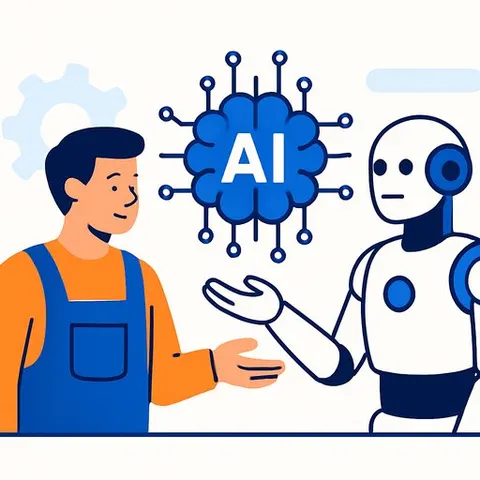
"Our clients understand that we should not use AI to replace the human touch," Herrera said. "We should use AI to make our humans supercharged or superpowered. Because in healthcare and fintech, close enough in AI isn't good enough."
For customer support professionals, this model points to a practical shift: AI handles routine workflows while agents focus on judgment calls and relationship work. Horatio's growth suggests that approach builds client loyalty - and careers. Some of the company's first-day agents now serve as directors of operations.
If you're a support leader weighing how to introduce AI without eroding service quality, Horatio's playbook offers a concrete template: pair AI tools with clear career paths for agents, and measure success by customer lifetime value rather than cost reduction alone. Training resources like AI for Customer Support and the AI Learning Path for Call Center Supervisors cover similar ground for teams building these systems in-house.
Why this matters for customer support professionals
Horatio's results show that AI adoption doesn't have to mean downsizing or deskilling support roles. The company's agents who joined at launch now run operations. That career trajectory exists because Horatio treats AI as a force multiplier, not a substitute.
"Investing in our people is going to remain central to our thesis," Herrera said. "As we diversify and expand across different regions, continuing to foster that talent is top of mind for us."