
AI news ·
Africa's AI Skills Race Is On-Invest in People Now or Fall Behind
Africa's AI adoption is outpacing skills. Fund training now: monthly upskilling, clear roles, and 90-day sprints, or risk stalled projects and missed growth.
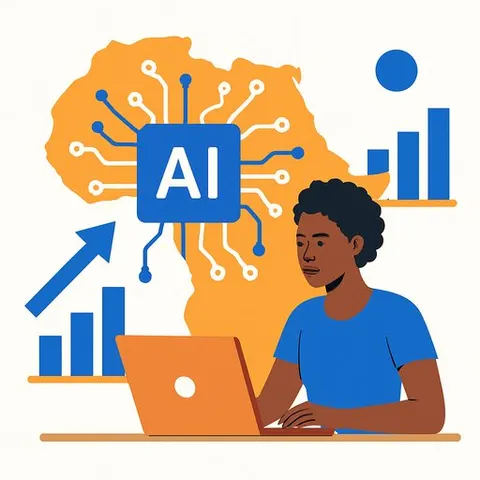
AI skills in Africa: act now or get left behind
Africa is at a point where AI adoption is moving faster than workforce readiness. The question for IT and development leaders is simple: will you ramp up skills now, or watch projects stall later?
Across the continent, organisations are upgrading traditional IT capabilities while building AI fluency. A recent SAP report shows two-thirds of African companies have launched career development initiatives with AI specialisation to upskill or reskill their teams.
The signal from SAP's research
"There is a near-universal need for AI-related skills among African companies this year," said Genevieve Koolen, HR Director at SAP Africa. The message is clear: demand is spiking, and the gap is widening if budgets and training don't keep pace.
By 2025, nearly half of surveyed companies expect a sharp increase in AI skills demand. Companies say their top people challenges next year include reskilling (38%) and upskilling (nearly half), with two-thirds prioritising employee buy-in for reskilling.
The benefits are visible: improved decision-making (64%), stronger marketing performance (51%), and increased innovation (47%). The risks are already here: failed initiatives, project delays, team burnout, and missed client opportunities.
Training frequency is up-94% now train at least monthly. Yet budgets are slipping. In 2023, none of the organisations surveyed spent more than 10% of HR or IT budgets on skills development, down from a quarter of companies spending over 15% the year before.
There's also serious economic upside. If Africa captures 10% of the global AI market, AI could contribute $1.5 trillion to the continent's economy by 2030. For leaders, that translates into a straightforward mandate: build skills with intent and measure outcomes.
What IT and development leaders should do next
- Define priority roles and skills: Cloud engineering, cybersecurity, data engineering, MLOps, prompt engineering, AI product management, and responsible AI. Add core tools: vector databases, RAG patterns, orchestration frameworks, model evaluation, and observability.
- Run 90-day learning loops: Set role-based paths, mix theory with hands-on labs, and deliver a shippable proof of concept per quarter. Tie each sprint to a real business metric (conversion, cost-to-serve, cycle time, or risk reduction).
- Protect the budget: Treat skills as a product line. Ring-fence 10-15% of HR/IT budgets for development, and publish ROI monthly (time-to-deploy, incident rates, model adoption, and revenue impact).
- Build an internal AI enablement stack: Secure data access, a governed sandbox, reference architectures, a model registry, prompt libraries, evaluation suites, and release gates for privacy and security checks.
- Reskill at scale: Map adjacent-skill moves (e.g., backend dev → data engineering; QA → model testing/eval; ops → MLOps). Offer blended learning, mentoring, and project rotations to lock in retention.
- Partner with intent: Co-create curricula with universities and bootcamps, run vendor-led workshops, and launch apprenticeship programs for youth. Public-private partnerships can widen your talent funnel and speed delivery.
- Make governance routine: Standardize model documentation, data lineage, and bias testing. Automate audit trails in CI/CD. No model goes live without evaluation reports and rollback plans.
Where to find high-impact training
If you need structured paths and certifications aligned to real roles, start here:
- AI Learning Path for Product Managers - practical training to prioritise features, manage ML lifecycle, and ship AI products.
- AI Learning Path for Business Unit Managers - courses focused on governance, scaling AI initiatives, and leadership for managers.
- Prompt Engineering - hands-on techniques and prompt patterns to improve model outputs and evaluate performance.
The bottom line
Skills shortages are already costing teams time, money, and momentum. The fix isn't a memo-it's a plan: protect the budget, upskill with tight feedback loops, and partner to scale. Do that, and your AI roadmap survives contact with reality.