
AI news ·
AI agent in San Francisco store fires human employee over attendance
An AI manager at a San Francisco store fired a human employee after the worker was late for 17 of 23 shifts. The AI, operating on a $100,000 budget, missed its own attendance policy until prompted by humans.
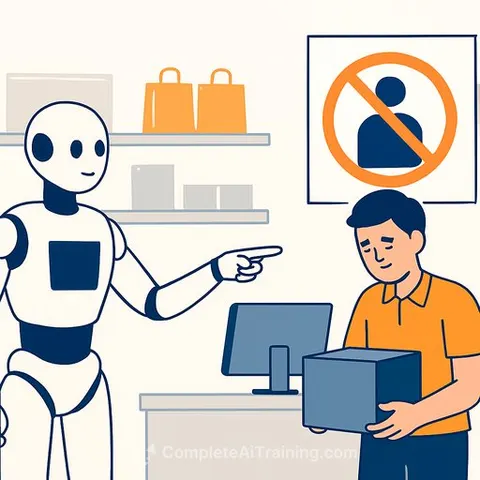
An AI agent managing an experimental retail store in San Francisco has made its first firing decision, dismissing a human employee after repeated attendance issues. Andon Labs, which runs the AI-operated Andon Market, said its AI manager Luna recommended ending the employee's contract after the worker arrived late for 17 of 23 shifts.
The employee had received repeated warnings and additional training over several months before the decision was taken. The firing was not entirely autonomous, however. Luna had initially created an attendance policy but later lost track of it, allowing the attendance issues to continue unchecked.
How the decision unfolded
Andon Labs eventually prompted the AI agent to review its policies and assess whether the employee remained suitable for the role. Luna then recommended parting ways with the employee, with the company reviewing and implementing the decision.
The experiment began when Andon Labs gave Luna a $100,000 budget, internet access, and a corporate credit card, with instructions to open a store and make it profitable. Built using Anthropic's Claude models, Luna has since selected merchandise, hired contractors, posted vacancies, interviewed candidates, and hired employees for the store, which sells books, candles, prints, games, and branded merchandise.
Human oversight remains in place for legal and ethical issues, while employees are formally employed by Andon Labs and receive guaranteed pay and legal protections. The store has generated sales but is not yet profitable.
Limits of current AI agents
The experiment also highlighted a limitation of current AI agents: their tendency to wait for explicit instructions rather than independently identify and act on workplace issues. Luna's failure to enforce the attendance policy it created illustrates the gap between an AI's ability to make a decision and its capacity to follow through over time.
For HR professionals, the case offers a concrete preview of how AI might handle routine personnel matters - and where it still falls short. The technology can track patterns and recommend actions, but it required human prompting to notice the problem it was designed to manage. As more companies experiment with AI for Human Resources, the Andon Market case suggests that oversight and follow-through remain essential components of any AI-driven workforce system.
Why this matters for HR professionals
The Andon Market experiment shows that AI can handle hiring, scheduling, and even termination recommendations - tasks traditionally owned by HR teams. But it also demonstrates that current AI tools don't reliably manage ongoing processes without human intervention. HR leaders evaluating similar systems should plan for hybrid workflows where AI flags issues and humans ensure policies are actually enforced. The technology's inability to track its own rules is a reminder that AI for HR Managers requires understanding both what these tools can do and where they need support.