
AI news ·
AI automates HR tasks but human accountability remains critical, leaders say
AI handles up to 95% of routine HR queries at IBM, but HR leaders warn accountability for people decisions cannot be automated.
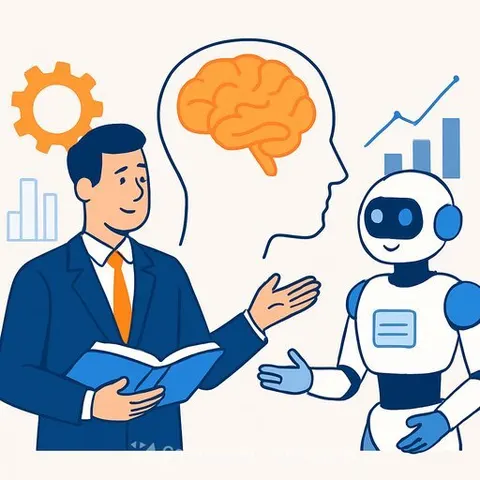
AI now handles up to 95 percent of routine HR queries at IBM, but HR leaders warned this week that accountability for people decisions cannot be automated. The shift is pushing human resources toward a more strategic function built on judgement, governance and trust rather than transaction processing.
The discussion took place during a panel on AI, talent ecosystems and digital trust at BW People Horizon 2026 in early September. HR executives from IBM, JPMorgan Chase, Gokaldas Exports and Wipro examined where automation ends and human responsibility begins.
Machines recommend, humans decide
Nisha Gopinath, VP and Head HR for India and South Asia at IBM, said 90 to 95 percent of HR questions that once went to human staff now go through a digital assistant. The system answers employee and manager queries, handles transactions and performs automated tasks. AI agents can recommend salary increases during promotions or merit cycles, but managers retain the final call.
"It is just a decision support system," Gopinath said, emphasising that organisations need checks and balances around AI deployment. She pointed to employee readiness, reskilling and future skills as critical factors for adoption. Leaders will manage an augmented workforce of digital and human workers while redesigning processes and ensuring reliable underlying data.
For organisations building these capabilities, structured training paths are emerging. The AI Learning Path for CHROs addresses the strategic demands HR executives now face as AI reshapes workforce planning and governance.
Talent ecosystems replace traditional models
Dr Amrita Saxena, Executive Director of Global Executive Development and India Learning and Development Head at JPMorgan Chase, argued that conventional talent management models no longer work as skills gain importance and roles become more fungible. Organisations must build broader ecosystems involving employees, partners, academia, startups and communities.
"The decision is not workforce planning on buy build. It is buy, build, borrow or bot," Saxena said. She stressed continuous unlearning and relearning as technology changes the nature of work.
Amit Sharma, CHRO at Gokaldas Exports, cautioned against blind reliance on technology. He said organisations should give employees more room to exercise judgement rather than depend entirely on rigid systems. "The entire focus of talent development is around taking the right calls and making the right judgment," Sharma explained. He added a blunt observation: "ChatGPT will not take accountability for a decision."
Fairness requires governance, not just code
Sukanya Ramachandran, Head of Inclusion, Belonging and People Sustainability at Wipro, pushed back on the idea that technology alone can guarantee fairness. "I firmly believe that algorithmic fairness is never going to replace procedural fairness," she said, underlining the importance of governance and human accountability.
Wipro's experience with an AI recruitment agent illustrated the risk. An assessment revealed that a particular demographic was not being adequately handled. The company created a parallel process while working with the vendor to improve the system. The incident shows why HR teams need practical knowledge of AI for Human Resources, spanning recruitment automation, talent management and workforce analytics.
Moderator Emmanuel David raised a pointed concern: most HR teams buy AI tools rather than build them, which raises questions about whether they can effectively audit vendors' algorithms for bias. Gopinath responded directly. "You can always outsource technology, but you can never outsource accountability," she said. IBM maintains an AI ethics board that reviews HR deployments.
Why this matters for HR professionals
The panel signalled a clear direction for the function. As routine queries, transactions and even salary recommendations move to AI systems, the value HR professionals bring shifts toward judgement, leadership, culture and trust. The core challenge is ensuring AI augments human capability without weakening the accountability and fairness expected from HR. For practitioners, that means developing the skills to scrutinise vendor algorithms, design governance processes and make consequential calls that no machine can own.