
AI news ·
AI coaching tools help managers rehearse difficult workplace conversations
42% of managers know what to say but struggle with how to say it, and AI coaching tools now let them rehearse difficult conversations with simulated employee reactions and feedback.
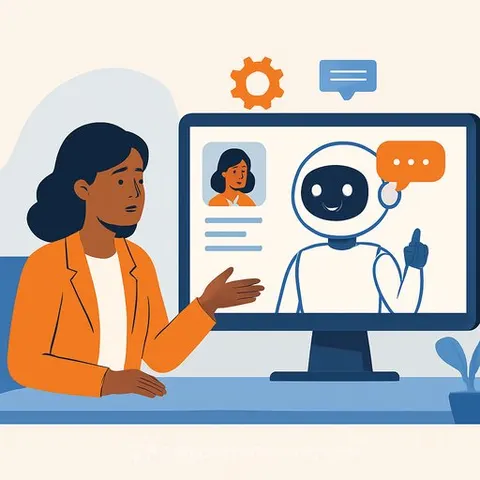
Managers who dread telling an employee their performance is subpar, their raise isn't coming, or their position is being cut now have a new set of preparation tools. AI coaching platforms are helping supervisors rehearse these difficult conversations before they happen in real life, addressing a gap where 42% of managers say they know what they want to say but struggle with how to say it, according to a July survey from The Predictive Index.
The survey also found that only 20% of managers prefer to prepare for difficult conversations entirely on their own, without a framework, coaching guide, or HR input. Top blind spots include delivering criticism constructively, anticipating an employee's reaction, and staying objective.
"Spontaneity is not a goal of a high-stakes work conversation," said Emily DeJeu, a professor of business communication at The Tepper School of Business at Carnegie Mellon University. "You want to know the executive has really thoughtfully prepared for an important conversation."
How AI role-playing works for managers
AI coaching tools come in text-based and voice-enabled formats. Some incorporate employee data such as personality profiles to tailor the simulation, while others use generic scenarios. Managers can run multiple rounds: first asking the AI to simulate an angry employee, then an emotional one. The core value is not automating the conversation itself but letting the manager practice delivery and receive feedback - something a mirror cannot provide.
"It's like batting practice," said John Morgan, president at LHH, a human resources consulting firm that offers an AI coaching tool through a subsidiary. The only way to improve is through practice, but real-world opportunities are limited.
Managers can give the AI specific parameters. They might tell the tool to role-play giving feedback to a sensitive employee who is habitually late, or ask it to grade them on tone, flag legally risky topics, and assess whether their language is concise. "The role-playing alone is good, but the real lessons come from the feedback," said Anthony Belluccia, senior product scientist at The Predictive Index.
DeJeu described one manager who habitually opened difficult conversations with the bad news, unaware that his blunt delivery was off-putting. The AI advised him to first discuss the employee's contributions and value to the company before easing into the negative news. "It guided him on how to reframe the conversation," she said.
Employees can use the same tools
The preparation works both ways. Employees who suspect a tense conversation is coming can use free tools to prepare more thoughtful and articulated responses. The same role-playing logic applies: practicing how to react to criticism or unexpected news can lead to clearer communication under pressure.
Where AI falls short and what HR needs to watch
AI tools are designed to be agreeable, which becomes a problem when a manager genuinely needs critical feedback. DeJeu recommends telling the tool directly to stop being agreeable and to be more direct. Managers should also avoid entering any personally identifiable information into public AI tools - no names, no performance details, no confidential data. Employer-approved enterprise systems may have different privacy controls, and HR professionals should understand the vendor's data retention, access, and model training policies before deploying these tools.
Even with AI preparation, human oversight remains essential. Casey Schaffer, founder of Definitions Coaching and Consulting, recommends practicing first with an AI coach, then debriefing with a supervisor or HR partner to catch missed legalities or messaging gaps. Looking someone in the eye during a termination conversation is fundamentally different from looking at a screen. "The emotional weight of something like a termination conversation is nearly impossible to replicate," Schaffer said.
For HR leaders evaluating these tools, understanding how AI fits into broader people-management workflows is critical. The AI for HR Managers Learning Path covers practical applications of AI in coaching, performance management, and employee relations. At the strategic level, the AI for VP of Human Resources Learning Path addresses governance, vendor evaluation, and policy considerations for AI adoption across HR functions.
Why this matters for Human Resources professionals
HR teams are often the ones fielding the fallout when a manager delivers hard news poorly. These AI tools shift some of the preparation burden away from HR and onto the manager, but they also introduce new risks around data privacy, legal compliance, and over-reliance on agreeable AI feedback. The HR role becomes one of setting guardrails: selecting enterprise-grade tools with clear data policies, training managers on what information never belongs in a prompt, and ensuring a human reviews the script before any high-stakes conversation. The technology can make managers sharper, but only if HR defines the boundaries for its use.