
AI news ·
AI data pipelines reshape modern web development stacks
AI-powered data pipelines are replacing fragile scrapers in web development, with teams cutting data-heavy feature development from weeks to days. The shift requires asynchronous processing, caching, and typed schemas to avoid the maintenance problems of legacy structures.
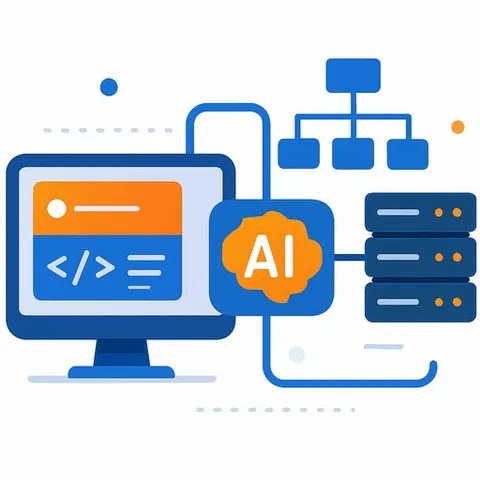
Web development is shifting from static databases and hand-built scrapers toward AI-powered pipelines that feed live, structured data into machine learning models. For engineering teams, the bottleneck is no longer the model itself - it's how quickly and cleanly they can get external data into it.
Modern full-stack applications increasingly rely on AI features like real-time search and recommendation engines, which require continuous access to fresh, structured external data. Static databases can't keep up. Integrating third-party extraction tools directly into backend microservices lets development teams convert unstructured web content into clean, machine-readable payloads, avoiding the maintenance burden of custom scrapers that break whenever a site's DOM changes.
From scrapers to data APIs
The practical shift is straightforward: instead of building and maintaining fragile scraping infrastructure, developers connect clean data APIs to vector databases and large language models. A typical integration fetches structured data, formats it for embedding generation, and passes it to the AI pipeline. That removes a significant chunk of backend maintenance work and lets teams focus on application logic.
For developers looking to build these skills systematically, an AI Learning Path for Web Developers covers the practical side of integrating AI into web workflows, from data handling to model deployment.
Faster sprints with AI APIs
Delegating tasks like natural language processing, semantic document analysis, and dynamic data enrichment to specialized endpoints keeps codebases modular. Engineers spend less time on infrastructure and more time on product logic. Combined with agile methodologies, that allows cross-functional teams to test hypotheses, refine prompt pipelines, and ship MVP features in days rather than months.
That speed comes with architectural responsibilities. Fetching, parsing, and embedding data in real time can introduce performance bottlenecks if not managed carefully.
Building resilient AI architectures
Engineering teams adopt asynchronous processing patterns to keep latency low and reliability high. Background task queues offload heavy extraction and vector processing to workers. Caching layers, such as Redis or edge memory stores, reduce redundant API requests for frequently accessed data. And resilient design patterns account for third-party rate limits and graceful degradation.
Keeping backend dependencies strictly typed and well-structured also prevents runtime errors as data schemas evolve. For software engineers working on these systems, an AI Learning Path for Software Developers covers AI integration and coding automation at scale.
"The future of web development isn't just about writing code - it's about orchestrating intelligent data flows."
Why this matters for IT and development teams
The practical takeaway: teams that adopt AI-powered data pipelines can cut development time on data-heavy features from weeks to days. The trade-off is architectural discipline. Engineers who plan for asynchronous processing, caching, and typed schemas from the start will ship faster and maintain systems that don't degrade under load. Those who bolt AI onto legacy structures will inherit the same maintenance problems they had with scrapers - just with more moving parts.