
AI news ·
A.I. detectors push writers to change their own work
A journalist found Pangram's AI detector flagged parts of his human-written work, prompting him to rewrite his own sentences to pass. His em-dash use dropped 50% as writers alter their prose to dodge AI tools, risking self-censorship.
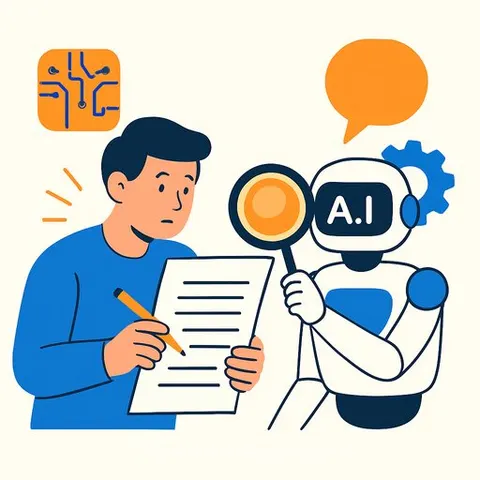
Writers are starting to change their own prose to dodge AI detectors - and that may be a bigger problem than the detectors themselves. A recent essay by a journalist who tested the popular AI detector Pangram on his own work found the tool sometimes flagged small portions of his fully human writing as AI-assisted, prompting him to rewrite sentences he'd already written by hand.
The episode illustrates a growing tension for working writers: AI detectors are meant to preserve trust in human work, but the pressure to register as "100% Human" can push writers into self-censorship. The journalist, who writes for multiple publications, described running drafts through Pangram before submitting them, then rewriting his own sentences when the detector returned a score below perfect.
He sent one editor a six-text explanation after a draft came back flagged as partly AI-assisted. "We were all good, he said," the essay recounts. But the experience left a mark.
Detectors are easy to fool
Pangram is among the most popular AI detectors, and its accuracy claims are strong. A company blog post last year said it had a "1 in 10,000 false positive rate." University of Chicago researchers and a New York Times journalist have found the tool works well.
But the journalist's own unscientific testing found a higher error rate. Tech writer Alex Heath, who uses AI in a back-and-forth editing process, reported that Pangram judged his text 100 percent human. Writer Freddie deBoer argued that Pangram "doesn't seem broken but does seem easy to break."
The tool's own definitions are part of the problem. Pangram describes AI-assisted writing as "text a person wrote partly with help from an AI tool-for example, editing or rewriting parts." That category is where the detector is most likely to miss an LLM's actual help, the journalist argued.
AI writing is in the water supply
Beyond the accuracy debate, the essay raises a subtler concern: AI-generated text is now so common that human writers are internalizing its tics. The journalist analyzed 64,000 words of his own published writing using Claude's Opus 5 model and found his em-dash usage had declined by about 50 percent - a conscious change as em dashes became a marker of AI slop.
But his use of antithetical framing - the "It's not x but y" structure - had gone up, despite his intention to avoid it. In the essay itself, he caught himself writing: "My anxiety about A.I. is not that it will make my job obsolete but that it will make me a little dumber."
Writers now face a version of the observer effect. The tools meant to detect machine writing are changing how humans write, sometimes in ways that make the work less distinctive. The journalist noted he has started picking words he "wouldn't have settled on otherwise" to sound less like AI.
Why this matters for writers
For anyone who writes for a living, the practical takeaway is straightforward: AI detectors are a fact of the workflow now, and their false positives are a real risk. If you use AI at any point in your process - even for brainstorming or light editing - run your final draft through a detector before you submit it. Know what score your typical work gets, and be ready to explain your process if a client or editor asks.
But the deeper lesson is about your own voice. If you find yourself editing your prose to satisfy a detector, that's a signal. Writers who want to stay ahead of both the machines and the tools that police them should study what makes their work recognizably theirs - and lean into it. The goal isn't to game a score. It's to write in a way that no detector would ever mistake for a machine's work in the first place. For practical help, resources like AI for Writers and AI for Creatives can help you understand where AI tools genuinely help versus where they erode your own judgment.