
AI news ·
AI-Driven Predictive Safety Slashes Offshore Incidents and Boosts Workforce Engagement
AI-driven predictive safety tech deployed across Noble’s offshore fleet cuts incidents by 43% and boosts workforce engagement by 30%. Real-time insights enable proactive risk management.
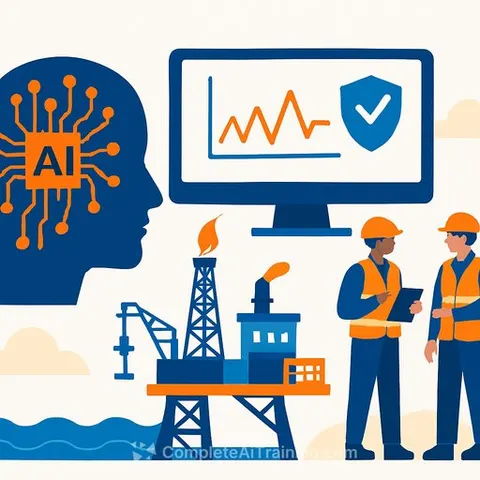
Predictive AI Transforms Offshore Safety Management
Offshore energy operations demand safety as a core priority—not just a metric but a necessity for continuous operations and regulatory approval. Despite years of investment in behavioral safety programs and risk controls, the industry has mostly reacted to incidents after they occur. A partnership between UK-based Fennex and Noble Corp. has changed that by developing AI-driven predictive safety technology, now fully deployed across Noble’s offshore fleet.
This technology leverages behavioral data and machine learning to predict potential incidents before they happen. The results speak for themselves: a 43% reduction in incident reporting and a 30% boost in workforce engagement across the fleet. This approach gives operators clear foresight, enabling proactive safety management rather than reactive responses.
Building a Data-Driven Safety Foundation
The journey started with digitizing Noble’s Behavior-Based Safety (BBS) program using Fennex’s AI-powered BBSS platform. This mobile-enabled, multilingual tool captures structured safety observations in real time across 30+ offshore assets. Moving away from paper forms, HSE teams now access detailed, high-resolution insights into behavioral patterns and emerging risks.
With over 3.5 million safety observations recorded, this dataset is among the most comprehensive in the offshore sector. These observations go beyond checklists—they’re behavioral signals that AI analyzes to separate actionable risks from background noise.
From Data to Predictive Insight
Earlier this year, a real-time predictive safety dashboard was introduced. It serves as an early warning system, providing 30-day incident risk predictions for each rig. Leaders can compare risk levels across assets and explore behavioral drivers like leadership engagement and the quality of corrective actions.
Key findings validated in the field include:
- Crews with 65% or higher stability experience fewer incidents.
- Active supervisory engagement, measured by balanced interventions, strengthens safety culture.
- Detailed corrective actions correlate with measurable reductions in incidents compared to generic responses.
These insights enable HSE teams to move from assumptions to evidence-based interventions, improving safety outcomes across operations.
Moving Beyond Compliance
This AI-driven approach shifts safety management from reacting to past incidents to anticipating and preventing future risks. It equips frontline leaders with real-time intelligence, reinforces accountability, and fosters a culture focused on early risk detection and mitigation.
Crucially, AI supports human judgment rather than replacing it, enhancing decision-making with data-backed foresight.
Why Predictive Safety Matters Now
Offshore operators face mounting pressures to maintain energy security while advancing decarbonization goals. Operational resilience is under scrutiny, making predictive safety an essential leadership priority—not a luxury.
The platform-agnostic design of this technology means it can be adapted to various operational settings. Following a successful pilot, Fennex and Noble are expanding the system to additional assets, setting a new standard for proactive safety management in the offshore sector.