
AI news ·
AI gets a national day reality check as Singaporeans question its role in cultural moments
Singaporeans are not broadly opposed to AI -- 54% of 271 tracked conversations were positive -- but backlash spiked when it was used in National Day content, with 92.2% of negative AI mentions tied to the parade.
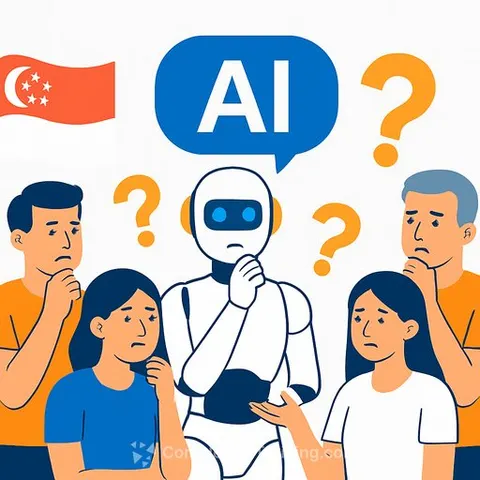
Two concurrent National Day projects in Singapore that used generative AI have sparked debate among creatives and the public about authenticity and accuracy in culturally significant work. Local filmmaker Jack Neo used AI to compose the music for his National Day song "Singapore is already 61" and generated visuals of politicians including Prime Minister Lawrence Wong, while Singapore-based studio Edenstone released an AI-assisted short film about a fictional National Day Parade under attack by a pathogen. Both projects, alongside an AI-generated banner removed from Kampong Chai Chee estate for inaccuracies in national flag depiction and human figures, prompted questions about where the technology belongs in content meant to represent national identity.
According to sentiment analysis by media intelligence firm CARMA, Singaporeans are not broadly opposed to AI: of 271 tracked conversations, 54% were positive and only 9% negative. But criticism became pronounced when AI was used in National Day content. The firm found that 92.2% of negative AI conversations referenced the National Day Parade, suggesting AI-related concerns were amplified when attached to Singapore's flagship celebration.
Negative conversations focused on visible AI errors, poor creative quality, and a perceived lack of human oversight. Criticism sharpened when AI-generated content misrepresented national symbols or appeared to replace local creative work. Some 46.5% of negative conversations referenced "people" and 40.6% referenced "government," meaning users questioned who was responsible for the content and how AI decisions were made. Positive reactions were strongest when AI was positioned as an enabler for digital progress and innovation.
Consumer backlash extends to brand advertising
DoubleVerify's "Global insights: Media quality in the age of AI report" found that half of Singapore consumers said their perception of a brand would be negatively affected if its advertising appeared alongside low-quality or spam-like AI-generated content. Only 23% said they would respond positively. When the work was professionally produced, just 18% said it would negatively affect their perception of a brand, while 45% said it would have a positive impact.
The findings suggest consumers are not opposed to AI-generated marketing itself, but to poor execution. This mirrors the debate around generative art in National Day content: accuracy and craftsmanship matter.
Are responsively produced AI works appropriate?
Stanley Yap, head of creative at Splash Productions, said the debate should centre on creative purpose rather than AI use. "AI is a tool. The bigger question is whether the creative actually rallies Singaporeans and strengthens that sense of patriotism. If using AI becomes the conversation instead of the message, or triggers a negative response. " He added: "We should embrace AI and new technology, but we also need to understand how ready our audience is to embrace it with us."
Kelvin Kao, founder and CEO of Protocol, said AI is an inevitable part of the creative toolkit but does not excuse a lack of craftsmanship. "At the end of the day, with creative work, we want to see craftsmanship. Creative work is subjective, but I don't think there was evidence of much craftsmanship there, so that was inherently disappointing," noting the work lacked an inherently human message, which he found difficult to accept. He said agencies must work with available tools, including AI, but the technology still needs to be tastefully applied.
For both creatives, the issue is not AI itself but what it displaces: the craft, human story and cultural insight behind an idea.
Why this matters for creatives
For people in creative fields, the case of National Day 2026 demonstrates that audience tolerance for AI-generated content drops sharply when it misrepresents national symbols, replaces local creative work, or shows visible errors. The distinction for AI for Creatives is not whether to use the technology, but whether the result demonstrates craft, centres a human story, and offers cultural nuance that allows audiences to recognise themselves in the work. When AI becomes the conversation rather than the message, the creative compomise is complete.