
AI news ·
AI gives online students practice in interpersonal skills
At Virginia Tech, a professor built AI role-play partners that resisted persuasion and gave feedback on student listening and conflict skills. Students in online courses said the AI forced them to work harder, making practice feel genuinely valuable.
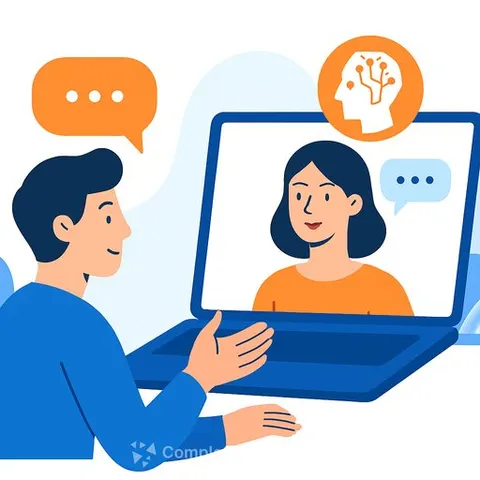
For instructors who teach communication-heavy subjects online, one of the biggest gaps has always been practice. Students can read about negotiation, mediation, or conflict resolution, but they rarely get to try those skills in a realistic setting. An experiment at Virginia Tech suggests generative AI can fill that gap.
Kathy Miller Perkins, a professor of practice in the Center for Leadership in Global Sustainability, spent months building two AI tools for her asynchronous courses. The first acted as a role-play partner with a fixed perspective - one that resisted easy persuasion. The second was a coach, offering feedback on how students listened, responded, and navigated conflict. The goal was not to replace human interaction, but to give students a safe space to experiment with difficult conversations.
The approach emerged from a practical problem. In a traditional classroom, students can role-play with classmates and get immediate feedback. Online, that is much harder. Perkins initially offered voluntary role-play sessions, but few students participated. Many were balancing careers, families, and competing responsibilities. Scheduling additional meetings was simply not realistic.
So she turned to AI. Students interacted with simulated conversation partners in scenarios that ranged from moderately challenging to intentionally difficult. The partners were programmed to push back, which forced students to work harder, listen more carefully, and apply the communication strategies they had been studying.
What surprised students
Perkins said the result surprised her. Students did not just click through the exercises - they meaningfully engaged. Many said the experience felt valuable precisely because the AI pushed back. They had to earn progress, and that made the practice feel real.
What surprised students most was the quality of the coaching. "Emotional intelligence is often considered uniquely human, but I had the AI tool provide feedback about how they communicated, listened and responded to conflict," Perkins said.
Building the tools took months of testing and refining. Every instruction mattered. Perkins adjusted prompts, corrected unintended behaviors, and made sure the feedback aligned with course objectives. She enlisted colleagues to test the system before students saw it.
Moving from answers to experiences
The experiment raises a broader question for educators: what if AI's value is not in generating answers, but in generating experiences? For disciplines that depend on interpersonal skills - communication, leadership, negotiation, mediation - AI can create practice opportunities that are otherwise difficult to provide, especially in asynchronous environments.
Perkins envisions richer possibilities: students interacting with AI-powered stakeholders in environmental conflicts, practising mediation, or engaging with simulations that adapt to their decisions. Visual avatars could add realism, and scenarios could become increasingly personal.
She also cautions that educators cannot ignore student concerns about AI. In sustainability programs especially, students are often aware of energy consumption and ethical questions, and some worry about how AI may affect future employment. "If we ask students to engage with AI, we should also create space for critical conversations about its limitations and impacts," she said.
For instructors considering similar tools, the key is to focus on what students actually need. In Perkins' case, that was practice. "The most valuable thing AI gave my students was not information but something far more difficult to provide online: the chance to practise and refine their skills."
Why this matters for educators
The takeaway for teachers and faculty is straightforward: AI can be a useful tool for building practice opportunities that online students otherwise miss. The tools take time to build and refine, but they do not require advanced technical skills. Start with a specific skill you want students to practise, design a scenario that forces them to work, and test the system before rolling it out.
The approach is not limited to conflict resolution. Any course that depends on interpersonal skills - leadership, negotiation, client communication - could use the same model. For educators looking to get started, resources like AI for Teachers offer structured training on implementing similar tools in the classroom. And for a broader view of how AI is reshaping teaching practice, the AI in Education tag tracks related developments and course offerings.
The key is to treat AI as a practice environment, not a shortcut. Students still need to learn the concepts, reflect on their experiences, and develop their own judgment. AI just gives them a place to try - and fail - before they need to get it right in the real world.